

Choosing a scent for your home is about so much more than just making a room smell nice. It’s about crafting an atmosphere, a feeling. The right fragrance can turn a simple house into a personal sanctuary, bring back treasured memories, and truly define the character of your space.
The Art of Creating Your Home's Atmosphere

This is where intentional scenting comes in. Think of it less as a way to cover up odours and more like "scent-scaping"—the art of deliberately using aroma to design a sensory experience in your home. It’s about being purposeful.
With this mindset, you can start to curate the mood of each room to match its function and your personal style. A well-chosen fragrance can make a living room feel instantly more welcoming, a bedroom more peaceful, or a kitchen feel sparkling and vibrant.
Understanding Scent as a Design Element
Think of scent as an invisible layer of your home's decor. You wouldn't just throw any colour on the walls; you choose paints and textures to create a specific look. Fragrance works the same way, adding a deep, emotional dimension that ties everything together. It's often the final touch that makes a space feel truly complete.
Your primary tools in this creative process are the different fragrance formats:
- Scented Candles: Perfect for creating a mood with both fragrance and the warm, ambient glow of a flame.
- Reed Diffusers: These offer a constant, subtle background scent without any heat or electricity. They’re the "set it and forget it" option.
- Room Sprays: Ideal for an instant burst of fragrance when you need a quick refresh before guests arrive or just to reset the room's energy.
Each method has its own strengths, giving you full control over the intensity and longevity of the atmosphere you want to build. Of course, for the purest scent experience, starting with clean air is essential. High-quality air purification systems can provide a neutral canvas for your chosen fragrances to shine.
The Growing Demand for Conscious Fragrance
It’s no secret that we’re all becoming more mindful about what we bring into our homes. This shift is clear in the home fragrance market, which was valued at $9.05 billion and is expected to grow to $12.96 billion by 2029. This isn't just about pretty smells; it's a movement driven by a real desire for natural ingredients, pure essential oils, and eco-friendly practices.
Choosing a home fragrance is no longer just an aesthetic decision; it's a wellness choice. By selecting high-quality, clean-burning products like those from Shivora Candles, you are investing in both the ambiance and the health of your home.
This guide will walk you through everything you need to know to become a true expert in the art of home fragrance.
Finding Your Perfect Fragrance Format

Choosing the right scent is only half the battle. How you bring that aroma into your space is just as important, and each method—or format—creates a completely different experience. It’s all about matching the delivery to your lifestyle, your room, and the mood you want to set.
Think of it like lighting a room. Sometimes you want the soft, intimate glow of a table lamp for reading, and other times you need bright overhead lights for cooking. Fragrance works the same way. Let's walk through the most popular options to find the perfect fit for your home.
The Classic Ambiance of Scented Candles
Scented candles are the undisputed champion of cozy. They do more than just release a beautiful fragrance; the gentle flicker of the flame brings a visual warmth and comfort that other methods simply can't match. This makes them perfect for creating a distinct atmosphere.
Think of those moments you want to make special: a quiet evening curled up with a book, a dinner party with friends, or a long, relaxing soak in the tub. The scent from a candle, what we call its scent throw, builds slowly as the wax melts, filling the room with a rich, layered aroma. High-quality soy wax candles, like the ones we pour at Shivora, are designed for a clean, even burn that lets the true fragrance shine without any unwanted soot.
Effortless and Continuous Scent with Reed Diffusers
If you love coming home to a house that always smells welcoming, without having to light a thing, reed diffusers are your answer. They're incredibly simple and elegant. Natural reeds soak up the scented oil from the bottle and gently release the aroma into the air, 24/7.
It’s a true "set it and forget it" approach to home fragrance. This makes them ideal for spaces where you want a consistent, subtle background scent, like your entryway, a powder room, or even your home office. The fragrance is generally more delicate than a candle's—a gentle whisper of scent rather than a bold statement. To get the most out of yours, check out our guide to using a home fragrance diffuser.
Instant Refreshment with Room Sprays
Room sprays are the sprinters of the fragrance world. They give you an immediate, powerful burst of scent exactly when you need it. They’re perfect for a quick refresh before guests walk through the door or for instantly clearing the air after cooking.
While the effect is immediate and potent, it's also the most temporary. The scent is designed to make an impact and then fade away gracefully. Think of it as a tool for a quick atmospheric reset rather than a source of continuous ambiance.
Modern Efficiency with Electric Diffusers
Electric or ultrasonic diffusers are the high-tech option. They use water and vibrations to create a fine, scented mist, giving you a ton of control. You can typically adjust the intensity and set timers, and many even double as a soft mood light.
Because they use water, they also add a little humidity to the air, which can be a nice bonus in drier months. They're a great choice if you love experimenting with different essential oils and want total command over your scent experience.
Choosing a fragrance format is ultimately about matching the delivery method to your lifestyle and the desired effect. There is no single "best" option—only the best option for a particular room, moment, or purpose.
Comparing Home Fragrance Formats
To help you decide at a glance, we've put together a simple table comparing the most common formats. This side-by-side look at scent intensity, longevity, and best uses should make it easy to pick the right one for your needs.
| Fragrance Format | Scent Intensity | Longevity | Best For | Maintenance |
|---|---|---|---|---|
| Scented Candles | Moderate to High | 2-4 hours per burn | Creating a cozy, warm ambiance for specific moments | Trimming the wick before each use is essential. |
| Reed Diffusers | Low to Moderate | Weeks to Months | Constant, subtle background fragrance in any room | Flip the reeds every week or so to refresh the scent. |
| Room Sprays | High (Instant) | Short-Term (Minutes) | Quick odour elimination and instant refreshment | None, simply spray as needed. |
| Electric Diffusers | Adjustable | Varies by setting | Customizable scent experiences and purifying air | Requires regular cleaning and refilling with water and oil. |
By keeping these key differences in mind, you can confidently choose the right format to bring your favourite scents to life. You'll be able to make sure your home always feels and smells exactly the way you want it to, no matter the occasion.
Decoding the Language of Scent
Have you ever read a candle description that mentions "top notes of bergamot" or "a heart of jasmine" and wondered what that really means? It can feel like a secret language, but once you crack the code, you'll be able to pick the perfect scent every single time.
Think of a fragrance less like a single smell and more like a piece of music. It's not just one note, but a chord of different scents that play together, changing and evolving over time. This structure is often called the fragrance pyramid, and it’s the secret behind why a great scent feels so dynamic and alive.
The Unfolding Layers of a Fragrance
The beautiful thing about a high-quality home fragrance is that it tells a story. The scent you notice right away isn't the same one that will be lingering a few hours later, and that’s entirely on purpose. This evolution is what gives a fragrance its depth and personality.
These layers are called notes, and there are three of them:
- Top Notes: This is your first impression. The moment you light a candle or spritz a room spray, these are the scents that jump out. They're typically bright, light, and energetic—think citrus bursts like lemon and bergamot, or fresh green herbs. They make a splash and then gracefully fade into the background.
- Middle Notes (or Heart Notes): As the top notes soften, the true character of the fragrance emerges. These are the middle or "heart" notes, and they form the main theme of the scent. This is where you'll find lush florals like rose and lavender, or warming spices like cinnamon and clove.
- Base Notes: These are the rich, deep notes that anchor the entire fragrance and give it staying power. They are the last to appear and the last to leave. Scents like sandalwood, creamy vanilla, musk, and warm amber provide that lasting impression that makes a scent memorable.
A well-crafted home fragrance is a story told in three parts. The top notes are the bright opening, the middle notes are the heart of the plot, and the base notes provide a satisfying, lingering conclusion that defines the mood of your space.
Finding Your Vibe: The Main Scent Families
To make things even easier, the world of fragrance is organized into broad categories called scent families. While perfumers can get incredibly specific with sub-families, most scents you'll encounter fall into one of four main groups.
Knowing these families is a shortcut to finding the atmosphere you want to create. If you want to go even deeper, you can discover your perfect scent with our guide to candle fragrance families.
The Four Core Scent Groups
1. Floral
This is perhaps the most classic and widely loved family. It’s like stepping into a blooming garden, with scents ranging from the light, fresh aroma of lily-of-the-valley to the deep, romantic scent of a velvety rose. Floral fragrances are fantastic for creating an elegant, uplifting, and timelessly beautiful atmosphere.
2. Woody
Grounded, earthy, and deeply comforting, Woody scents bring the serene feeling of nature indoors. Think of the warm, creamy scent of sandalwood, the crispness of cedarwood, or the fresh aroma of a pine forest. These fragrances are perfect for creating a cozy, sophisticated, and stable environment—ideal for a study or living room.
3. Amber (Previously Oriental/Spicy)
This family is all about warmth, richness, and a touch of luxury. Amber fragrances are built around intoxicating notes of vanilla, musk, exotic resins, and warming spices like cinnamon, nutmeg, and clove. They feel sensual and inviting, making them perfect for creating a cozy and luxurious vibe on a cool evening.
4. Fresh
Bright, clean, and energizing, the Fresh family is pure invigoration. This is a big category with a few distinct personalities:
- Citrus: Zesty and sparkling notes like lemon, grapefruit, and mandarin.
- Aquatic: The clean scent of sea spray, fresh rain, and salty air.
- Green: The crisp aroma of freshly cut grass, herbs, and green leaves.
Fresh scents are brilliant for cutting through cooking smells in the kitchen or making a bathroom feel spa-like and clean. By understanding these notes and families, you're not just buying a candle—you're curating the entire mood of your home.
How to Scent Every Room in Your House
Alright, now that we've covered the basics of scent language, let's get to the fun part: putting it all into practice. Scenting your home isn't about finding one single fragrance and spraying it everywhere. It's about creating a unique sensory journey as you move from one room to the next.
This is a little trick we call scent zoning. Think of it as the art of assigning a specific aroma to each space to perfectly match its purpose and the feeling you want to create there. You wouldn't decorate your kitchen and your bedroom the same way, right? The same logic applies to fragrance. A well-thought-out scent story makes your entire home feel more intentional and harmonious.
The Welcoming Embrace of the Living Room
The living room is the heart of the home. It’s where you relax, chat, and make memories. The goal here is simple: warmth and comfort. You want a scent that draws people in, encourages them to kick back, and makes the whole atmosphere feel sociable and cozy.
Warm, inviting fragrances are your best bet. I usually lean towards scents from the Woody or Amber families to create a backdrop that’s both sophisticated and comfortable.
- Sandalwood and Cedarwood: These are classic woody notes that feel grounding and serene. They’re perfect for creating a stable, calming environment where conversation can flow easily.
- Vanilla and Amber: A little bit rich, a little bit sweet. These scents add a touch of luxury and warmth that’s as comforting as a soft blanket on a chilly evening.
- Cinnamon and Clove: As the weather cools down, subtle spice notes like these can make a room feel incredibly festive and welcoming.
For a space like this, I love using a long-lasting format like a reed diffuser to maintain a constant, gentle aroma. Then, for special evenings or when guests are over, I'll light a beautiful candle from Shivora to really elevate the mood.
The Clean and Crisp Kitchen
The kitchen is a whirlwind of its own aromas, from sizzling garlic to freshly baked bread. The real challenge here is picking a fragrance that can cut through those cooking odours without clashing with them. You're looking for something that smells clean, bright, and invigorating—not something cloyingly sweet or floral.
Fresh and herbal scents are your best friends in the kitchen. They have a knack for neutralizing unwanted smells and leaving the space feeling energized and spotless.
- Citrus Notes: Lemon, grapefruit, and bergamot are natural deodorizers. They give the room a zesty, uplifting kick.
- Herbal Scents: Think basil, mint, and rosemary. They add a green, aromatic crispness that just feels right in a culinary space.
- Green Tea: This is a fantastic option if you want something light and clean that offers a subtle freshness without being overpowering.
A quick spritz of a room spray is perfect for a reset after you’ve finished cooking. For an all-day bright scent, an electric diffuser with some citrus essential oils works wonders. If you're looking for more ideas, check out our guide to the best fragrance for rooms options.
The Tranquil Retreat of the Bedroom
Your bedroom is your sanctuary. It's the one place that’s all about rest, relaxation, and recharging. The fragrance here needs to be calming and gentle, something that helps you unwind at the end of a long day and eases you into a peaceful sleep. This is no place for strong, stimulating scents.
Soft florals and gentle woody notes are just the ticket for creating a serene atmosphere. You want scents that feel like a deep, calming breath.
- Lavender: It’s a classic for a reason. Lavender is famous for its sleep-promoting properties and its ability to melt away stress.
- Chamomile: This soft, slightly sweet floral is incredibly soothing and gentle on the senses.
- Cashmere or Soft Musk: These base notes provide a subtle, skin-like warmth that feels incredibly comforting and intimate.
The infographic below breaks down the main scent families, which can help you visualize which aromas might best fit the purpose of each room.
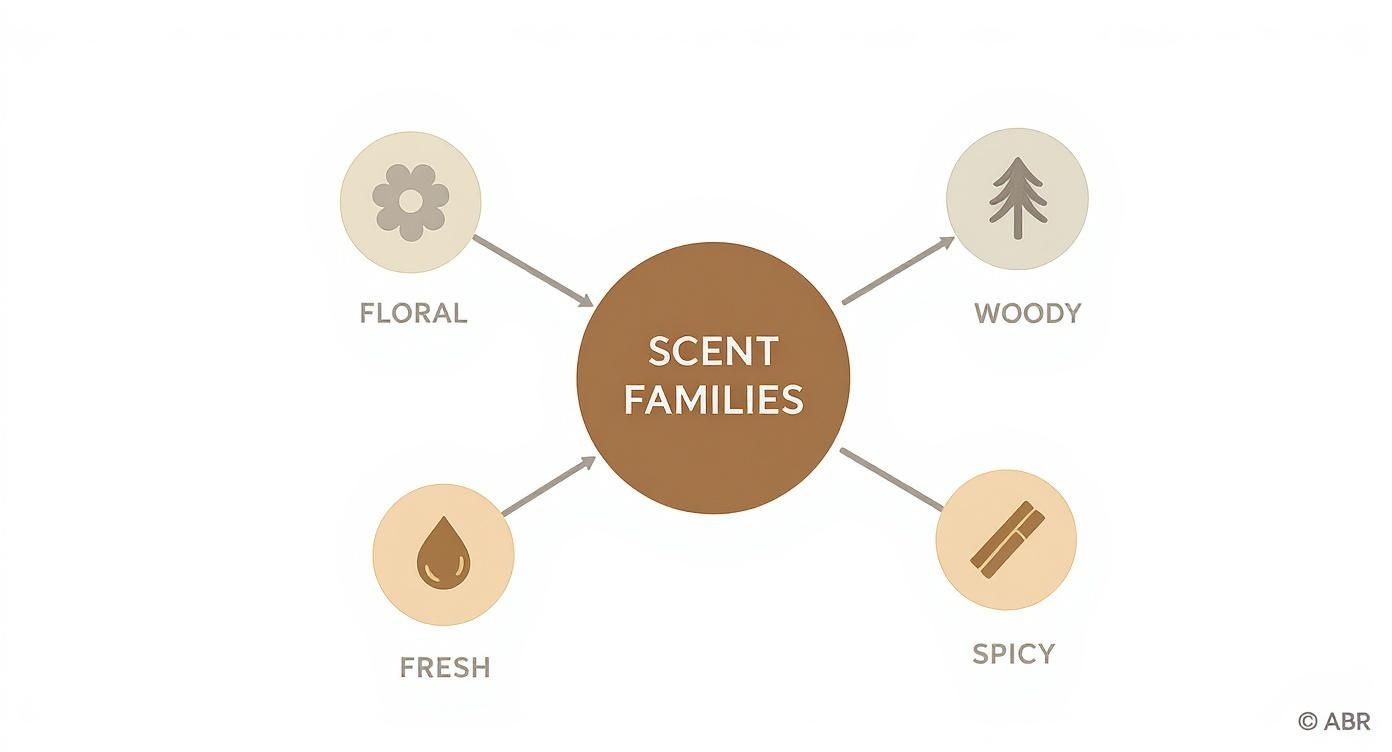
Getting a handle on these foundational scent categories is the key to making intentional choices that help you craft the perfect mood throughout your home.
The Spa-Like Oasis of the Bathroom
The bathroom should feel like a clean, refreshing escape. With the right fragrance, you can transform it from a purely functional room into your own personal spa. The trick is to choose scents that evoke cleanliness, purity, and just a touch of luxury. This is also one area where people are really starting to invest. The premium side of the home fragrance market is growing, with a projected compound annual growth rate of 7.39% until 2030 as more of us seek out artisanal and eco-friendly options.
To get that spa-like vibe, fresh and aquatic fragrances are absolutely perfect.
- Eucalyptus and Mint: These scents are crisp, clean, and invigorating. They’re known for creating a sense of clear breathing and renewal—perfect for a morning shower.
- Oceanic Notes: Scents that remind you of sea salt and fresh air make the space feel open and pristine.
- Cotton or Linen: For a simple, understated feel, these clean fragrances reinforce that feeling of pure freshness.
Scent zoning is so much more than just making your house smell good. It's about designing an emotional landscape, where each room has its own distinct personality that supports its purpose and makes your home a more intuitive and enjoyable place to live.
Layering Scents for a Signature Aroma
Once you've gotten the hang of scenting individual rooms, you can start playing with the real artistry of home fragrance. This is where fragrance layering comes in—it’s how you design a completely unique aroma that is signature to your space. You stop being someone who just uses a nice scent and become the conductor of your home's olfactory symphony.
Think of it like mixing a custom paint colour. You start with a base, then you add dabs of other colours to create a shade that’s entirely yours. Fragrance layering is the same idea. You combine complementary scents and different formats—like a diffuser and a candle—to build a complex, multi-layered aroma that tells a story as you move through your home.
This is what elevates a home from simply smelling pleasant to feeling truly curated and unforgettable. It adds a depth and personality that a single product just can't achieve on its own.
The Foundation and Accent Method
The easiest entry point into layering is what I call the "foundation and accent" method. The strategy is simple: you use a continuous, subtle fragrance as your base, then you bring in a stronger, more temporary scent to set a specific mood or mark an occasion.
Here’s how it works in practice:
- Establish the Foundation: A reed diffuser is perfect for this. Pick a versatile, gentle scent to act as your home’s constant background music. Think light woods, soft musks, or clean linen—these create an inviting canvas without being overpowering.
- Introduce the Accent: When you want to shift the atmosphere, maybe for a dinner party or just a quiet evening in, light a scented candle. The key is to choose a candle with notes that complement your diffuser's base scent, adding a new dimension of warmth and complexity.
For example, imagine your foundation is a subtle cedarwood diffuser. Lighting an accent candle with notes of vanilla or spice would instantly create a cozy, welcoming vibe. The two scents work in tandem; the diffuser provides that steady, grounding note while the candle brings in a rich, dynamic top layer.
Layering is about creating harmony, not a clash. The goal is to pick scents that lift each other up, creating an aroma that's far richer and more interesting than either could be alone.
Tips for Prolonging Your Home Fragrance
Creating a beautiful scent profile is one half of the equation; making it last is the other. To get the most out of your efforts and enjoy a consistently lovely atmosphere, you need to be smart about placement and product care. Maximizing the longevity of your chosen fragrance for home is all about the details.
Where you place your products makes a huge difference. Reed diffusers, for instance, thrive in high-traffic areas with good air circulation, like hallways or entryways. The natural movement of people walking by helps gently waft the aroma through your space, making the scent more present without being overwhelming.
For candles, proper care isn't just a suggestion—it's essential for both longevity and safety.
- Trim the Wick: Before every single burn, trim the wick to about a quarter-inch. A shorter wick means a smaller, more controlled flame, which reduces soot and helps the candle burn slower and more evenly.
- Allow a Full Melt Pool: On the very first burn, let the candle stay lit long enough for the melted wax to reach all the way to the edges of the container. This simple step prevents "tunnelling" down the middle and ensures you get to use every last bit of that gorgeous wax.
- Limit Burn Time: As a rule of thumb, never burn a candle for more than four hours at a time. This prevents the container from getting too hot and helps preserve the integrity of the fragrance oils.
By layering scents and formats with a little thought, you can design an aroma that's truly signature to you. For more in-depth advice, you might find our complete guide to choosing fragrances for a room helpful, as it offers even more tips for perfecting your home's ambiance.
Making Conscious Choices in Home Fragrance
We all want our homes to be a sanctuary, a place that feels as good as it smells. But creating that perfect atmosphere goes deeper than just picking a pretty scent. It's about being mindful of what we're bringing into our space, ensuring our choices are good for us, our families, and the planet.
This is where the conversation shifts from just fragrance to the ingredients behind it. It means looking at the very foundation of your favourite candles and diffusers, starting with the wax. For a long time, paraffin wax, which comes from petroleum, was the go-to. But as we've all become more conscious consumers, cleaner, more natural alternatives have thankfully taken centre stage.
Why a Clean Burn Matters
This is where natural waxes, like the soy wax we use in every Shivora Candle, really shine. Soy wax is a game-changer. It's made from soybeans, a completely renewable resource, and it burns much cleaner and slower than its paraffin counterpart.
What does a cleaner burn actually mean for you? Less soot. That means no more worrying about dark marks on your walls or surfaces, and better yet, cleaner air in your home. The slower burn is a fantastic bonus, too—it simply means your candle lasts longer, giving you more beautiful fragrance for your money. It’s a small change that makes a big difference.
Essential Oils vs. Fragrance Oils: What's the Difference?
The next piece of the puzzle is understanding where the scent itself comes from. You’ll see two main terms on labels: "essential oils" and "fragrance oils," and they are fundamentally different.
- Essential Oils: These are the real deal, extracted straight from plants. They give you a pure, authentic aroma, but the variety can be limited, and they often come with a hefty price tag.
- Fragrance Oils: These are masterfully blended concoctions of natural and synthetic components. This approach opens up a world of possibilities, allowing for complex, layered scents that you just can't get from a single plant. They're also more stable and reliable in candles.
The trick is to find brands that use high-quality, non-toxic fragrance oils. We're talking about oils specifically formulated to be free from nasty chemicals like phthalates, ensuring the scent filling your home is completely safe. If you want to get into the nitty-gritty, our guide to phthalate-free fragrance is a great place to start.
“Making conscious choices about your home fragrance is an act of self-care. It’s about creating a space that not only smells beautiful but also supports a healthy and mindful environment for you and your loved ones.”
It's clear this isn't just a niche concern anymore. As the home fragrance market continues to boom—it's projected to hit $4.60 billion by 2030 in the U.S. alone—so does our collective demand for transparency and quality. People are actively looking for scents that do more, that fit into their wellness routines and daily rituals. This powerful shift shows that choosing safe, sustainable products isn't just a fleeting trend; it’s the new standard for a thoughtfully curated home.
Got Questions About Home Fragrance? We've Got Answers.
Diving into the world of home fragrance can feel a bit like learning a new skill. You've got the basics down, but a few practical questions always pop up. Getting these little details right is what separates a good scent experience from a truly great one, making sure every candle burns perfectly and every diffuser fills your space just right. Let's tackle some of the most common queries we hear.
Why Is My Candle Tunnelling?
Ah, the dreaded tunnel. It's one of the most common frustrations for candle lovers: the wick burns straight down the middle, leaving a thick, wasteful ring of hard wax clinging to the sides of the jar. The culprit? Almost always, it's that very first burn.
Here’s the secret: you have to let that initial burn go long enough for the melted wax to reach all the way to the edges of the container. This first melt pool sets the "memory" for every burn that follows, ensuring the wax melts evenly from there on out. As a general guide, plan on burning it for one hour for every inch of its diameter.
Think of a candle's first burn as its most important job. By letting it create a full melt pool, you are ensuring you get to enjoy every last bit of the wax and fragrance you invested in.
How Often Should I Flip My Diffuser Reeds?
Reed diffusers are brilliant for their low-effort, continuous scent, but they aren't completely "set and forget." To keep the aroma fresh and noticeable, you'll want to flip those reeds every so often. With time, they can get saturated or even a little dusty, which slows down their ability to draw up and release the fragrance oil.
A good rhythm to get into is flipping the reeds about once a week. If you have people coming over and want a quick scent boost, giving them a flip right before they arrive works wonders. It's a simple little ritual that keeps the fragrance channels open and the scent flowing beautifully.
Why Can't I Smell My Fragrance Anymore?
Ever walk into a room and love the scent, only to find you can't really smell it an hour later? You're not imagining things. This is a classic case of olfactory fatigue, or what's more commonly known as nose blindness. Your brain, being the efficient machine it is, simply starts to filter out a constant scent, flagging it as unimportant background noise.
Don't worry, the scent is definitely still there! The quickest fix is to just step out of the room for a few minutes. When you come back in, your nose will have reset, and you'll be able to enjoy the aroma all over again. This is also why rotating your scents with the seasons is such a great idea—it keeps your senses engaged and prevents that nose blindness from setting in.
Ready to create a home atmosphere that smells as good as it feels? Explore the curated collections at Shivora Candles and find the scents that speak to you. Discover our premium soy wax candles at https://shivoracandles.ca

