

Lighting a candle after dinner should feel calm, not complicated. In a Canadian home, though, that small ritual works best when the wick is trimmed, the holder is steady, and someone stays close until the flame is out. Good candle safety tips protect the atmosphere you want while keeping the fire risk where it belongs, under control.
Table of Contents
- Preparing Your Candle for a Safe Burn
- Burning Your Candle Safely Every Time
- Protecting Children, Pets, and Vulnerable Households
- Extinguishing, Storing, and Maintaining Your Candles
- Preventing Soot and Enjoying Travel-Ready Candles
Preparing Your Candle for a Safe Burn
The first mistake usually happens before the match is struck. A jar gets set on a side table, a window is cracked for fresh air, and the rest is assumed to sort itself out. Safe prep matters more than that, especially with soy candles in glass jars, where a steady base and a trimmed wick change how the flame behaves from the start.
Start with the surface and holder
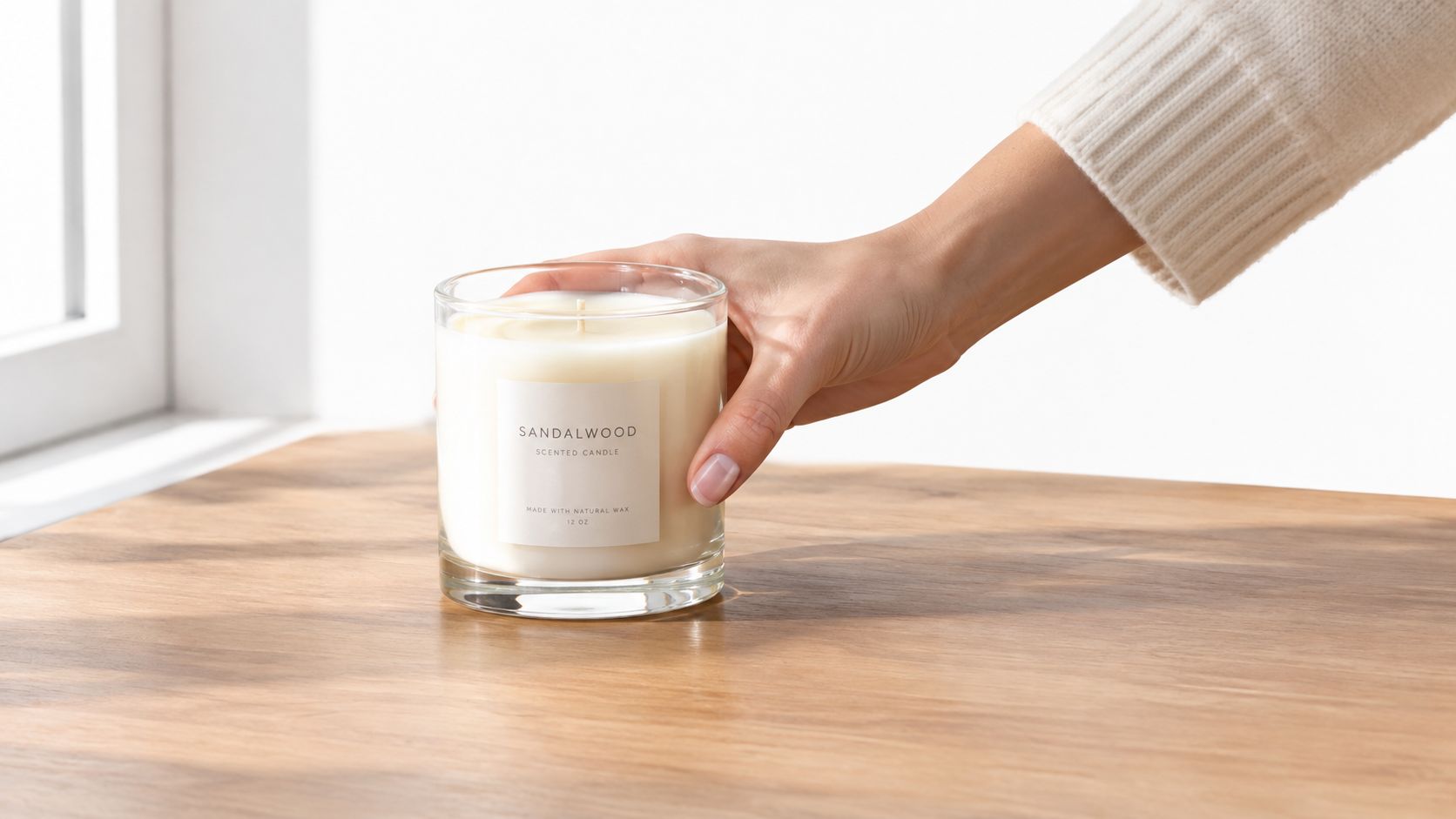
Set the candle on a flat, stable, heat-resistant surface with a holder that will not tip. Keep it clear of curtains, clothing, furniture, decorations, and other combustible materials. That matters in busy living rooms and smaller condos, where everyday objects sit closer together than they seem in daylight. Health Canada's historical estimate linked candle use with nearly 800 fires a year, 8 fire-related deaths, 115 injuries, and CAD 26.2 million in property damage from the periods it reviewed. Health Canada candle safety guidance
Their trimming guide also points to 5 to 7 mm, about one-quarter inch, as the right wick length before lighting, and trimming again every 2 to 3 hours helps keep the flame from growing too tall during longer burn sessions. Health Canada wick trimming guide
Practical rule: if the candle setup would make you uneasy near a child or a tail wagging through the room, it is not ready yet.
For a hand-poured soy candle like Shivora Candles' small-batch jars made in Ontario, preparation is part of the burn experience, not extra work. A clean wick and a level base help the candle perform as it should, whether the scent is a bakery-style vanilla or something brighter for the kitchen. If you want a quick refresher before first use, the candle care before first burn guide is a good place to start.
Read the wick before you light it
A long wick is a signal to trim. Cotton and wood wicks both need attention, but they behave a little differently, so the habit stays the same even when the flame looks different. Trim the wick, clear the area, then light only when the candle can burn without interruption.
That routine matters because a candle is not just décor. Safe setup and wick care reduce the chance of a flame that runs too hot, so the candle stays pleasant to use and easier to supervise in real homes.
Burning Your Candle Safely Every Time
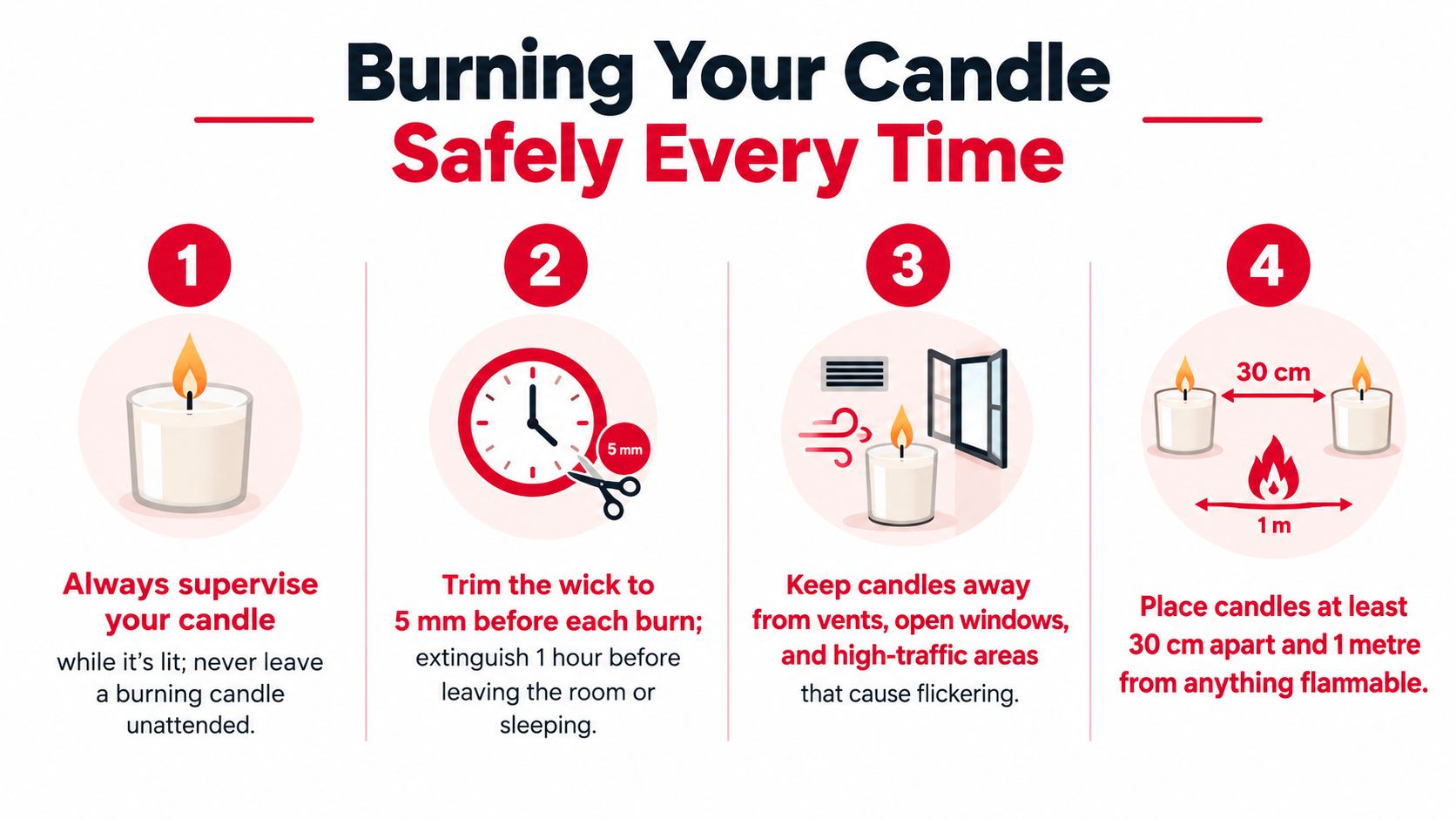
Once the candle is lit, the job shifts from preparation to supervision. That's the phase where people get relaxed, leave the room for “just a minute”, or get distracted by dinner, laundry, or a phone call. A candle doesn't forgive those moments, so the safest habit is simple, stay in the room, keep the flame visible, and extinguish it before you step away.
Keep the flame in sight
Ontario's home fire guidance is clear, candles should never be left unattended, and they should stay away from children, pets, and anything that can burn. Toronto fire-safety advice says to blow out every candle before leaving the room or going to bed, and that's the rule I follow in practice, even for a candle that seems settled and harmless. Ontario fire safety at home Toronto fire safety tips
A useful way to think about burn time is in short sessions, not “set it and forget it” use. If a room needs fragrance while you're moving around, a candle isn't the right tool for that moment unless someone can stay with it. For households that need scent without the open flame, soy wax melts with the right warmer are a better fit than stretching a candle beyond safe supervision.
Give the candle breathing room
Distance matters more than people expect. Canadian household guidance recommends at least 30 cm between a candle and materials that can burn, while federal home-fire guidance advises 1 m between a candle and an overhead surface. That means shelves, curtains, low pendant lights, and hanging décor all need a second look before you light up for the evening. Square One household fire prevention guidance
Keep the candle where you can see it, reach it safely, and clear the room around it.
If you're comparing safety habits to broader home-fire checklists, the Phoenix fire prevention guide is a useful reminder of how small household choices add up around heat sources. The exact products and room layout differ, but the core idea stays the same, reduce clutter, keep separation, and don't rely on memory to protect an open flame.
Protecting Children, Pets, and Vulnerable Households
Some homes need stricter rules than others. If a child naps in the afternoon, a cat jumps onto every surface, or someone uses oxygen equipment, the standard advice to “keep candles out of reach” isn't enough on its own. The right question is not whether the candle looks safe from across the room, it's whether the room is safe for that kind of flame at all.
Use a risk hierarchy, not a guess
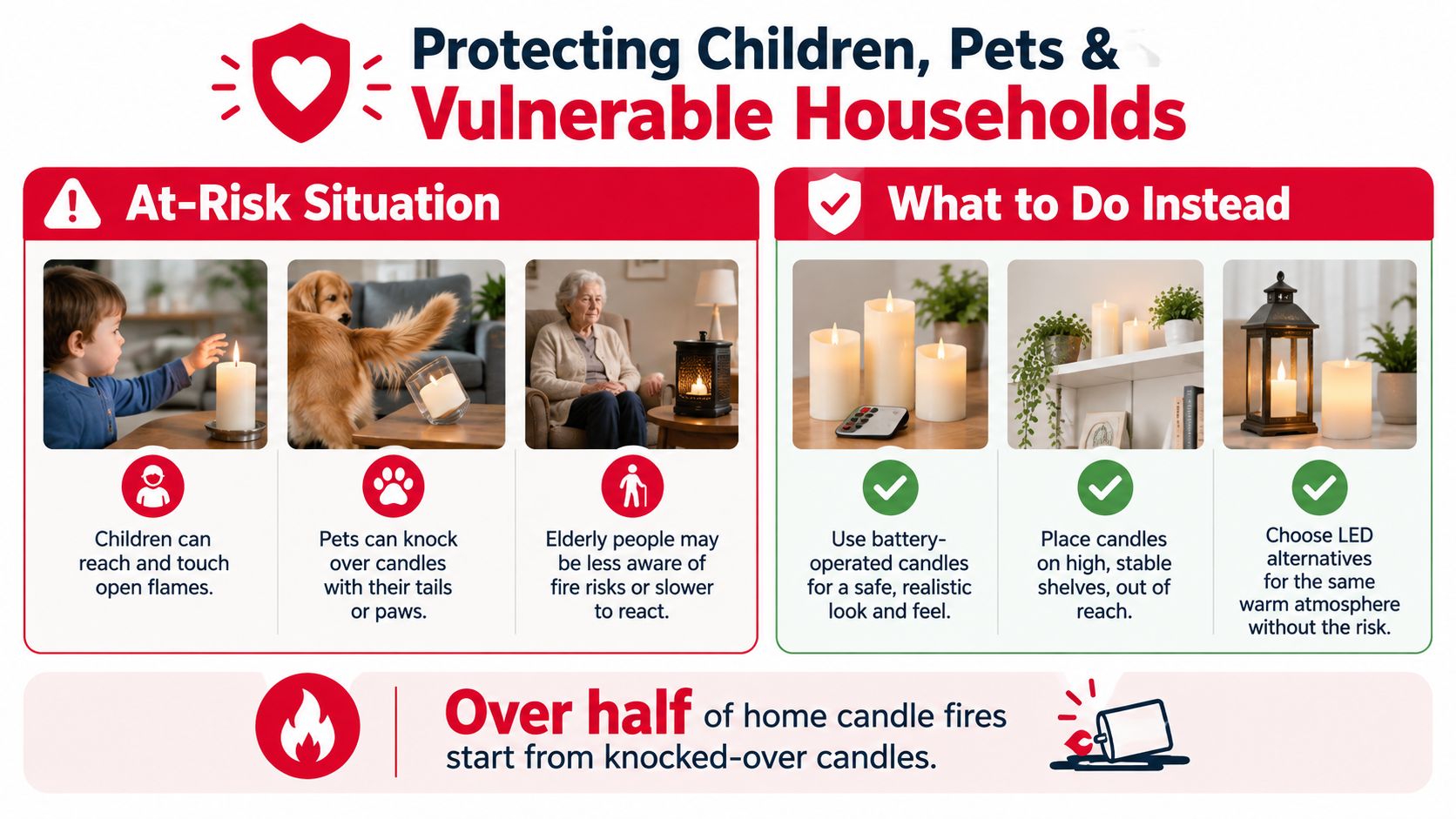
Canadian public-health guidance says to use flameless candles whenever possible and to extinguish candles before leaving a room or going to bed. It also warns against using candles in homes where oxygen is being used, and municipal guidance says not to use candles where people may fall asleep. That combination creates a clear hierarchy, no open flame around oxygen or sleeping occupants, flameless options for children's rooms and pet-accessible areas, and only carefully supervised candles in controlled spaces. Health Canada home fire safety
A tall shelf can look secure and still fail if a pet can jump, a child can climb, or a curious hand can reach during a passing moment. Toronto's guidance on sturdy holders positioned up and away from children and pets fits that reality, because "out of reach" has to be judged by the people and animals present in the room, not by the idea of a room. If you're choosing between an open flame and a flameless fragrance option, our scented candles and pet-safety guide is a helpful companion read.
Match the product to the room
For a nursery, playroom, or bedroom, I'd steer people toward wax melts with an appropriate warmer or a battery-operated candle rather than a live flame. In living spaces where adults are present and attentive, a candle can still fit beautifully, but it should sit on a stable, uncluttered, heat-resistant surface with clear separation from anything that can burn. If a candle is part of a quiet evening routine, the candle should be lit only when someone is there to watch it.
Good test: if you'd be uneasy leaving the room with the candle on, the room isn't the right place for that candle.
This is also where thoughtful gift-giving matters. A candle gift is more useful when it comes with a simple safety note, especially if the recipient has pets, small children, or mobility concerns. The safest candle is the one matched to the household, not the prettiest one on the shelf.
Extinguishing, Storing, and Maintaining Your Candles
A candle session doesn't end when the flame goes out. It ends when the wax has cooled, the holder is safe to touch, and the candle is ready for the next burn without hidden issues. Toronto's fire-safety guidance adds an extra safeguard, wetting candle wicks before leaving a room or going to sleep, which can help ensure the flame is fully out when people are tired or distracted.
End the burn cleanly
For routine extinguishing, a candle snuffer or a gentle blow is usually enough. What you don't want is a sharp gust that throws wax or a splash of water that can scatter hot material, tip a candle, or damage the container. Once the flame is out, let the wax cool completely before moving the candle or putting it away. Toronto fire safety tips
Wick care continues here too. During longer sessions, trim the wick every 2 to 3 hours after extinguishing and cooling, then relight only when the top is clean again. That small habit helps the next burn start evenly and reduces the odds of a high flame developing during a long evening. Health Canada wick trimming guide
Store candles and melts the right way
Unused candles belong in a cool, dry place away from direct sunlight. Heat can soften wax, and bright light can be unkind to fragrance over time. Wax melts do best sealed in their original packaging until you're ready to use them, and warmers should always be used according to the maker's instructions.
If the candle feels warm, it's not ready to be moved.
For older adults, caregivers, and anyone managing a household with mobility concerns, a fire safety check for older adults is a worthwhile companion resource. Candle care is only one part of household fire awareness, but it often sits right beside space heaters, lamps, and other everyday risks that deserve the same attention.
Preventing Soot and Enjoying Travel-Ready Candles
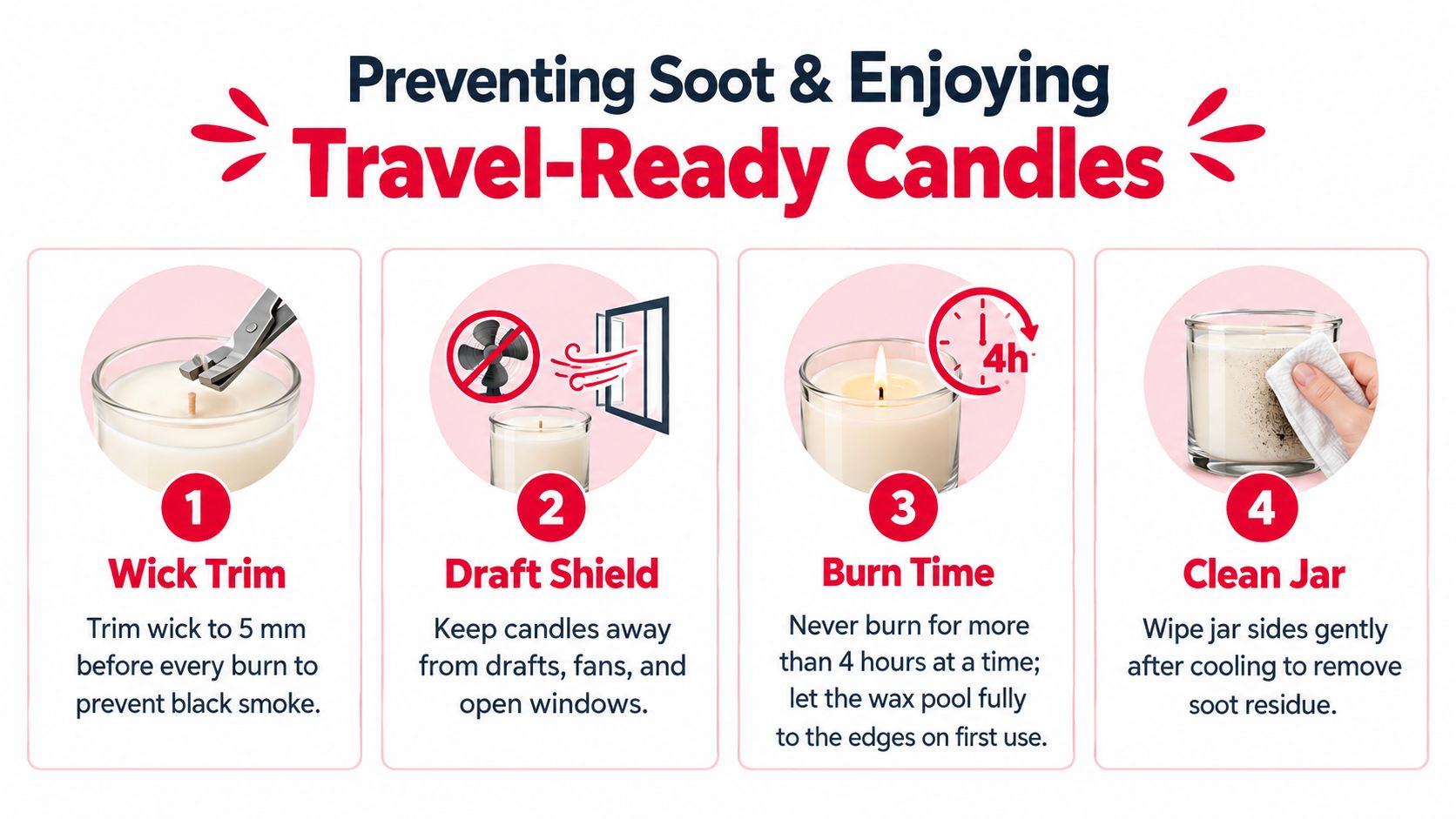
Soot usually points to something practical. A wick may be too long, the flame may be catching a draft, or the candle may be sitting where air moves across it too hard. With soy candles, cotton wicks, and wood wicks, the aim is steady burn quality, so the jar stays cleaner and the room still feels pleasant. For a deeper walkthrough of keeping jars clean, see our guide on how to avoid candle soot.
Keep airflow from working against the flame
Drafts are the quiet problem behind a messy burn. Open windows, fans, vents, and busy hallways can make a flame flicker, which often leaves soot on the jar or around the wick. A candle burns best in a calm spot, because the flame can only stay even when the air around it is steady.
That matters in Canadian homes, especially during seasonal shifts, when furnaces run, windows are cracked, and indoor airflow changes through the day. Place the candle somewhere stable, trim the wick before each burn, and keep it in place while it is lit. For households that want fragrance without an open flame, a wax melt warmer is a practical option.
Pack candles like breakables, not decorations
Travel-ready candles need simple protection. Keep jars upright, use sturdy packaging, and do not tuck a candle loosely into a tote or gift bag where it can tip, crack, or stain other items. That matters even more with small-batch candles, because a jar that arrives intact should also be ready to give without extra cleanup.
If you are sending a candle as a gift, include a short note with the main care points. A reminder to trim the wick, keep the jar away from drafts, and never leave the flame unattended makes the gift more useful. For road trips, cottages, and seasonal gatherings, if soot is a recurring concern in your space, pairing a steady burn with better indoor air filtration helps, and Castus' compare Castus purification units are one example of how Canadian households approach indoor air quality alongside fragrance choices.
Shivora Candles makes hand-poured soy candles and wax melts in Ontario, Canada, with cotton or wood wicks and small-batch consistency that suits careful candle care. If you want a candle or wax melt with safer everyday habits in mind, visit Shivora Candles and explore the collection. Shipping across Canada starts at $9.99. Free shipping on orders of $79.99 CAD or more. Some conditions apply.


