

Wooden candle wicks are thin slivers of sustainably sourced wood that create a gentle crackling sound and a wider melt pool, but they need more careful trimming and aren't necessarily cleaner than quality cotton wicks. Proper burn conditions matter more than the material label.
You light one after dinner, hear the first soft crackle, and watch a ring of melted soy wax spread across the jar. It's an appealing ritual, especially on a quiet Ontario evening, but the sound and wider melt pool come with a little responsibility. Wooden candle wicks can smoke, flare, tunnel, or go out when the wick size, wax, fragrance, jar diameter, or airflow isn't well matched.
That trade-off matters in Canada. Health Canada estimated that candles caused nearly 800 fires per year on average between 1999 and 2008, based on data from Ontario, Manitoba, Alberta, and British Columbia. Those incidents were associated with an annual average of 8 deaths, 115 injuries, and CAD 26.2 million in property damage (Health Canada's candle-safety guidance). A wooden wick can change the experience, but it doesn't remove the risks of an open flame.
Table of Contents
- What Wooden Candle Wicks Are
- Wooden Wicks vs Cotton Wicks for Soy Candles
- How to Trim and Care for Wooden Candle Wicks
- Why Wooden Wicks Are Not Automatically Cleaner
- Best Scents and Routines for Wood-Wick Candles
- Common Wooden Wick Problems and Fixes
What Wooden Candle Wicks Are
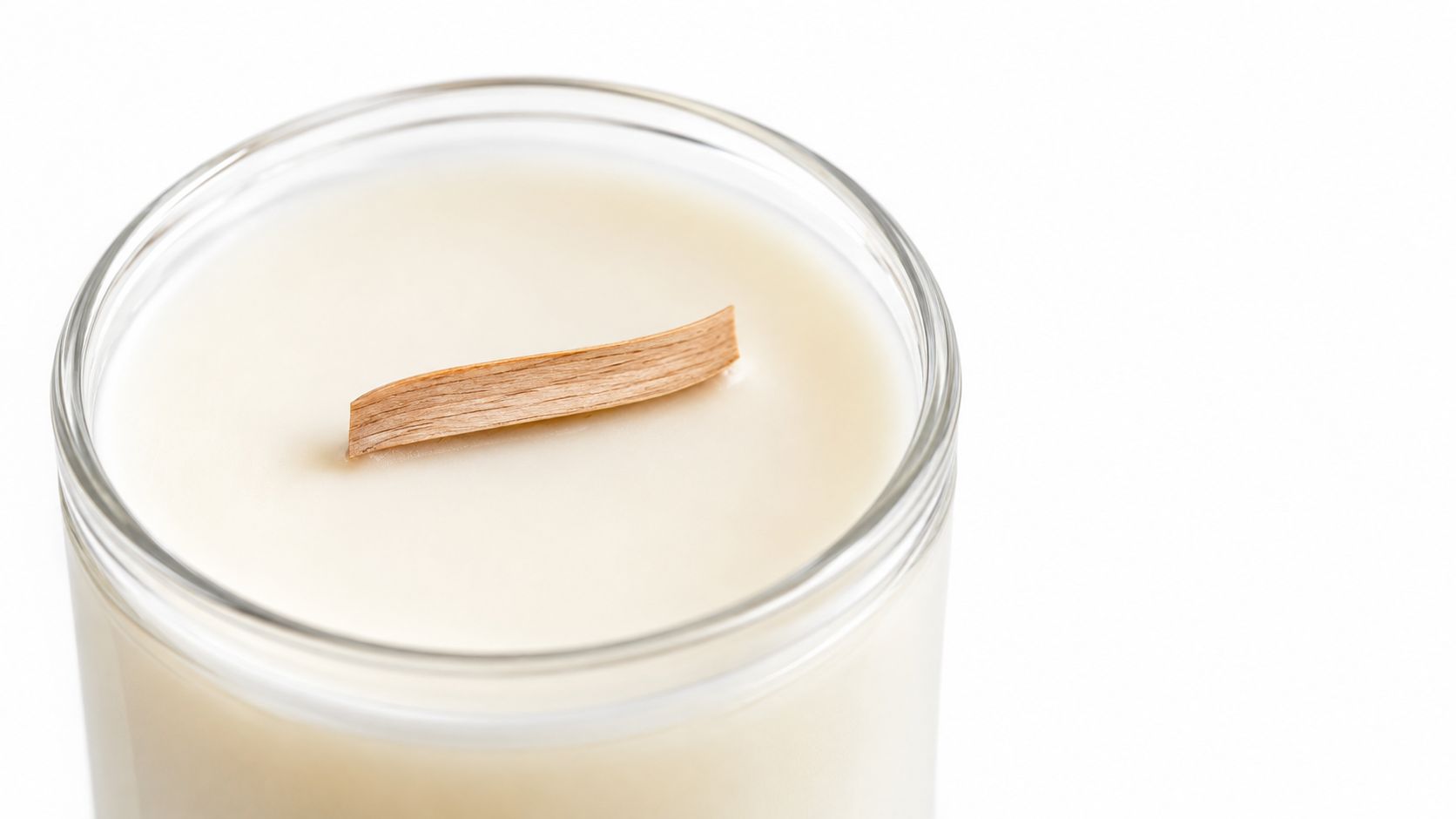
A wooden wick is a thin strip of wood fixed upright in the wax. Makers usually use woods such as birch or poplar, cut into even slivers so the wick can pull melted wax into the flame. Width, thickness, and whether the wick is single-ply or layered all affect heat output, flame shape, and how far that heat reaches across the candle surface.
For a home fragrance shopper, the difference shows up the moment you light it. The flame usually sits lower and wider than cotton, and if the wick is burning cleanly, you may hear a soft crackle. In a soy candle, that broader heat can help melt wax across more of the jar and support a fuller scent throw in the room.
Why the crackle happens
The sound comes from the wood heating up as wax feeds the flame. Small shifts in the wood, the charred edge, and wax vapour can all contribute to that fireplace-like crackle. It adds atmosphere, but it does not tell you on its own that the candle is burning well.
In practice, I treat crackle as a feature, not a quality test. A wooden wick that sounds pleasant but throws a tall, jumpy flame may be too long, carrying too much char, or sitting in a draft. A candle placed near an open window, a forced-air vent, or a busy hallway can misbehave no matter how nice the wick sounds.
The wider flame profile often suits a broader vessel because it spreads heat over more of the wax surface. That can help with melt-pool formation and fragrance release, especially in soy, but only when the wick is matched to the jar, wax blend, and fragrance. Ontario makers who pour wood-wick candles still have to test for those variables carefully. Wood does not excuse poor sizing or placement.
What you're buying into
Choosing a wooden wick means choosing sound, visual character, and a more involved care routine. You will usually need to keep the charred tip short for an easy relight, and placement matters more than some shoppers expect. Health Canada's candle guidance still applies to wood-wick candles because they are still open flames.
Shivora Candles' hand-poured soy candles and wax melts are made in Ontario, Canada, giving shoppers a local option when they compare wood-wick formats with more familiar cotton-wick candles. For most homes, the better choice comes down to the vessel, wax, scent style, and the amount of wick care you are willing to do.
Wooden Wicks vs Cotton Wicks for Soy Candles
Wood and cotton can both work well in soy wax, but they suit different habits. Wooden candle wicks tend to provide a wider, lower flame with a crackling sound. Cotton wicks generally burn with less noise and are often easier for shoppers who want a simple trim-before-lighting routine.
The vessel matters as much as the wick. A wooden wick can suit a wider jar where a broad melt ring and ambient sound are part of the appeal. Cotton can be the more practical option for a narrow vessel or for someone who prefers a quiet candle that asks less attention during use.
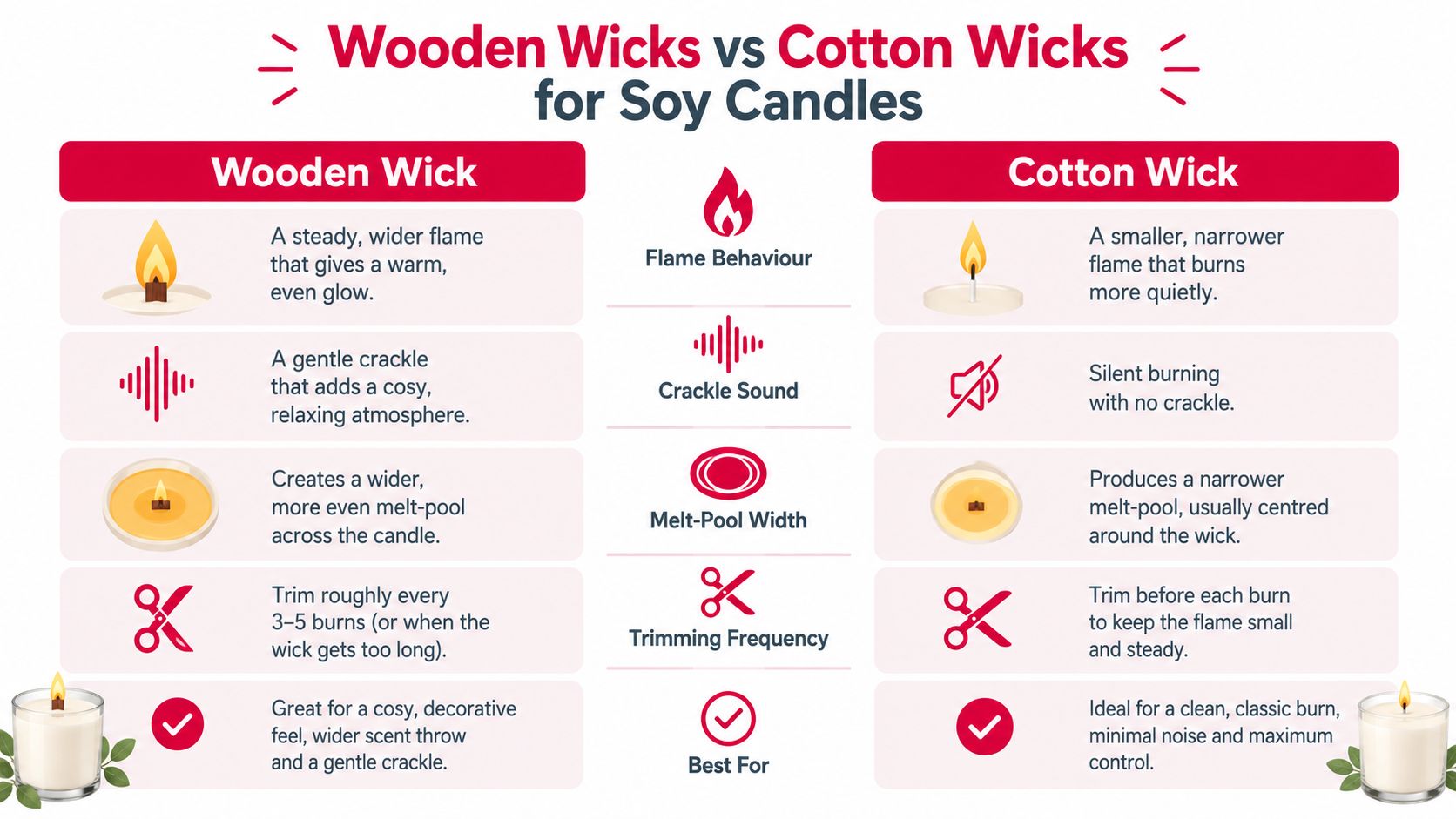
| Feature | Wooden Wick | Cotton Wick |
|---|---|---|
| Flame behaviour | Broad, lower flame that can respond noticeably to airflow | Usually quieter and more familiar in appearance |
| Crackle sound | Gentle crackle when burning well | Silent burning |
| Melt-pool width | Often suited to a broader melt ring | Can suit narrower vessels, depending on sizing |
| Trimming frequency | Needs regular attention, especially when char builds up | Usually simpler to trim before lighting |
| Best for | Ambience, wider jars, and shoppers who enjoy an audible burn | Quiet evenings, narrow vessels, and lower-maintenance routines |
How the choice feels in practice
A wooden wick adds a sensory layer that cotton doesn't provide. The sound can complement reading, bathing, or winding down, while the broader heat pattern may help fragrance move through a room. That doesn't mean every wood-wick candle will throw scent more strongly. Fragrance concentration, wax formulation, jar diameter, and wick testing all influence the result.
Cotton has a different strength. It's a sensible choice for a shopper who wants a predictable flame and doesn't want to learn how to clear char from a wooden tip. A properly sized cotton wick can perform well in soy wax, particularly when the maker has tested the full wax, fragrance, vessel, and wick combination.
For a more detailed side-by-side explanation, see this cotton wick versus wood wick guide. The useful decision isn't “wood or cotton for every candle.” It's matching the wick to your jar, room, scent preference, and willingness to maintain it.
How to Trim and Care for Wooden Candle Wicks
You light a wood-wick candle for a quiet evening, and the flame starts out low, then turns jumpy because the tip is carrying too much char. That is normal burn behaviour with wooden wicks. They usually need a bit more hands-on care than cotton, especially in soy candles, because the flame can choke on leftover carbon if you relight without cleaning the top first.
Trim only when the candle is fully cool. Lift off the loose blackened material with your fingers or a wick trimmer, then make a small clean trim. There is no need to cut deep into the wax or force the wick down to the base. A short, tidy top gives the next burn a better start.
Quebec's fire guidance advises trimming the wick to about 5 mm and keeping candles more than 30 cm away from flammable items such as curtains and tablecloths (Quebec's candle-prevention guidance). In practice, that means paying attention to placement as much as trimming. A wood wick may burn beautifully in a calm corner, then struggle beside an air vent, near an open window, or in a busy hallway where airflow keeps disturbing the flame.
A practical routine
- Before lighting: Check that the wick is upright, short, and free of loose char. Set the candle on a stable, level, heat-resistant surface.
- During the burn: Watch for a flame that leans, flares, or starts smoking. With wooden wicks, those signs usually mean draft, excess char, or both.
- After a few hours: If the flame grows too high or looks unstable, extinguish the candle and let both wax and vessel cool fully before trimming for the next burn.
- Before moving it: Put the flame out first, then wait. Hot wax shifts easily, and warm glass is easier to knock over.
Practical rule: A full melt pool is helpful, but it never outweighs a flame that is tall, smoky, or erratic.
Never leave a burning candle unattended or burn one while sleeping. Canadian holiday safety guidance also recommends using a snuffer instead of water, since water can splatter hot wax and react badly with a heated container (Health Canada's holiday safety alert).
Wooden surfaces near the burn zone need protection too, and setting up a safe environment for wood covers placement, mats, and heat clearance for furniture. For wick-specific technique, this candle-wick trimming guide gives a useful visual reference.
Why Wooden Wicks Are Not Automatically Cleaner
“Wooden” describes the wick material, not the complete emissions profile of a candle. Research on candle emissions found that wax and wick composition can influence soot, PM2.5, and particle-phase PAHs, while flame disturbance and burn duration also affect airborne pollutants. Under stressed-burning conditions, emissions were dominated by soot across candle types (research on candle emissions and particle pollutants).
That finding changes how shoppers should read clean-burning claims. A wooden wick can smoke when it's too long, when airflow disturbs the flame, when the wax pool is poorly established, or when the wick and jar aren't well matched. A cotton wick can also burn cleanly when it's correctly sized and cared for.
The variables that matter more than the label
A candle's behaviour reflects several parts working together:
- Wick thickness and width: Too much fuel can create an oversized flame, while too little can cause repeated extinguishing.
- Wax and fragrance: Soy wax and fragrance load change how quickly the melt pool forms and how the wick feeds the flame.
- Vessel diameter: A broad jar asks the flame to heat more surface area than a narrow container.
- Air movement: Fans, vents, open windows, and busy walkways can disturb combustion.
- Burn duration: Long or poorly supervised burns can allow the flame and melt pool to become difficult to control.
Shivora Candles describes its candles as hand-poured soy products made with phthalate-free fragrance oils and cotton or wood wicks. A balanced formulation can support dependable combustion, but no ingredient choice replaces trimming, placement, and supervision. The more useful promise is a well-matched candle used responsibly, not a claim that wooden means smokeless or healthier by nature.
Health Canada's Canadian fire history makes that distinction important. A wooden wick doesn't change the fact that an open flame needs a stable holder, clear space, and an attentive person nearby. The practical alternative to chasing a “clean” label is simple: keep the wick maintained, reduce drafts, and extinguish the candle when its behaviour changes.
Best Scents and Routines for Wood-Wick Candles
Wooden candle wicks work especially well when the scent and setting benefit from a little atmosphere. Warm woods, sandalwood, amber, cedar, smoke, and seasonal spice can complement the audible crackle because the candle feels like more than a fragrance source. It becomes part of the room's evening rhythm.

Delicate florals and very light citrus profiles can still work with wood, though cotton may suit shoppers who want the fragrance to remain the only noticeable feature. The broader melt pool can help fragrance release, but scent strength still depends on formulation, room size, airflow, and how long the candle has been burning.
Match the scent to the setting
| Scent direction | Useful setting | Wick and vessel preference |
|---|---|---|
| Sandalwood, cedar, amber | Living room, reading corner, evening routine | Wooden wick in a medium or wider vessel |
| Vanilla and seasonal spice | Dining area, entryway, winter hosting | Wooden wick when crackle adds warmth |
| Lavender and soft florals | Bedroom or quiet wind-down space | Cotton for silence, or wood when gentle sound is welcome |
| Fresh citrus and herbs | Kitchen, office, daytime use | Cotton for a cleaner, quieter background |
| Strong smoky or resinous notes | Short, attentive ambience sessions | Wood only with careful trimming and draft control |
A useful scent reference can help you think about woody notes by character rather than by marketing language. The Essentia Perfume scent guide offers a vocabulary for comparing woods, resins, and warmer fragrance impressions.
Rotate candles instead of burning the same profile in every room. Use a wood-wick candle where its crackle adds to the mood, then switch to soy wax melts when you want flameless fragrance. Melts can be a practical choice for a workspace, a busy household, or an evening when you don't want an open flame.
For more scent ideas, the best wood-wick candle scents guide can help narrow a choice by fragrance family. Shivora Candles offers hand-poured soy candles and wax melts made in Ontario, Canada, so shoppers can choose between crackling candles and flameless formats within a Canadian-made home-fragrance range.
This short visual guide also shows how scent, flame, and setting work together:
Shipping across Canada starts at $9.99. Free shipping on orders of $79.99 CAD or more. Some conditions apply.
Common Wooden Wick Problems and Fixes
A wood wick usually gives you a useful signal when something is off. Look at the flame first, then the wick tip, then the surrounding airflow.
| What you notice | Likely cause | What to do |
|---|---|---|
| Flame is tall or flickering | Wick is too long, charred, or exposed to a draft | Extinguish with a snuffer, cool the candle, trim the wick, and move it away from moving air |
| Candle smokes | Excess char, fragrance and wax imbalance, or disturbed airflow | Stop the burn if smoke persists, let the candle cool, clear loose char, and check placement |
| Wax tunnels around the sides | The burn has been too short, or the wick isn't heating the vessel adequately | Follow the maker's burn guidance and avoid repeated brief sessions |
| Wick goes out | Wick tip is clogged, the flame is starved, or the wick is poorly matched | Cool the candle, trim away char, and relight only when the wick is clear |
| Melt pool is uneven | Candle is near a draft or sitting on an uneven surface | Move it to a level, stable location and monitor the next burn |
Don't use water to extinguish a candle. Use a snuffer, then let the vessel cool before handling it. If the glass is cracked, the container is excessively hot, the flame remains unstable after trimming, or the candle has little usable wax left, retire it rather than trying to rescue it.
A quick trim can restore a healthy flame, but it can't fix every formulation or vessel problem. If the same symptom returns despite proper trimming and stable placement, the candle has likely reached the limit of what that wick and container combination can deliver.
Shivora Candles offers hand-poured soy candles and soy wax melts made in Ontario, including wood-wick options for shoppers who enjoy a crackling ambience and practical care routine. Visit Shivora Candles to explore Canadian-made scents and choose the candle format that fits your home.

