

You've probably stood in a kitchen or living room, lit a candle for comfort, and then wondered whether “clean burning” means the jar, the wax, the wick, or the air in the room. In Canada, that question matters, because a candle isn't just a scent choice, it's also an open flame and a combustion source. A better way to think about clean burning candles Canada is simple, the ingredients matter, but burn conditions matter too.
Shivora Candles makes hand-poured soy candles and wax melts in Ontario, Canada, so this guide uses Canadian safety guidance and plain-language burn habits to separate useful claims from marketing shorthand. If you've ever bought a candle because it said soy, natural, or phthalate-free, then noticed soot, tunnelling, or a smoky room anyway, you're already seeing why the label alone doesn't tell the whole story.
Table of Contents
- What Clean Burning Candles Mean in Canada
- Understanding Wax Types and Fragrance Choices
- Cotton Wicks vs Wood Wicks for Cleaner Burns
- Canadian Regulations, Labels, and Buying Criteria
- Candle Care Tips for Consistent, Responsible Burns
- Eco-Conscious Gifting and Flameless Alternatives
- Why Local Canadian Candle Makers Matter
What Clean Burning Candles Mean in Canada
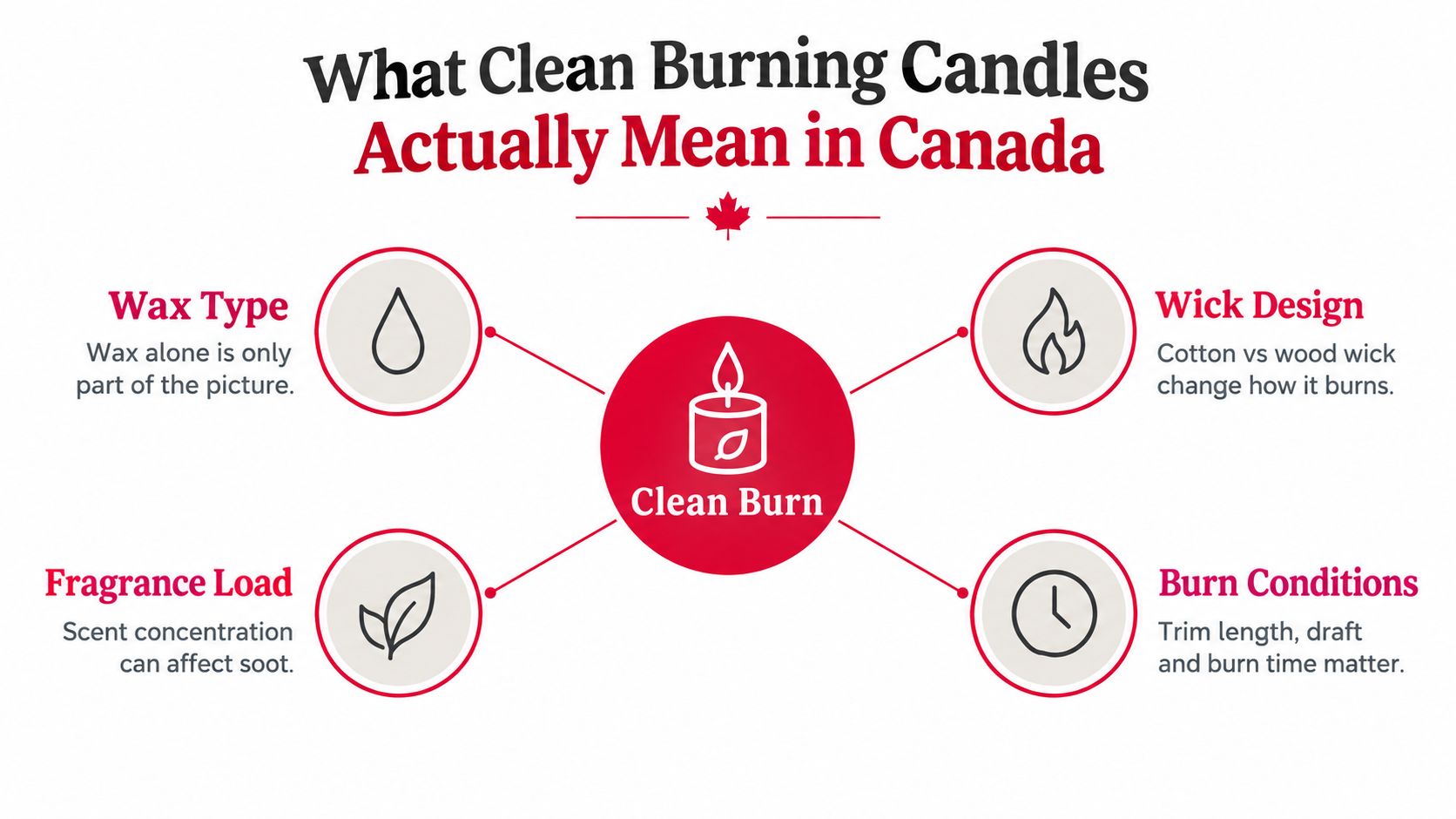
Shoppers often hear clean burning and assume it refers to the wax alone. In Canada, that is too narrow. Health Canada identifies candles and incense as sources of indoor particles and other air pollutants, including smoke, soot, and aerosol particles, and warns that inhaling them can be harmful. Health Canada's healthy-home guidance makes the point plainly, a cleaner burn is about reducing unnecessary smoke and visible soot, not pretending a flame produces no emissions.
Ingredients help, but they are not the whole story
Wax type, wick design, fragrance load, container shape, room ventilation, and draft control all shape what happens once the candle is lit. A plant-based wax can still smoke if the wick is too long or the flame keeps hitting moving air. “Natural” and “soy” do not automatically mean a tidy burn.
Practical rule: If the candle is lit, treat it like a combustion product, not a decor object.
A better way to read the label is simple. Material choices set the baseline, and burn habits decide the result. A lead-free wick, a stable vessel, and a sensible fragrance load can support a cleaner-looking burn, but only if the candle is trimmed, watched, and used in a ventilated space.
Understanding Wax Types and Fragrance Choices
Wax gets most of the attention because it's the part shoppers can see first. Soy, paraffin, and other plant-based waxes all behave differently once heat reaches them, but none of them gives you a free pass on care. The useful question isn't “Which wax is perfect?” It's “Which wax matches how I burn candles at home?”
What the wax can and can't do
Soy wax is popular with Canadian home-fragrance buyers because it's plant-based and often supports a slower, more controlled burn. Paraffin, by contrast, is a petroleum-derived wax that some shoppers prefer to avoid for personal reasons. Even then, wax alone doesn't determine whether a candle leaves residue on the jar, because the wick, melt pool, and room conditions also shape the result.
That's why claims about “clean” should stay modest. Wax can help support a cleaner-looking candle, but it doesn't cancel out combustion by-products. A good jar in the wrong draft can still smoke.
Fragrance strength should suit the room
Fragrance oils bring another layer of confusion. Many Canadian shoppers want scent, but not a heavy cloud that takes over the room. Balanced fragrance load matters because stronger doesn't automatically mean better. A candle that smells pleasant in a living room can feel too intense in a smaller apartment or a closed bedroom.
If you're comparing product pages, look for language that explains scent style in plain terms, such as bright citrus, warm woods, or gentle everyday use. That's more useful than vague promises about being “cleaner” or “safer” without context. For a deeper ingredient-focused comparison, this guide to candle wax types is a helpful companion read for shoppers weighing soy and other wax options.
A candle should fit the room, not fight it.
The same logic applies to fragrance confidence. A lighter scent can feel more livable over time, especially in homes where candles are part of everyday routine rather than occasional decor. If a candle claims to fill the room, ask yourself whether that's useful in your space or just loud.
Cotton Wicks vs Wood Wicks for Cleaner Burns
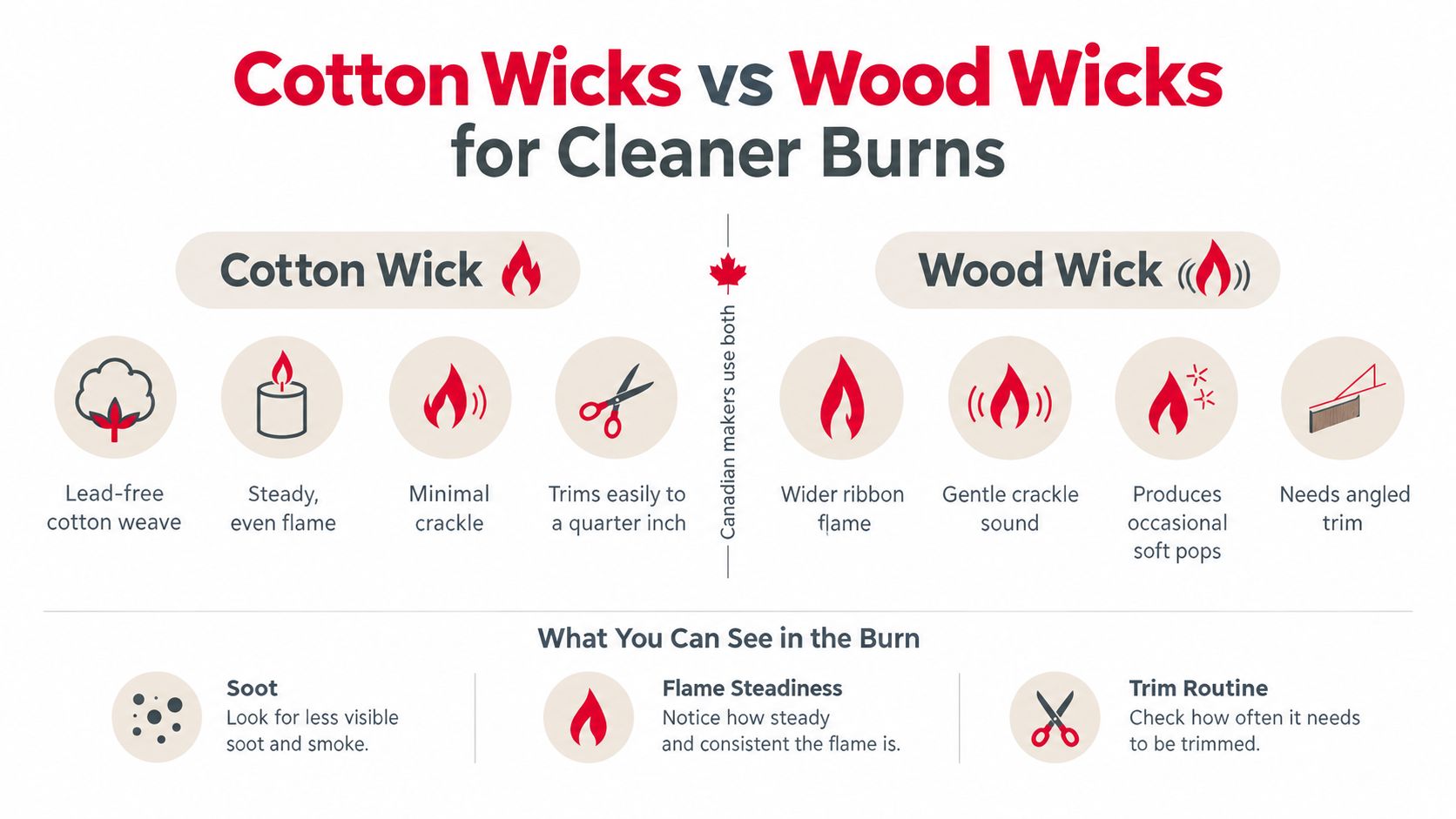
Wick choice changes how a candle behaves the moment you light it. Cotton and wood are the two styles Canadian makers often use, and each gives a different burn profile. The question isn't which one is universally better, it's which one gives you the kind of flame, sound, and soot level you want in your home.
Cotton wicks tend to feel more familiar
Lead-free cotton wicks are commonly chosen for a steadier, more traditional flame. They trim easily, and that makes them practical for people who like simple candle care. If you want a straightforward burn with less visual distraction, cotton is usually the easier starting point.
Wood wicks change the atmosphere
Wood wicks create a different experience. They often make a soft crackle, and that sound is part of why people choose them. They can also produce a broader flame shape, which some buyers like for ambience, but they usually ask for more attention to trim angle and wick length.
The important part is this. Wick material influences the burn, but wick maintenance influences it more. A wood wick that's left too long can smoke. A cotton wick that isn't trimmed can flicker unevenly. For a side-by-side shopping reference, the cotton wick versus wood wick guide gives a useful comparison for buyers deciding between the two.
Use the wick that fits your habits
If you prefer a quieter, more minimal candle routine, cotton may suit you better. If you like the sound and look of a crackling flame, wood can be a better fit, as long as you're willing to trim it properly. Either way, the candle performs best when the wick is kept in check and the jar isn't sitting in a draft.
Canadian Regulations, Labels, and Buying Criteria
A candle label can look polished and still leave out the details that matter most. In Canada, clean burning is not a legal label that guarantees a safer flame. Health Canada's consumer guidance notes that candles and incense add indoor particles to the air, and Canada's Candles Regulations set safety requirements without turning fragrance or wax claims into a simple promise.
What to check before you buy
A trustworthy product page lists wax type, wick material, trim instructions, and expected burn time, all in plain language. Ingredient disclosure still matters, but it works best alongside care guidance and burn details. That mix helps you judge how the candle is meant to perform, not just how it is marketed.
Winter also raises the stakes. Canadian household fire guidance explains that candles are more likely to cause problems when they are left unattended, placed near combustible items, or used where décor crowds the flame. Square One's household fire safety guidance is a practical reminder that placement and supervision shape safety as much as the wax blend does.
| Practical Buying Criteria for Canadian Candle Shoppers | What to Look For | Why It Matters |
|---|---|---|
| Ingredient clarity | Clear wax and fragrance descriptions | Helps you judge whether the candle matches your preferences |
| Wick information | Cotton or wood wick details | Wick type affects flame behaviour and soot visibility |
| Burn guidance | Trim and session advice | Better burn habits support a steadier flame |
| Container design | Stable, heat-resistant vessel | Safer placement and less risk from overheating |
| Fragrance transparency | Plain scent descriptions | Makes it easier to match the candle to the room |
Product pages that are worth your attention usually sound practical, not glossy. They explain how to use the candle, where it fits best, and when to stop. If you want a clearer sense of fragrance disclosure, this Canadian guide to phthalate-free candles is a useful place to start reading labels with more confidence.
A label should help you burn the candle well, not just sell it quickly.
Candle Care Tips for Consistent, Responsible Burns
Good candle care solves a lot of the problems shoppers blame on wax. Most uneven burns, heavy smoke, and messy jar walls start with habits, not with the candle itself. If you want a tidy burn, the routine has to start before the flame does.
Small habits make the biggest difference
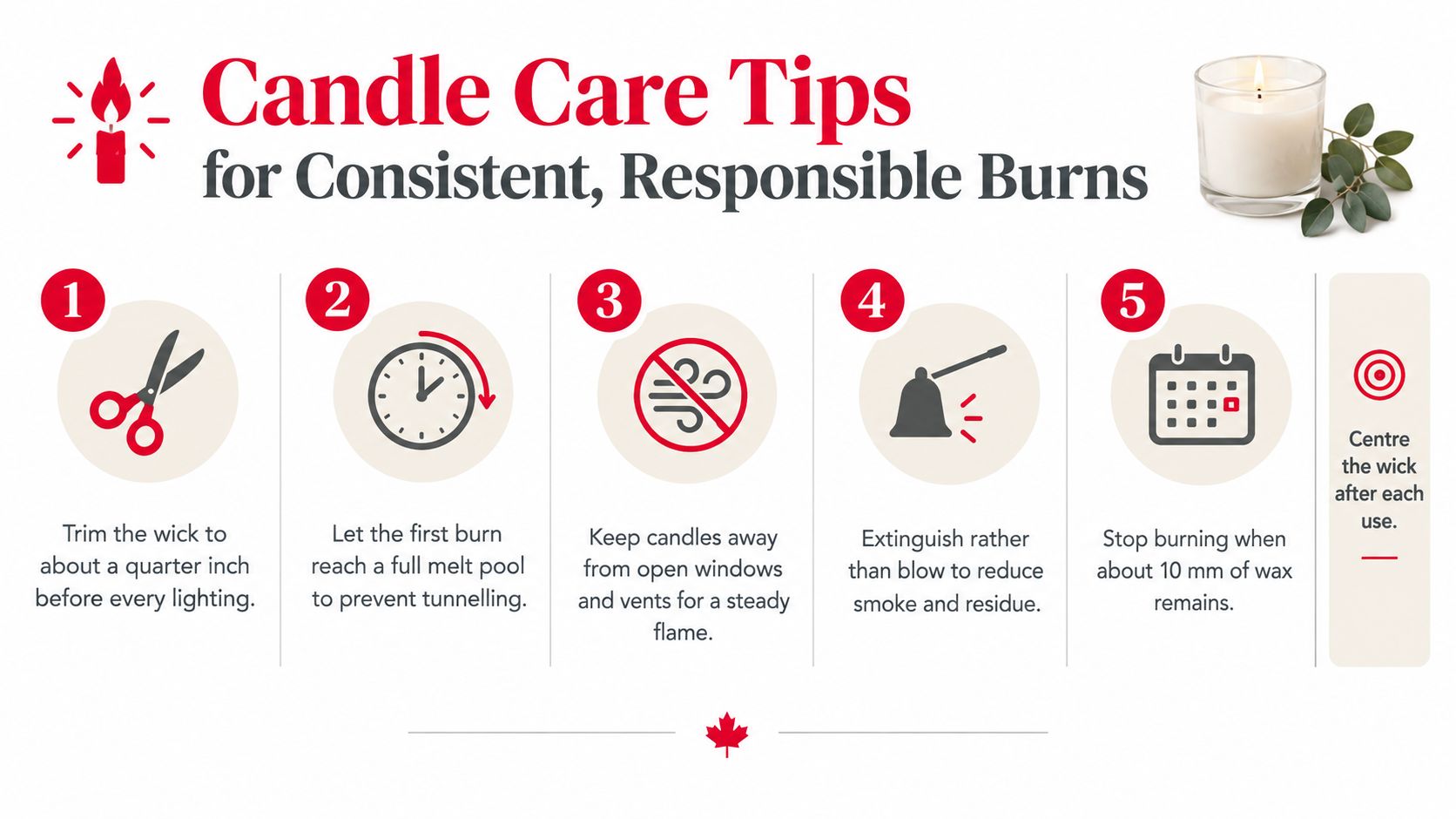
Trim the wick to about a quarter inch before every lighting. That one step helps keep the flame controlled and reduces the chance of a smoky burn. Let the first burn reach a full melt pool, because that helps prevent tunnelling and gives the wax a more even path on later burns.
Drafts matter more than many people expect. Open windows, vents, and fan-driven airflow can push a flame around and make even a good candle look messy. Extinguishing with a snuffer can also reduce the burst of smoke that sometimes follows a blown-out flame.
Burn with the room, not against it
A candle needs space to behave properly. In smaller rental rooms or holiday settings with paper décor, keep the jar away from anything combustible and never leave it going while you leave the room. If the flame starts to smoke heavily, flicker repeatedly, or look unusually high, that's a sign to stop using it.
For care-minded buyers, these habits are part of the product, not extra homework. They're what keep the glass cleaner, the flame calmer, and the fragrance more consistent.
Stop burning when there's only a shallow layer of wax left, and don't push a candle to the bitter end.
Eco-Conscious Gifting and Flameless Alternatives
Some shoppers want a thoughtful gift that fits a home where an open flame is not a good match. Soy wax melts fit that need well. They still add fragrance, and they work with a warmer instead of a wick, which makes them practical for busy households, bedrooms, or homes where the recipient may not want to manage a candle.

Wax melts still need sensible heat safety, and they are not emission-free. They do remove the open-flame element, which changes the risk profile in a simple way. A warmer behaves more like a small appliance than a candle, so the buyer still needs to place it carefully and follow the instructions. For gift buyers who care about presentation as part of the experience, packaging choices matter too, and the guide on UK packaging rules is a useful reminder that material choices and gift appeal often go together.
A candle can still be the better gift in some homes. Seasonal scents, restrained fragrance profiles, and compact jars are often easier to live with than stronger, room-filling styles. The best choice is the one that matches the space, the routine, and the amount of care the recipient wants to give it.
Why Local Canadian Candle Makers Matter
Buying from a Canadian maker gives you a clearer line of sight into what's in the jar and how it's made. Small-batch production usually means more consistent quality control, and local support makes it easier to ask about scent strength, wick choice, or burn care without guessing. For shoppers comparing home fragrance options, that kind of clarity is often worth more than vague branding.
Shivora Candles offers hand-poured soy candles and soy wax melts made in Ontario, and the online store serves customers across Canada. Shipping across Canada starts at $9.99, and free shipping applies on orders of $79.99 CAD or more, with some conditions. If you're shopping for everyday fragrance, candle gifts, or a flameless option for a specific room, those details make planning simpler.
The clean-burning conversation comes back to the same point every time, transparent materials, responsible care, and realistic expectations. A good candle doesn't pretend to be smoke-free, it just gives you a better burn when you use it well. If that's the kind of home fragrance you want, Shivora Candles is worth a look for soy candles, wood-wick options, and wax melts made in Ontario.
If you want home fragrance that's made in Canada and designed with burn care in mind, explore the current soy candles and wax melts at Shivora Candles. You'll find hand-poured options that fit the way Canadian homes use candles, with practical guidance to match. Shipping across Canada starts at $9.99, and free shipping applies on orders of $79.99 CAD or more, with some conditions.


