

Between 1999 and 2008, candles caused nearly 800 fires a year on average, resulting in annual averages of 8 deaths, 115 injuries and CAD 26.2 million in property damage, according to Health Canada's candle fire statistics. A window candle is first a clearance and airflow decision, then a styling one. Sills sit near fabric, moving air and cold glass, so choose a candle, wax melt or flameless light only after the spot can accommodate it.
Table of Contents
- Choosing Candles for Windows at a Glance
- Clearance Rules for a Window Sill
- Burning Habits That Keep a Window Candle Safer
- Scent Strength and Size Near a Window
- Why Candles Cannot Fix Winter Condensation
- Seasonal Window Décor and Where Flames Fit
- Window Candle Questions Before You Shop
Choosing Candles for Windows at a Glance
The first decision is which window candle you need, because flame, scent and sound don't travel together.
| Option | Flame | What it delivers | Window fit |
|---|---|---|---|
| Soy jar, cotton wick | Open flame | Steady scent throw, quiet burn | Good for a sill with clear space above and beside |
| Soy jar, wood wick | Open flame with crackle | Scent plus crackling sound, livelier flame | Check flame height and clearance before lighting |
| Paraffin jar or pillar | Open flame | Strong hot throw; may soot more on cool glass | Same clearance as soy; poor fit on a tight or curtained sill |
| Wax melt in a warmer | Flameless heat | Gentler scent from cubes, no open flame | Stable warmer spot away from curtains and blinds |
| LED flameless candle | No flame | Visual glow only, no fragrance | Suits any sill, including spots where a flame is not allowed |
Soy with a cotton wick is the simplest lit option when the ledge is deep and nothing hangs close. Wood wicks add a crackle, and the flame can sit higher, so measure before you light. Paraffin can throw scent hard once the pool is hot, yet petroleum wax can soot more readily against cool glass. It still needs the same upright holder and clearances as soy, and it is a weak fit on a narrow or curtained sill.
Scent first or glow first
If you want fragrance, choose soy or a wax melt. If you want the look, mix one lit jar with LED pieces on the same sill so the open flame stays in the safest spot. We hand-pour soy candles in Ontario, in 4 oz, 8 oz and 10 oz jars, with lead-free cotton wicks or crackling wood wicks. Nothing in that lineup is a reason to skip the next checks. Clearance and burn habits decide whether the choice is usable.
Clearance Rules for a Window Sill
Canadian fire-prevention guidance in the National Defence home fire prevention booklet asks for at least 1 metre (3 feet) between a candle and any surface above it. The same guidance says to keep candles out of drafts, leave at least 10 centimetres (4 inches) between candles, use a heat-resistant surface, and choose a holder that keeps the candle firmly upright.
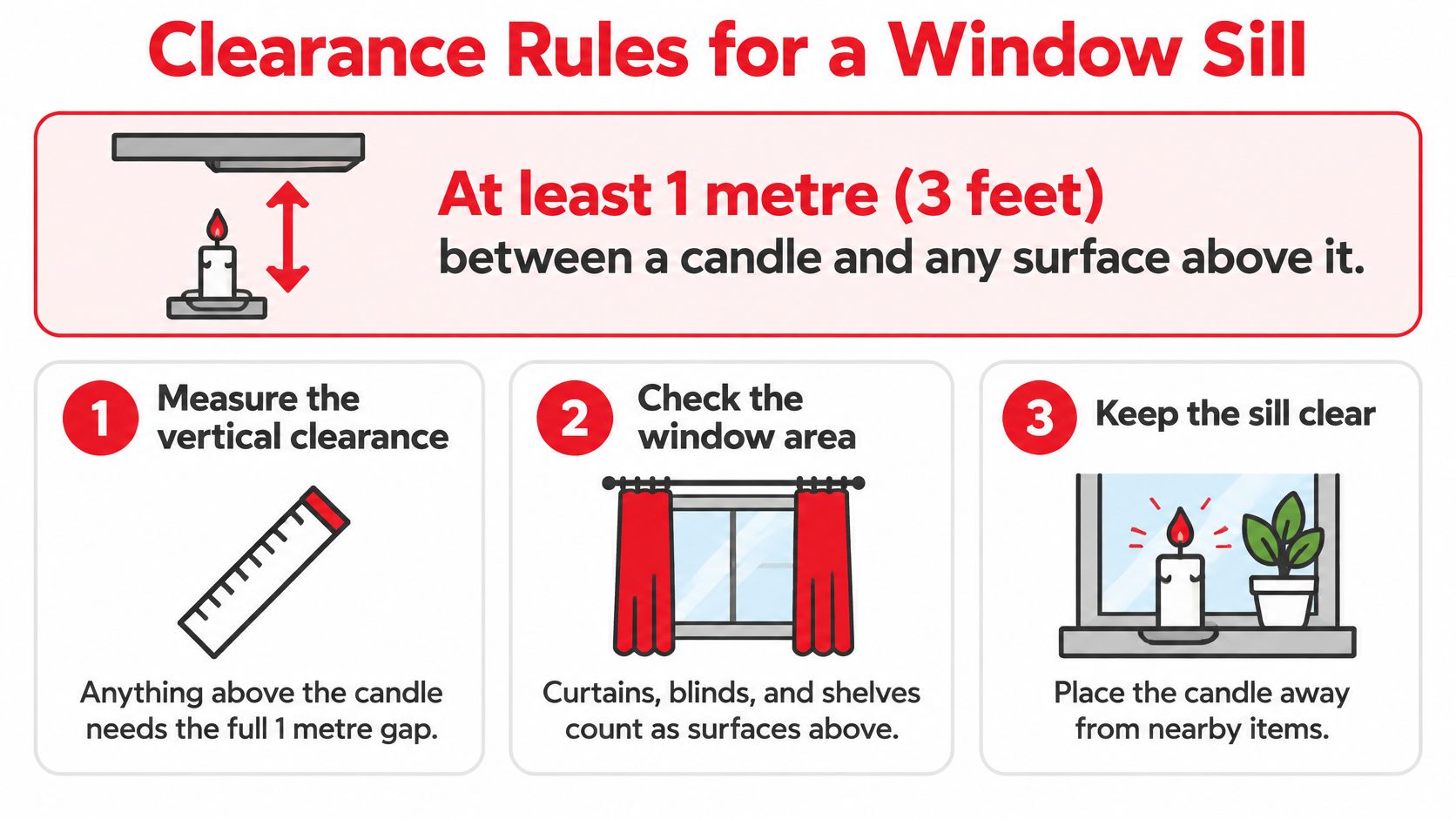
Walk the window in this order.
- Measure upward. From the wick to the top of the frame, a shelf, a valance or hanging décor, clear everything inside that 1 metre. Fabric and wood above the flame count, not only the curtain beside the jar.
- Check sideways. Curtains, sheer panels and blind slats must stay well clear, including when a draft moves them. A still panel at noon can brush the jar after you open a door.
- Separate the candles. Leave at least 10 centimetres so flames don't crowd and heat doesn't build between jars.
- Get the flame out of moving air. Window seals, a door swing and a heating vent all make a flame lean toward fabric. The Bradleys Radiators window heating guide is a useful read on how heat and airflow behave under a window, which is the same ledge where a candle would sit.
- Set the base. Use a tray or ceramic dish that can take heat, and a holder that cannot tip if the sill is nudged.
- Recheck after the room changes. Closed curtains, a rearranged chair or new seasonal décor can erase a gap you measured yesterday.
Practical rule: A clear sill is a daily check, not a one-time setup.
Burning Habits That Keep a Window Candle Safer
A safer burn depends on what happens before, during and after lighting. Keep a candle in a room you are using, and put it out before leaving the room or going to sleep. Health Canada's candle safety guidance also advises keeping candles out of children's and pets' reach.
A routine you can repeat
- Check the setup, then trim the wick. Confirm the candle is upright and stable, then trim the wick so it does not become tall or smoky.
- Stay in the room while it burns. A candle should not be left unattended, even for a quick trip elsewhere in the home.
- Extinguish it before leaving or sleeping. Let the wax cool completely before moving the jar. Hot wax can spill, and a hot jar should not be set against a cold surface.
- Store matches and lighters out of children's and pets' reach. Put them away after lighting.
- Keep paper, cards and cords off the sill. Burn the candle only on a flat, stable surface.
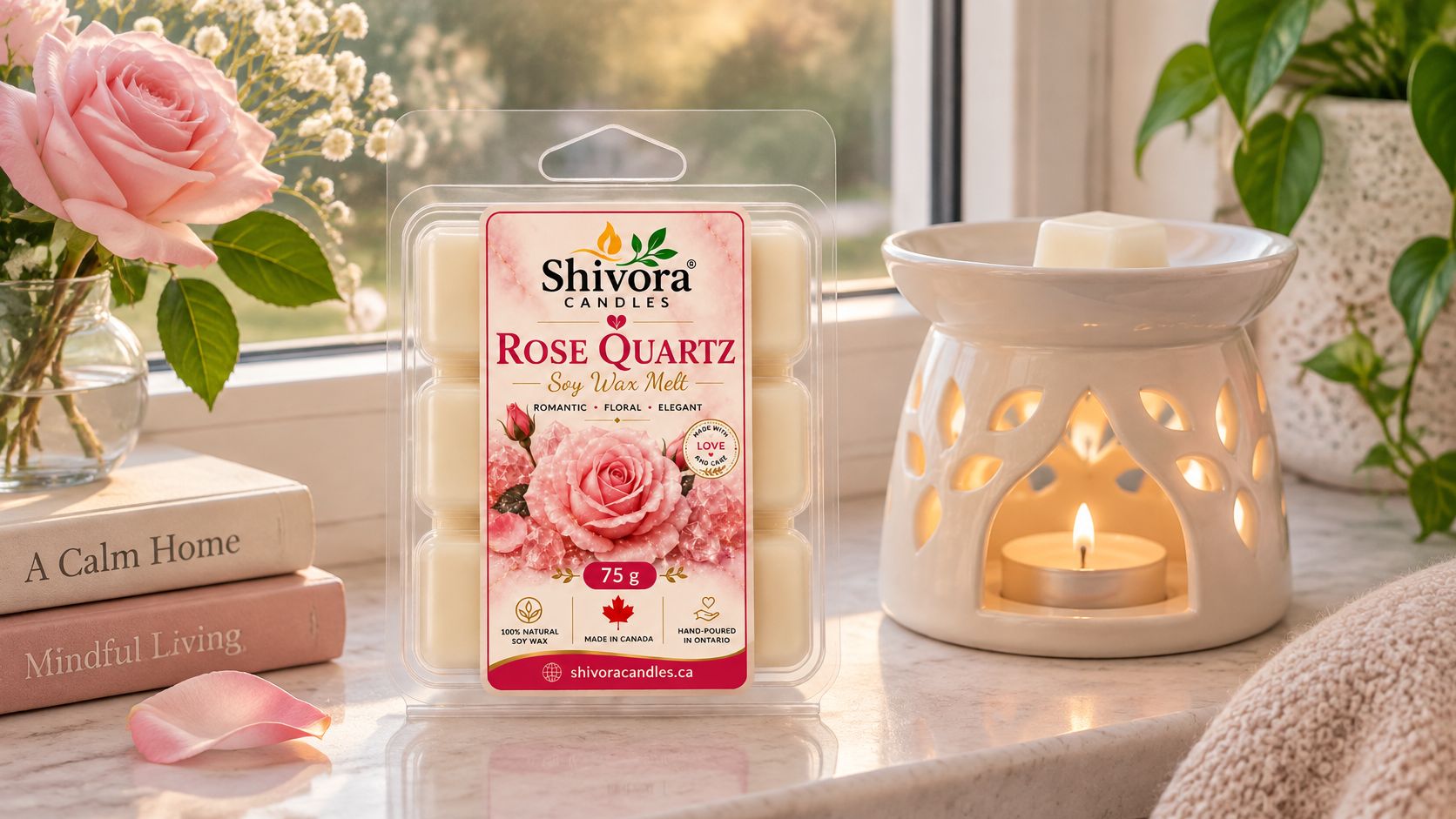
For fragrance without an open flame, Shivora Candles offers wax melts in easy-to-use cubes for a warmer. Follow the warmer's directions, and do not leave it unattended. See these candle care and safety tips for more on wick trimming and jar handling.
Scent Strength and Size Near a Window
A window changes how fragrance behaves. Drafts carry scent out of the room and make the flame lean, so a ledge needs more care than a shelf in the middle of the room.
Match the jar to the room
A smaller jar suits a bedroom or a narrow ledge where you want the scent close. A larger jar suits an open living room where the window is in view and air moves through a bigger volume. One candle for a few evenings tells you more than lighting three on the first night.
Citrus and sage, or a fresh floral, sit well on a bright sill. Lavender and soft woods suit a bed or a reading corner. Cinnamon, coffee and caramel belong in a kitchen or a holiday window, and they can feel heavy in a closed room. Test one before you add another.
Cotton wicks give a quiet, steady burn. Wood wicks add a crackle that suits a living room and a quiet evening, though the flame may be taller, so the clearance check still comes first. Our hand-poured soy candles, made in Ontario, cover woody, floral and gourmand options so you can match strength to the room. Wax-melt cubes suit a bedroom where you don't want a flame at all. Our guide to candle scent strength walks through how throw changes with room size.
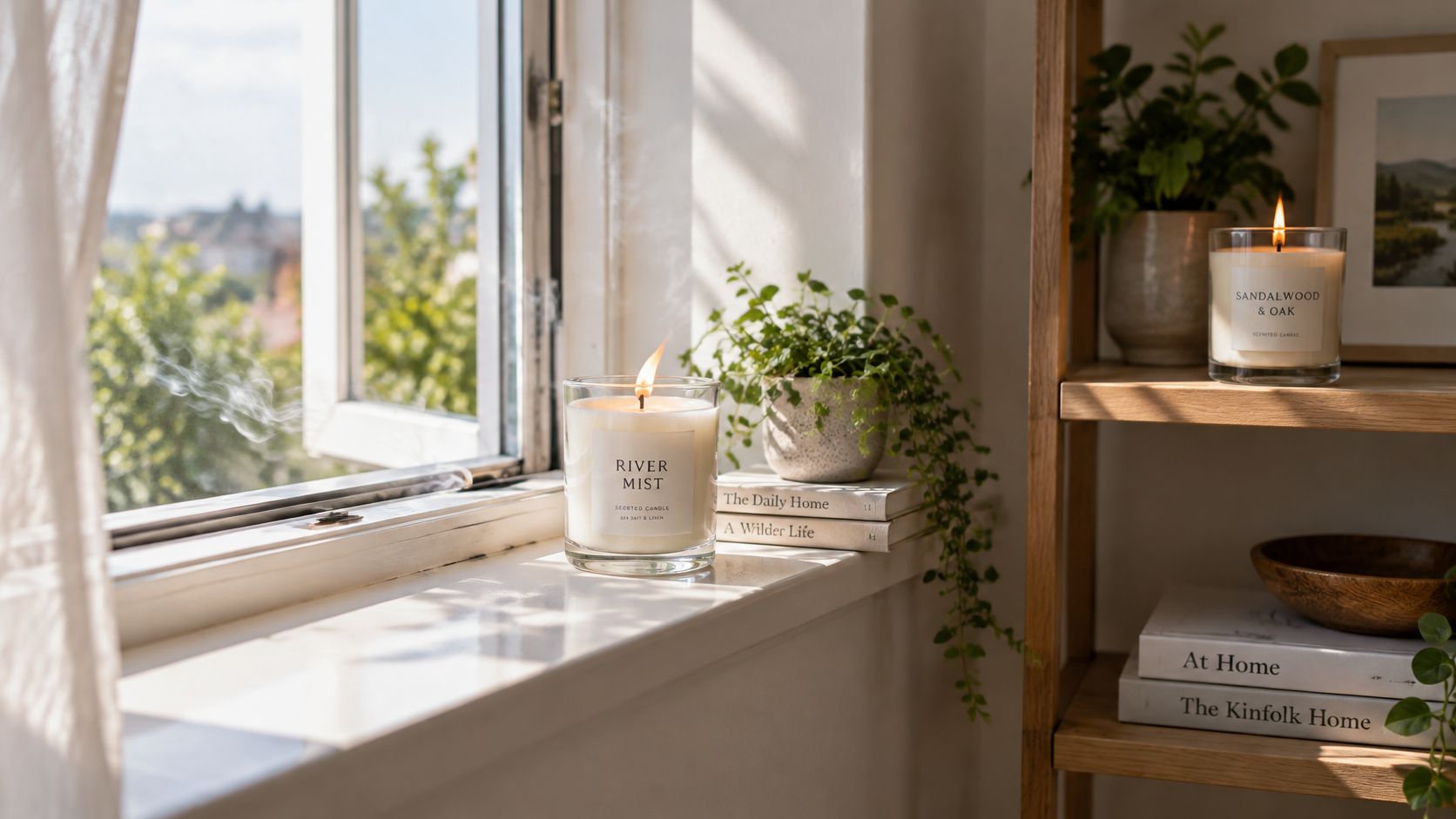
Ventilate the room, but keep the flame out of a direct draft.
Why Candles Cannot Fix Winter Condensation
A window candle does not stop frost or fogging. Condensation is a moisture and temperature problem, not a décor gap.
Natural Resources Canada states that condensation forms when humid indoor air meets a surface colder than its dew point. Winter moisture shows up most often on windows and frames. Blocked airflow lets cool air pool on the glass, which is why the lowest pane often beads first. A candle warms only a small patch. Uneven heating can create temperature differences that stress cold, single-pane or damaged glass.
What actually helps
- Keep air moving. Leave a gap between curtains and the sill instead of sealing the glass.
- Cut indoor moisture. Vent cooking steam and bathroom steam, and run ventilation during showers.
- Don't push the vessel against the pane. Keep the candle a clear distance from cold glass.
- Inspect the window. Cracked panes, failed seals or pooled water on the frame need repair, not a longer burn.
- If the fog keeps returning, look at humidity and ventilation before you choose a bigger candle.
The managing window condensation in Utah homes write-up is a clear walk-through of why interior glass sweats, and the same physics applies in a Canadian winter. A candle on the sill is for ambiance. It is not a condensation fix.
Seasonal Window Décor and Where Flames Fit
In a 2024 Angus Reid Forum survey of 1,503 Canadians commissioned by Yankee Candle, 30% said lighting a candle lifted their holiday spirit, according to the survey release. At a window, that glow needs room: choose the flame position before adding greenery, ornaments or extra jars.
| Season | Scent direction | Décor idea | Flame note |
|---|---|---|---|
| Winter holidays | Cinnamon, pine, woods | One jar on a stable tray, with greenery outside the flame-clearance area | Recheck clearance after decorations go up |
| Early spring | Fresh florals, citrus | Flameless warmer or LED pillar on a bright sill | Keep the sill edge clear and the display stable |
| Summer | Light citrus, coconut, sea salt | LED lanterns near windows opened for summer airflow | Keep open flames away from drafts and sheer curtains |
| Autumn | Woods, apple, warm amber | One jar on a deep sill with unobstructed space above | Check overhead clearance to the shelf and frame before lighting |
For a mixed display, put one lit jar and a shorter LED on a single stable tray. Keep the flame central only if that position provides clearance from both curtains and the frame. A centred candle is not automatically a safe candle. Nothing should be stacked above it.
For a fuller seasonal display, use flameless pieces toward the curtains and keep greenery separate from the burning jar. If the decorations crowd the flame, make the whole window display flameless rather than squeezing in a lit candle.
Leave the window's airflow path open when arranging heavy drapes and seasonal decorations. Keep that layout in mind when considering tips for reducing window condensation; adding décor should not mean closing off the glass. For tray arrangements, height and grouping, use how to style candles at home after choosing a position with adequate clearance.

Window Candle Questions Before You Shop
What if the frame leaves less than 1 metre above the wick?
Choose an LED candle or a wax-melt warmer. A low frame leaves too little clearance for a flame, even if the valance appears still.
Can you use paraffin on a sill?
Use the same requirements as for any candle: a stable, heat-resistant tray and clear space around the flame. Cool glass may collect soot. Wax type does not make a crowded sill safe.
How should you ventilate without feeding the flame?
Open an interior door or use a fan to move air across the room. Keep the window behind the flame closed, since a draft can push the flame toward sheer curtains.
How many jars fit if you keep 10 centimetres between them?
On a 60-centimetre sill, two jars and one flameless piece are a sensible limit. Leave enough room to keep each flame clear of fabric and other objects.
Shivora Candles offers hand-poured soy candles with cotton or crackling wood wicks, as well as flameless wax melts. The shop ships across Canada at a flat rate, with free shipping on orders of CAD $79.99 or more, subject to conditions.
Browse Shivora Candles to compare candles and wax melts. Choose placement first, then select a scent that suits the room.

