


It’s a scenario we’ve all dreaded—a stray drip of hot candle wax lands on your skin. That first instinct is to panic and wipe it off immediately, but that's actually the worst thing you can do. Trying to smear or peel away hot, liquid wax can tear your skin and make a small burn much worse.
The absolute first thing you need to do is get that spot under cool, running water.
First Aid First: Cool, Then Assess
Forget about the wax for a moment. Your only priority is to stop the heat from damaging your skin.
Get the affected area under a tap and let cool water—never ice-cold—run over it for a good 5 to 10 minutes. This does two crucial things: it immediately soothes the skin and stops the burning process, and it helps the wax harden completely. A solid piece of wax is infinitely easier and safer to remove than a sticky, hot mess.
This is your simple, immediate action plan.
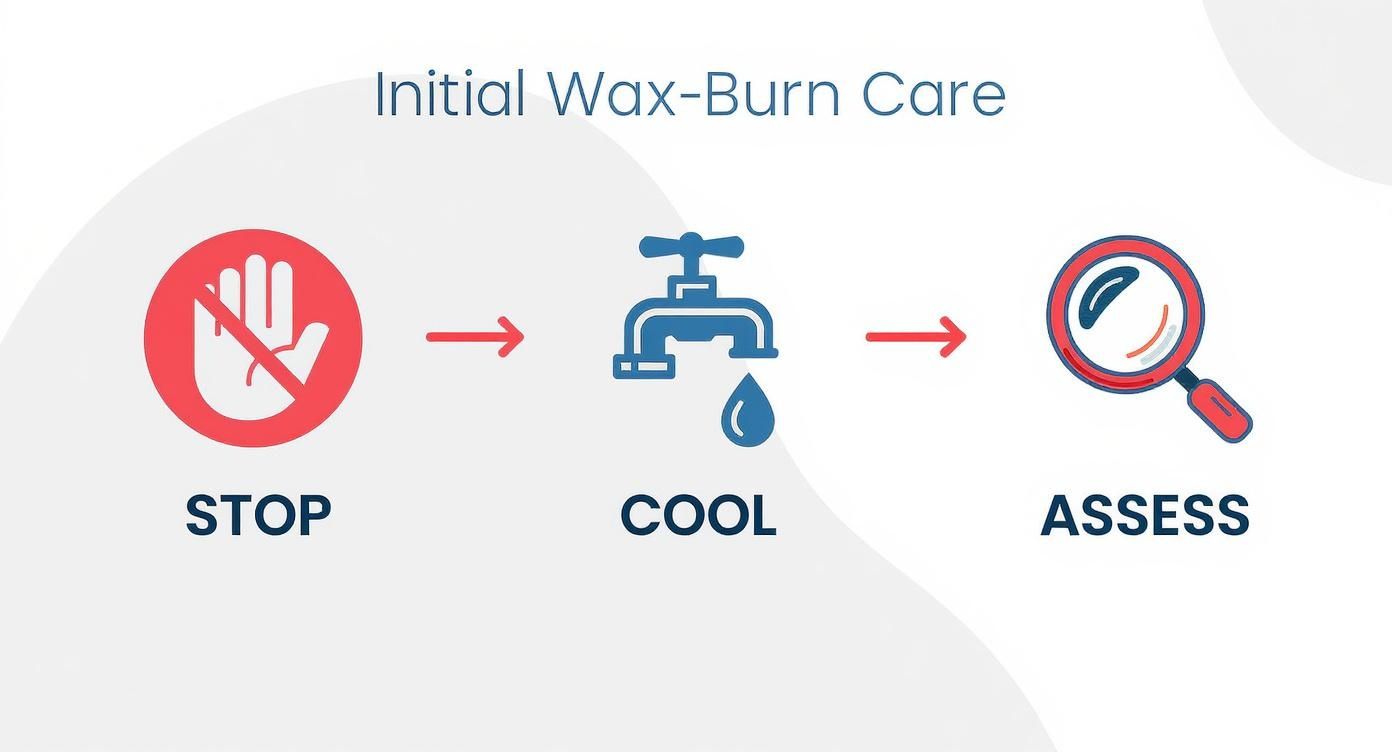
As you can see, the focus isn't on removal. It's about immediate care to minimize any potential damage.
Take a Breath and Check the Skin
Once the wax is hard and the area feels cool to the touch, you can take a moment to look at the skin underneath and around it. For most minor spills, you’ll likely just see some redness, similar to a very mild sunburn. This is typically a first-degree burn and something you can handle at home.
However, if you see widespread blistering, the skin is broken, or the wax covers a large patch of skin, it's time to stop and seek medical advice.
Preventing these little accidents is always the best approach. You can brush up on our essential candle safety tips to make sure your candle experience is always a relaxing one. By taking these few minutes to cool and assess, you’ve already handled the most critical part of the process. Now, removing the wax will be simple and pain-free.
The Best Ways to Gently Remove Hardened Wax
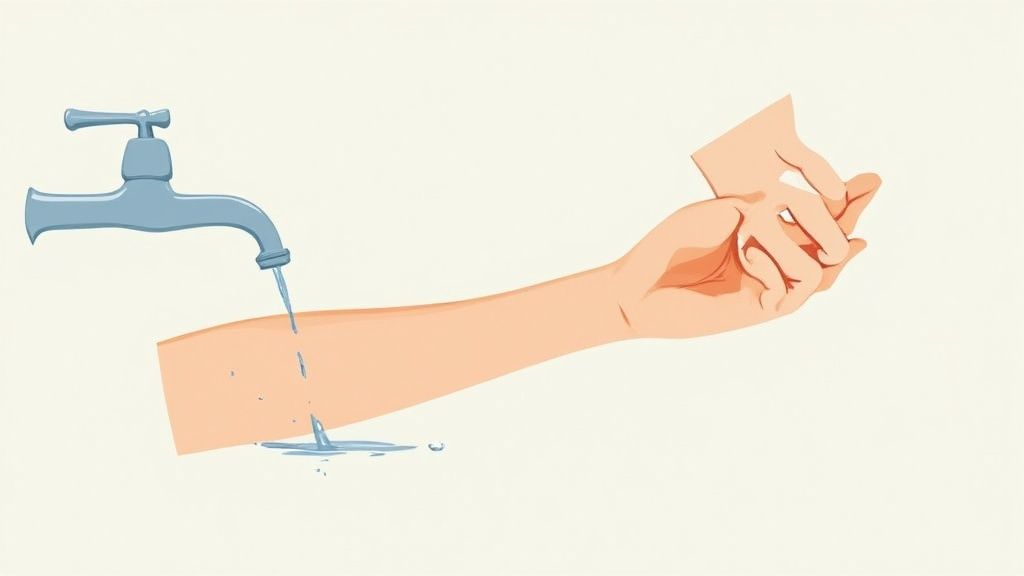
Once the wax is cool and solid, you can start thinking about getting it off. The most important thing here is to be patient. Whatever you do, resist the urge to scrape or pick at it. That’s a surefire way to irritate or even break your skin.
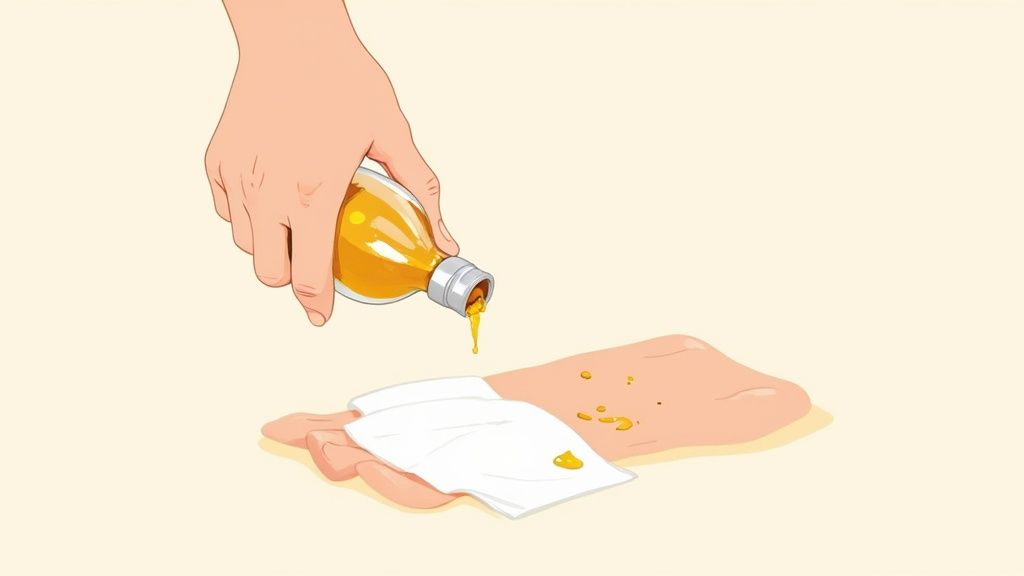
The good news is that the best tool for the job is probably already in your kitchen or bathroom cabinet: oil. Candle wax is what’s known as lipid-soluble, which just means it dissolves in other oils. This makes oil the perfect, gentle solvent to break the wax’s grip on your skin without any harsh scrubbing.
Let Household Oils Do the Work
You don’t need a fancy product for this. Simple, skin-friendly oils are your best bet, and they work like a charm.
Some of my go-to choices include:
- Coconut Oil: A great natural moisturiser that’s always kind to the skin.
- Olive Oil: This kitchen staple breaks down wax effortlessly.
- Baby Oil: Since it's made for sensitive skin, it’s an incredibly safe option.
- Vitamin E Oil: This one does double duty—it removes the wax and nourishes your skin at the same time.
Getting the wax off is easy. Just apply a generous amount of your chosen oil over the hardened wax and the skin right around it. Let it sit for a minute or two, which gives it time to soak in and loosen things up.
Pro Tip: Don't skimp on the oil. A good, thick layer ensures the entire wax patch gets saturated. This makes it much easier to wipe away and saves you from having to rub the same spot over and over.
After letting the oil work its magic, grab a soft cloth or cotton pad. Use a gentle, circular motion to wipe everything away. The wax should lift off with very little effort. If you have a few stubborn bits left, just add a bit more oil and repeat. It's a technique professionals swear by. In fact, a survey noted that 85% of estheticians prefer oil-based products for wax removal, as highlighted in the meeting materials from the California Board of Barbering and Cosmetology.
Try a Warm Compress for Minor Drips
If you're only dealing with a tiny spot or a very thin layer of wax, a warm compress is a decent oil-free alternative.
Simply soak a clean washcloth in warm water (not hot!), wring it out, and hold it over the wax for about 30-60 seconds. The gentle heat will soften the wax just enough for you to wipe it away. This method is handy, but it’s really only for the smallest of spills. For anything more substantial, oil is definitely the more effective solution.
Of course, getting wax on your favourite jeans is a whole different ball game. For fabric-related mishaps, our guide on how to get candle wax out of clothes has all the tips you'll need.
Comparing Wax Removal Methods at a Glance
With a few options available, it helps to see how they stack up. This quick comparison can help you choose the right method for your situation.
| Method | Best For | How It Works | Key Tip |
|---|---|---|---|
| Cool & Pop | Small, thick drips on less sensitive skin (e.g., fingertips). | Cooling the wax makes it brittle, allowing it to pop off in one piece. | Apply a cold pack for 30 seconds first to help it harden completely. |
| Oil Application | Large patches, thick layers, and sensitive skin areas. | Oil dissolves the bond between the wax and skin for gentle removal. | Be generous! A thick layer of oil prevents repeated rubbing and irritation. |
| Warm Compress | Very small, thin layers of wax or minor residual specks. | Gentle heat softens the wax, making it easy to wipe away. | Use warm, not hot, water to avoid irritating or burning the skin. |
Ultimately, oil is the most versatile and skin-safe method, but a warm compress or even the "cool and pop" trick can work well in the right circumstances.
Common Mistakes That Can Damage Your Skin
When you've just spilled hot wax on yourself, your first instinct might be to panic and try to get it off as fast as possible. But knowing what not to do is just as crucial as knowing the right way to handle it. Acting too quickly without thinking can easily turn a minor mishap into a bigger problem.
The most common impulse is to start picking at the hardened wax. It seems logical, but it's a move that often backfires. Using your fingernails or, worse, grabbing a sharp object like tweezers can easily break the skin's surface. Suddenly, you've created an open wound that's susceptible to infection and will take far longer to heal than the initial red mark.
Say No to Harsh Chemicals and Extreme Temperatures
Another gut reaction is to reach for something strong from under the sink, like rubbing alcohol or another household solvent. While these might seem like a quick fix, they are far too aggressive for your skin, especially when it's already stressed from the heat.
These chemicals strip away your skin's natural oils, leaving it dry, red, and seriously irritated. They compromise the skin's protective barrier, which is the exact opposite of what you want to do.
Crucial Warning: Never apply intense, direct heat or cold. Blasting the area with a hairdryer can re-melt the wax and cause a much more severe burn. Likewise, pressing an ice pack directly onto the wax can damage the already sensitive skin tissue.
Keep these other common missteps in mind to avoid making things worse:
- Scrubbing Too Hard: Using an abrasive sponge or a rough towel will only aggravate the area and can cause tiny tears in your skin.
- Using Hot Water: Trying to melt the wax off in a hot shower is a bad idea. It can spread the melted wax over a larger area and increase the risk of a burn.
- Forgetting Aftercare: Once the wax is gone, the job isn't done. Ignoring the area can leave it feeling dry, tight, and irritated.
When it comes to wax on your skin, patience is your best friend. The gentle methods work perfectly well and keep your skin healthy. Of course, the best strategy is prevention. Brushing up on some top candle safety tips for a cozy home can help you avoid these little accidents altogether.
Caring for Your Skin After Getting Wax Off
So, the wax is gone. That's the main hurdle cleared, but your skin still needs a little attention. It's just been exposed to heat and a bit of pulling, so some simple aftercare will help it settle down and prevent any lingering redness or irritation.
First things first, gently clean the area. If you used an oil to help lift the wax, you’ll want to wash off that leftover residue. A mild, fragrance-free soap with some lukewarm water is perfect. Don't scrub—just pat it dry with a soft, clean towel. Your skin is a bit sensitive right now, so be gentle.
Soothe and Hydrate Your Skin
With the area clean and dry, it's time to moisturize and calm things down. Applying something soothing helps your skin get back to normal and reduces any inflammation. You want to add hydration back without using anything that could cause more irritation.
Here are a few go-to options that work wonders:
- Aloe Vera Gel: There’s a reason this is a classic remedy for irritated skin. It has fantastic natural anti-inflammatory properties that immediately cool and soothe any tenderness.
- Calendula Cream: This is another excellent choice. Calendula is well-known for its healing abilities, making it great for calming stressed skin and helping it recover quickly.
- Unscented Lotion: Sometimes simple is best. A basic, gentle moisturizer will rehydrate the skin without any added perfumes that might cause a reaction.
Knowing how to properly apply these can make all the difference. For instance, using pure aloe gel for skin is a great way to tap into its natural soothing benefits for a faster recovery.
Here’s a little pro-tip: a cool compress can be a game-changer. If your skin still feels a bit warm or looks red, just soak a clean cloth in cool water and hold it on the area for 5-10 minutes. It provides instant relief and helps bring down redness fast.
A little bit of aftercare ensures your skin bounces back without any fuss. On that note, the type of candle you use matters, too. Understanding if soy candles are non-toxic can help you choose products that are gentler on your skin from the start.
When You Should See a Doctor for a Wax Burn
Thankfully, most run-ins with candle wax are minor and easy to handle at home. But it's important to know when a simple accident becomes something more serious. Your skin is your body's first line of defence, and some burns just need a doctor's touch to heal correctly and avoid nasty complications.
When in doubt, always play it safe. A quick trip to a clinic or a call to your doctor can make all the difference.
Signs That Require Medical Attention
Don't try to tough it out if you spot any of these symptoms. Getting a professional opinion right away is the best way to prevent infection and minimize scarring.
Keep an eye out for these red flags:
- Serious Blistering: A single, tiny blister is one thing. But if you see large, deep, or widespread blistering, it’s a sign of a more significant burn.
- Signs of Infection: Is the pain getting worse instead of better? Watch for spreading redness, swelling, or any pus or yellowish fluid weeping from the area. These are classic signs of an infection taking hold.
- Large Burn Area: As a rule of thumb, if the burn covers an area bigger than the palm of your hand, it’s time to get it checked by a professional.
- Location Matters: Any burn on a sensitive or critical part of the body—like the face, hands, feet, genitals, or over a major joint—needs immediate medical attention.
A burn that looks white, leathery, or charred signals a third-degree burn. This is a medical emergency, and you should seek help right away instead of trying to treat it yourself.
Aside from wax burns, it’s always a good idea to know the general signs indicating when to see a dermatologist for any skin-related issue. Trust your gut—if it looks or feels wrong, getting it looked at is always the smart move.
Frequently Asked Questions About Wax Removal
https://www.youtube.com/embed/v_RuKEnUXOw
Even with the best techniques, you might run into some tricky situations when dealing with a wax spill. Let's tackle some of the most common questions that pop up.
How Do You Remove Coloured Candle Wax?
Seeing a bright red or blue splotch of wax on your skin can be a bit alarming, but don't worry. The process for removing coloured wax is identical to removing plain wax. The dyes used in candles are designed to dissolve in oil, just like the wax itself.
All you need to do is apply a good amount of oil—coconut, olive, or even baby oil works perfectly—right on top of the hardened coloured wax. Give it a minute or two to work its magic and break down both the wax and the dye. Then, just gently wipe it all away with a soft cloth. If any faint tint remains, a little soap and warm water will take care of it.
What Is the Best Way to Get Wax Out of Body Hair?
This is probably one of the most dreaded wax scenarios. It's uncomfortable, and the first instinct is often to just pull at it, but that's the last thing you should do. The oil method is your best bet here, as it not only softens the wax but also lubricates the hair, letting the wax slip right off without any painful yanking.
Really saturate the waxy hair with oil, making sure you get it all the way down to the skin. Let it soak for a few minutes. From there, you can use your fingers or a soft cloth to gently work the wax out, always moving in the same direction your hair grows. For more answers to common candle questions, feel free to check out the FAQs about Shivora candles.
A warm shower can also work wonders. The combination of warm water and soap helps loosen the wax's grip, allowing you to wash it away with minimal fuss and discomfort.
What Can I Use if I Do Not Have Any Oil?
Caught without any oil on hand? No problem. A thick, oil-based lotion or even some petroleum jelly can do the job quite well. Just slather a generous layer over the wax, let it sit for about five minutes to soften everything, and then wipe it away.
Another great alternative is a simple warm compress. Soak a washcloth in warm—not hot—water, wring it out, and just press it against the wax. The gentle, steady heat will soften the wax, making it easy to remove without any oil at all.
At Shivora Candles, we believe in creating a beautiful and safe ambiance. Our premium soy wax candles are crafted for a clean, long-lasting burn, bringing luxury and comfort to your home. Discover your new favourite scent today at https://shivoracandles.com.
