

You've found a thoughtful scent, picked out a jar, and now you're weighing whether to pour a candle yourself or buy one made by a Canadian maker. DIY can turn a useful home-fragrance gift into something personal, but the cost depends on more than wax and a wick. Your equipment, batch size, recipient's preferences and time all matter.
These candle gift ideas DIY projects are designed for Canadian makers, with honest cost considerations, packaging suggestions and safety advice. You'll find out when making a candle makes sense, when a ready-made gift is the practical choice, and how to make either option feel considered.
Table of Contents
- Why Handmade Candles Make Meaningful Gifts
- Gathering Your Candle-Making Supplies
- Three DIY Candle Gift Projects to Try
- What DIY Candles Really Cost in Canada
- Packaging and Presenting Your Candle Gift
- Candle Safety Tips Every Gift Giver Should Share
- When to Buy Instead of Make
Why Handmade Candles Make Meaningful Gifts
At a birthday dinner, a housewarming or a holiday gathering, a candle can be a welcome home gift. Make it yourself and the choice of scent, vessel and label becomes part of the gesture. A familiar fragrance can remind someone of a place or season, while a simple handwritten tag shows that you made the gift with them in mind.
Crafting is already a familiar pastime for many Canadians. A Canadian consumer craft study reported that 44% of Canadian households participated in crafting at least once during 2011, and Statistics Canada found that half of Canadians aged 15 and over participated in creative activities in 2016, with crafts as the most popular category (Canadian consumer craft study, Statistics Canada on creative activities). These figures concern crafting broadly, not candle-making specifically, but they help explain why a handmade gift can feel familiar rather than niche.
A DIY candle also gives you room to match the gift to the recipient. A host who enjoys soft florals might appreciate a restrained scent and reusable-looking glass vessel. A friend who gravitates toward warm, cosy notes may prefer a candle with a simple label and understated packaging. If you don't know someone's fragrance preferences, choose a more modest scent or make the personal touch the label and presentation instead.
There's a practical side, too. A candle is a home-decor object, and small choices can make it feel suited to someone's space. Keep the vessel uncomplicated, label the fragrance clearly and include care instructions. You don't need years of experience to create a thoughtful gift, but you do need to follow the instructions for your wax, wick and fragrance materials. The projects below focus on that balance: personal, useful and realistic to make at home.
Gathering Your Candle-Making Supplies
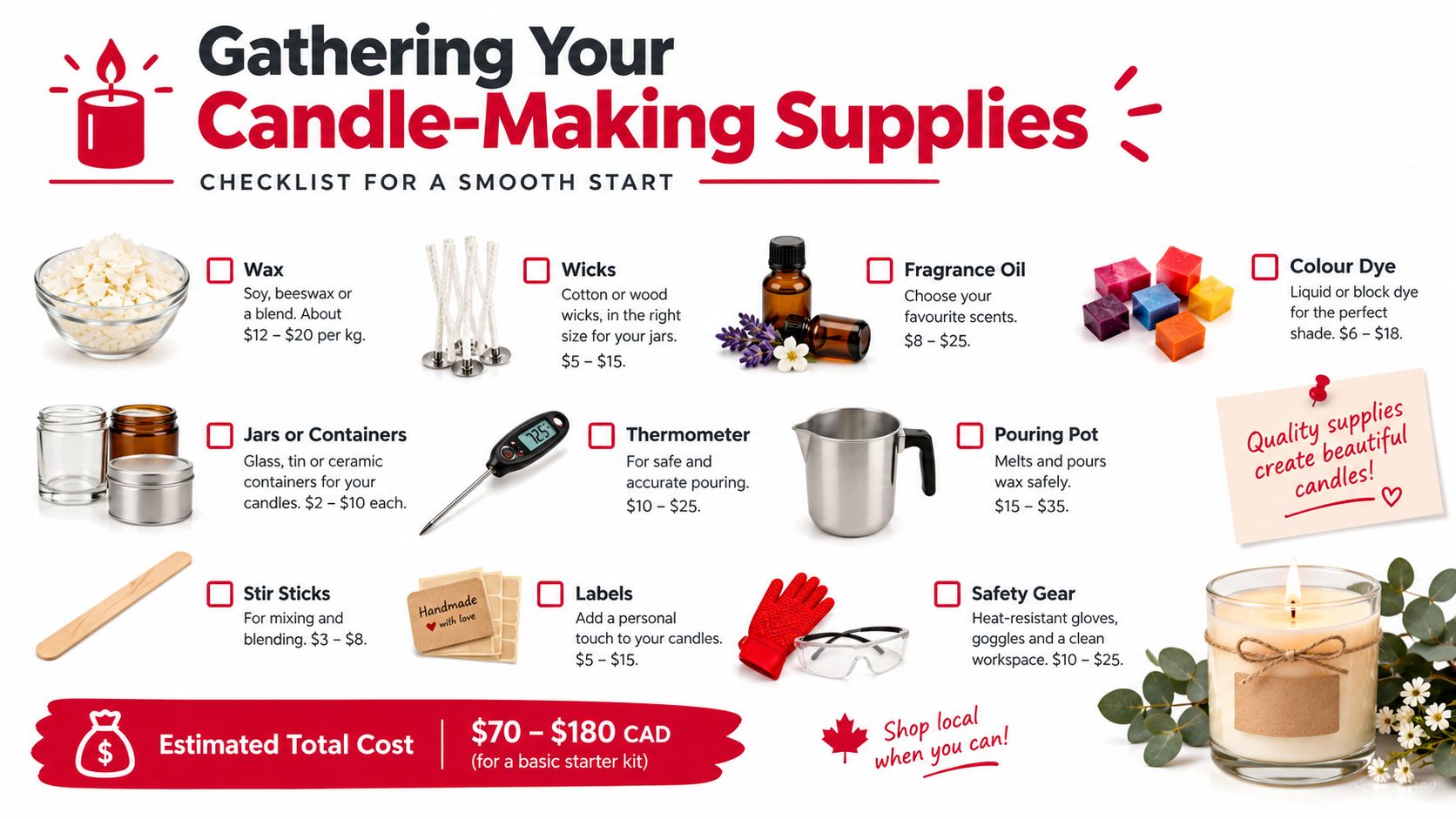
A tidy workspace and materials that suit one another will do more for a beginner candle than a drawer full of extras. Choose a candle-making wax, a wick specified for your vessel, fragrance oil labelled for candle use, and a heat-safe container intended for candles. A repurposed jar may look charming, but don't assume a container is suitable just because it held food or cosmetics. It needs to withstand candle heat.
Start with the essentials
- Wax: Soy wax is a popular choice for home candle projects. Buy a wax intended for container candles, then follow its supplier's directions for melting and adding fragrance. If you're comparing wax types, this guide to soy candle wax for candle making is a helpful starting point.
- Wick: Cotton and wood wicks behave differently, and neither is automatically right for every jar. Match the wick to the wax and vessel using the supplier's guidance, then test the finished candle. A wick that's too small may not perform as intended; one that's too large can produce an unsuitable flame.
- Fragrance oil: Use fragrance made for candles and follow its recommended use instructions. Check the supplier's specifications, including whether it is phthalate-free if that matters to your material choices.
- Vessel: Use a candle-safe vessel with enough room to centre and secure the wick. Keep the outside clean and dry before pouring.
- Melting and measuring tools: A dedicated melting pitcher, a double boiler setup and a thermometer help you control the process. Don't melt wax directly over an open flame, and don't guess at temperatures.
- Finishing supplies: Wick holders or simple centring tools, labels and a pen let you keep the wick in position and identify the scent.
Buy from a supplier that provides clear instructions for its wax, wicks and fragrance oils. You can reuse suitable measuring tools across batches, which helps spread their cost over more than one gift. The wax, fragrance and vessels, by contrast, need to be counted in the cost of each batch.
Practical rule: Don't combine ingredients by guesswork. Follow the instructions for the specific wax and wick you've bought, and test your candle before giving it away.
Three DIY Candle Gift Projects to Try
These projects move from simple personalisation to a coordinated gift set. Whichever one you choose, test the candle before gifting it and keep the scent and vessel appropriate for the person receiving it.
A simple single-scent candle
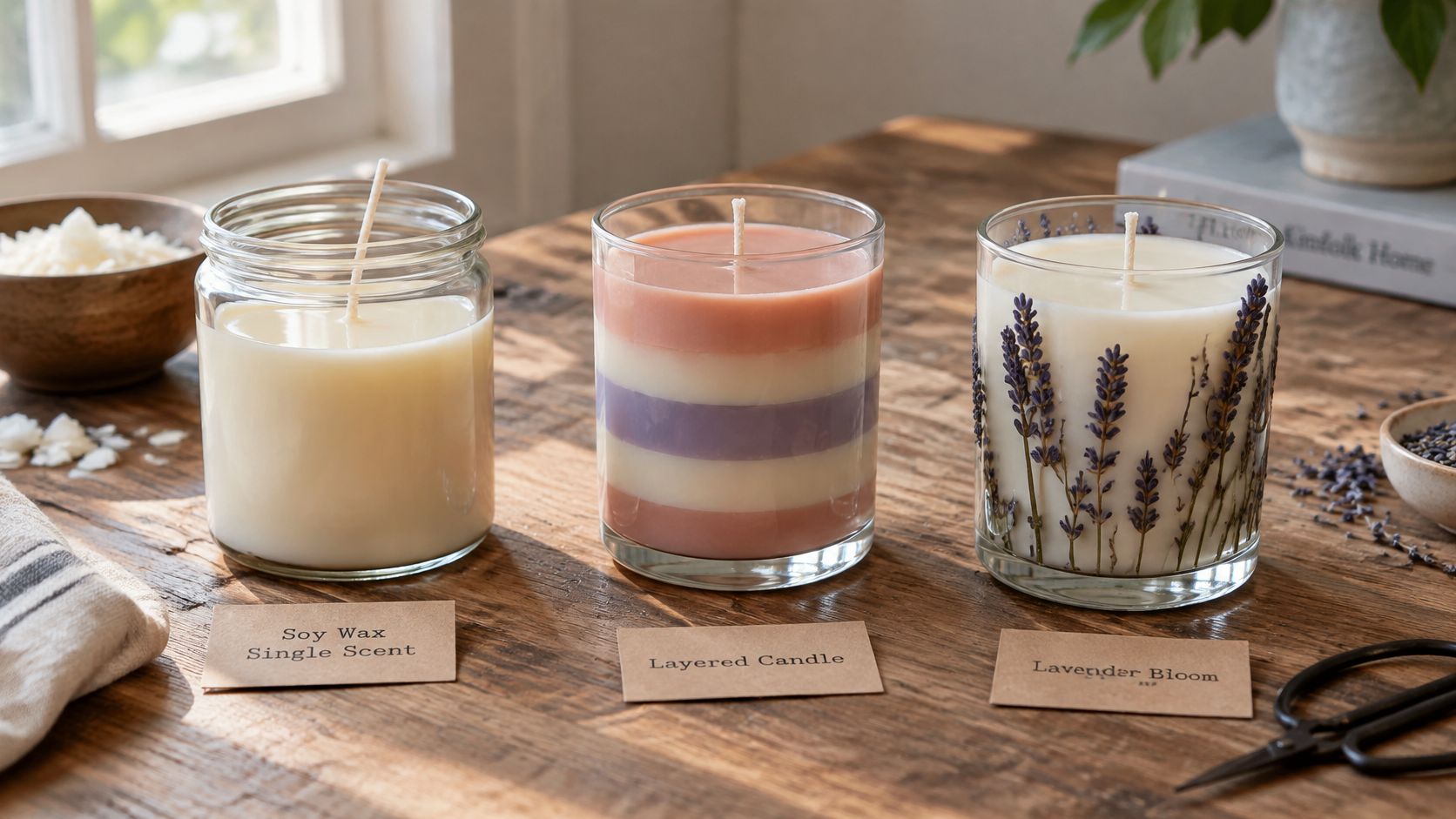
For a first project, use one candle-safe vessel, one wick selected for that vessel, and a single fragrance. A soft vanilla or gentle wood-inspired scent can suit a host gift, but ask yourself whether the recipient likes scented products before making a strongly fragranced candle. Melt and pour the wax according to its supplier's instructions, keep the wick centred as the wax sets, and let the candle cure for the period the supplier recommends.
A clean label can make a plain jar feel intentional. Write the fragrance name by hand, or add a short note about why you chose it. This is a good project for a friend who enjoys cosy evenings or a host whose home style you know.
A two-tone candle
A layered candle takes more patience because each pour needs to set enough to support the next. Choose colours that complement one another, and consider keeping both layers to one fragrance if you're still learning. If you do use different fragrances, make sure they work together and that each layer follows the wax supplier's guidance.
Let the first layer set before pouring the next, taking care not to disturb the wick. This makes a more decorative gift for someone who enjoys colour and home décor, but it's less forgiving than a single-scent candle. A small test is a better use of materials than making a whole gift batch before you know how the layers behave.
A personalised candle and wax-melt set
Pair a tested candle with a matching label and a wax-melt add-on for a more complete present. This can suit someone who likes home fragrance but prefers a warmer rather than an open flame. Check that they own a suitable wax warmer before including melts, and provide the warmer's safety instructions if they'll be using one.
If you'd rather assemble a ready-made pairing, Shivora Candles offers hand-poured soy candles and wax melts made in Ontario, Canada. Either way, keep the packaging simple and make the recipient's scent preferences the deciding factor.
Here's a visual demonstration of candle-making techniques to consider alongside the supplier instructions for your chosen materials.
What DIY Candles Really Cost in Canada
A homemade candle isn't automatically a cheaper candle. Wax, wicks, fragrance, vessels and labels all contribute to the per-gift cost, but so do the tools you buy for the first batch, shipping for supplies and any materials lost to a failed test. Your time belongs in the calculation, too, even if you don't assign it a dollar value.
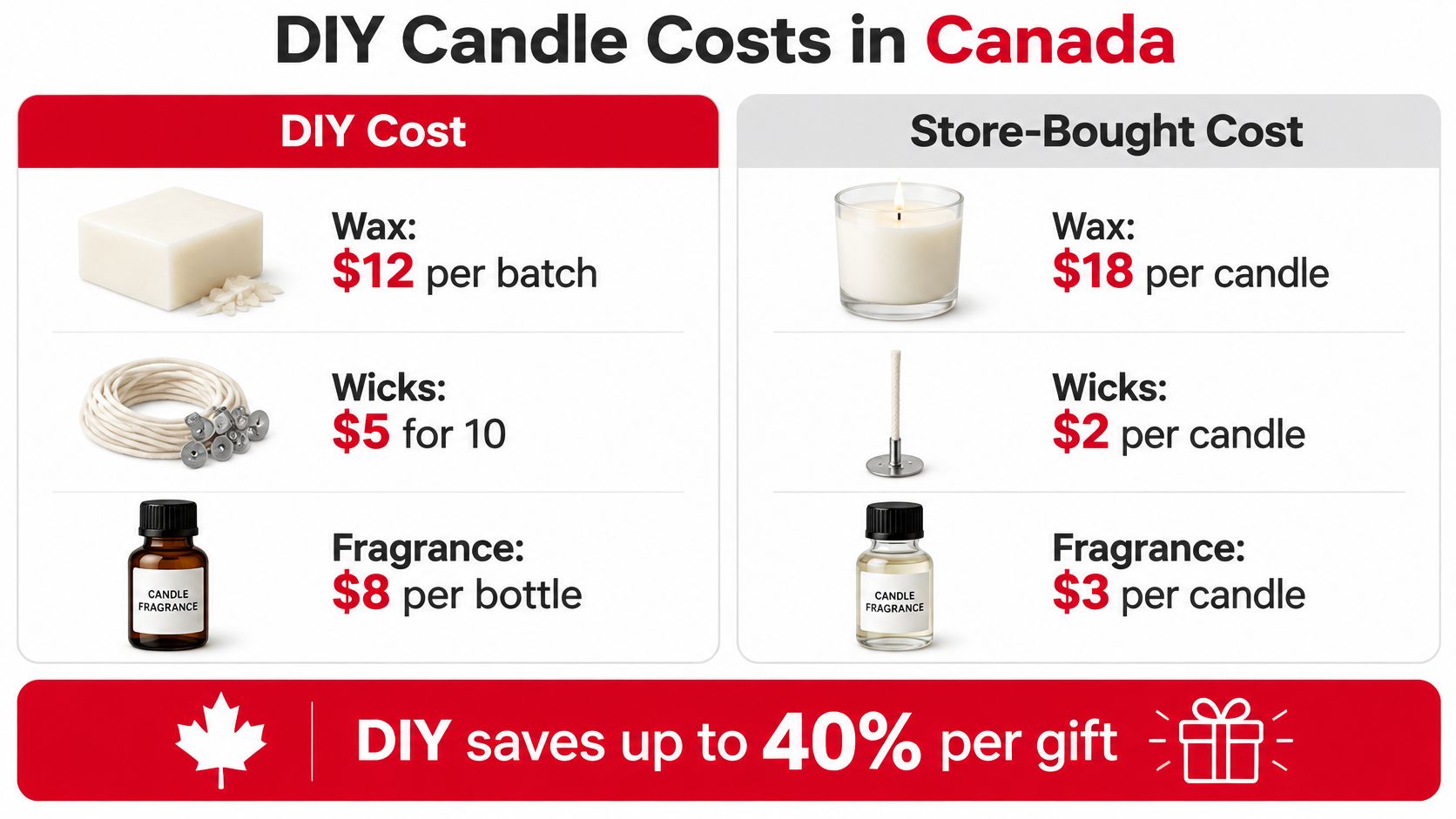
For a useful comparison, add up the materials used in a batch and divide by the number of finished candles that pass your checks. Keep reusable equipment separate from consumables, but remember that you paid for the equipment and may need it again. Include packaging and delivery charges on supplies. If you're testing different wicks or pouring a candle that doesn't turn out as planned, account for those materials rather than treating them as free.
When a batch starts to make sense
Making one or two gifts can be the most expensive way to try candle-making: you may need to buy tools and supplies in quantities larger than the project uses. A batch can make better use of those purchases, provided you've tested the recipe and can use or give away the finished candles. That doesn't make every larger batch economical. Unwanted fragrance, unsuitable vessels or failed test candles can quickly cancel out the savings.
The budget context matters for gift buyers, too. Deloitte Canada data indicates that holiday gift spending is expected to rise only modestly, that consumers are reducing other discretionary purchases by 8%, and that 56% of Canadians prefer gifts from local or small businesses (Deloitte Canada holiday spending coverage). That makes a Canadian-made gift appealing to many shoppers, but it doesn't mean DIY is always the lower-cost route.
The fairest comparison is your tested, complete per-candle cost against the price of a finished candle you'd be happy to give, with shipping and your time considered.
DIY may be worthwhile when you enjoy the process, want a specific personal detail or are making several gifts with supplies you already own. If you need one polished gift quickly, buying a Canadian-made candle may be simpler and better value.
Packaging and Presenting Your Candle Gift
A thoughtful presentation doesn't need an elaborate box. A clear label, careful wrapping and a short note can make a candle feel ready to give without hiding the vessel or adding packaging the recipient won't use.
Start with the information the recipient needs: the candle's scent, any relevant care instructions and a note that it should be burned on a stable, heat-resistant surface. A handwritten tag works well for a one-off gift. For a batch, printable labels can keep the look consistent while leaving room for a personal message.
Kraft paper and twine suit a simple, rustic presentation. If you add dried botanicals, keep them out of the candle and away from the wick and flame. Avoid decorating the wax or vessel in a way that could fall into the melt pool or interfere with burning. For ideas on practical presentation, see this guide to candle packaging trends.
A wax melt can be a useful companion for a recipient who prefers flameless fragrance, though it still needs to be used in an approved warmer and never left unattended. One example is the Rose Quartz Soy Wax Melt Canada – 75g, a hand-poured Canadian soy wax melt with a fruity-floral fragrance featuring red currant, raspberry, peach, rose, white lilies and jasmine.
Sending a candle through the mail
Use a sturdy outer box and enough cushioning to stop the vessel shifting in transit. Protect the candle from knocks, keep the lid or label from rubbing against the glass, and include a care card where it won't get lost in the packing material. For shipments within Canada, compare the packed size and delivery cost before choosing the box, especially if you're sending several gifts.
An empty vessel shouldn't automatically be labelled recyclable across Canada. Municipal waste responsibilities and producer programs differ by location, so ask recipients to follow their local instructions and check with their municipality or provincial or territorial government when uncertain (Environment and Climate Change Canada on reducing waste). Close with a handwritten card. A few specific words about the scent or the person you made it for often matter more than decorative extras.
Candle Safety Tips Every Gift Giver Should Share
A candle gift should come with clear use instructions, not just a pretty label. Health Canada estimated that candles were responsible for nearly 800 fires per year in Canada on average between 1999 and 2008, with annual estimates including 8 fire deaths, 115 fire injuries and CAD $26.2 million in property damage (Health Canada's candle safety guidance). These are historical estimates, not current nationwide counts, but they're a good reason to treat safety information as part of the gift.
Write a short care card in plain language. Tell the recipient to keep the candle away from children and pets, never leave it burning unattended, use a stable heat-resistant holder or surface, and keep the flame away from drafts and combustible decorations. Include the care directions recommended by the candle and wick supplier, including how to prepare and extinguish the wick safely.
A small care card doesn't make a handmade gift less personal. It shows that you've thought about how the recipient will use it.
Don't assume that a vessel is suitable for repeated burning just because it looks sturdy. Give the candle on a level, uncluttered surface, and encourage the recipient to stop using it if the container becomes damaged or the candle behaves unexpectedly. Store it away from heat and direct sunlight when it isn't in use.
For a ready-made example of the kind of practical guidance candle users need, Shivora's candle safety tips cover habits that support careful candle use. Match any advice you include on your own card to the materials in your candle, and don't promise that a candle is completely safe. Responsible instructions help the recipient enjoy the gift with care.
When to Buy Instead of Make
Buying a candle is a sensible choice if you're short on time, don't have a suitable workspace or prefer choosing a finished scent to learning the process. It can also make more sense when you're giving a single gift and would need to buy tools and materials from scratch. Your time and the cost of testing count, even when the finished candle looks simple.
A Canadian-made candle still carries a handmade spirit when it comes from a small-batch producer. Shivora Candles makes hand-poured soy candles and wax melts in Ontario, Canada, for customers shopping for home fragrance and gifts. Buying ready-made also means you can focus on selecting a scent and presentation instead of troubleshooting a wick or a pour.
Consider the recipient before deciding. If you know their preferred fragrance and want a custom label, DIY may be the more personal route. If you're uncertain about scent, working to a tight deadline or hoping for consistent finished presentation, a ready-made candle can take the pressure off. Someone who tried making candles and discovered they prefer the finished product hasn't failed at DIY. They've learned what works for them.
For a ready-made gift, Shivora's Buttercream & Vanilla and Birchwood & Cranberry candles offer different scent directions to consider when choosing for someone's home. Check the product details to choose the format and fragrance that fit your recipient, and include a card if you want to keep the personal touch. Shipping across Canada starts at $9.99. Free shipping on orders of $79.99 CAD or more. Some conditions apply.
FAQs
Is candle-making a good beginner gift project?
It can be, if you follow the instructions for your wax, wick and fragrance and test the candle before giving it away. Start with a simple single-scent candle in a suitable vessel rather than experimenting with several layers and fragrances at once.
What if I don't know the recipient's scent preferences?
Choose a modest fragrance, ask someone who knows their preferences, or make the label and packaging personal while keeping the scent uncomplicated. If they avoid open flames, consider a wax melt only if they have an approved warmer and know how to use it safely.
Is a DIY candle always cheaper than buying one?
No. Small projects can carry a higher per-candle cost because you may need to buy tools, supplies and shipping before you can make a gift. Compare the complete cost of materials and testing with the price of a finished candle, and consider whether you'll use leftover supplies.
Can I put a candle in any attractive jar?
No. A container needs to be suitable for candle-making and able to withstand the heat of use. Follow guidance from your vessel, wax and wick suppliers, and don't gift a candle you haven't tested.
Shivora Candles offers hand-poured soy candles and wax melts made in Ontario, Canada, for shoppers choosing a ready-made home-fragrance gift. Browse Shivora Candles for a Canadian-made option when you'd rather spend your time on the note, wrapping and visit with the recipient.

