

Would you still buy a beautiful candle if you knew you shouldn't light it? That question matters more than whether its colour matches your room. Candle art candles can be functional home fragrance, decorative objects, or both, but their appearance doesn't tell you which.
For Canadian shoppers, the useful distinction is burn or display. Separate the shape you love from the wax, wick and care information, and you can choose a piece that suits your home without assuming decorative means safer or more sustainable.
Table of Contents
- What Candle Art Candles Are and How the Styles Differ
- Waxes Wicks and Techniques Behind the Look
- How to Read Candle Labels Before You Buy
- When to Burn a Candle and When to Display It
- Candle Care and Safety for Decorative Pieces
- How to Style Candle Art in Canadian Rooms
- Frequently Asked Questions About Candle Art Candles
- Match a Candle to the Gift and the Room
What Candle Art Candles Are and How the Styles Differ
Candle art candles are candles whose form, colour, vessel or surface is designed to be looked at as much as lit for scent. They can still be functional, but the look is part of what you're buying. A sculpted pillar and a simple candle in an artistically finished jar can both belong in this category.
Artistic doesn't necessarily mean luxury, handmade or scented. Those describe different aspects of a product. Canada's luxury-candle market generated approximately USD 15.5 million in revenue in 2025, according to Grand View Research, but a luxury-market classification doesn't establish whether an individual candle is suitable for burning.
Candle art styles at a glance
| Style | Look | Typical wax |
|---|---|---|
| Sculptural or carved pillar | Free-standing shape, relief, or figurine | Paraffin, beeswax, or blends |
| Layered or marbled container | Colour bands or swirls in a jar or glass | Soy or blended container wax |
| Botanical embed | Dried flowers, herbs, or fruit near the surface | Soy or paraffin with inclusions |
| Painted or textured vessel | Art on the outside of the container | Any container wax, often soy |
| Wood-wick jar | Visible wood wick and a wider flame | Usually soy or a soft blend |
| Wax melt | Small cubes, tarts, or shaped pieces | Soy or other melt wax |
A sculptural or carved pillar makes the wax itself the artwork, with relief, curves or figurative details that change as it melts. A layered or marbled container candle keeps its shape within a vessel while colour bands or swirls provide the visual interest.
A botanical embed candle incorporates visible plant material, so the placement of those inclusions deserves particular attention before lighting. A painted or textured vessel places the artwork outside the wax, although the container still needs to be intended for candle use.
A wood-wick jar adds a visible wick, flame shape and sometimes crackling sound to the presentation. A wax melt provides a shaped fragrance piece without its own wick, although using it requires a suitable warmer.
Choose the kind of beauty you want to keep
Some shoppers enjoy watching a sculptural candle gradually change. Others would rather preserve its silhouette and use a separate jar candle for fragrance. Neither choice wastes the object if you make it deliberately.
A vessel-led design offers another possibility: you may value the container after the wax is finished, provided the maker identifies it as reusable and explains appropriate care. Don't assume every attractive glass is suitable for another candle pour.
A useful test: If you'd keep it on a shelf unlit and still be glad you bought it, it's candle art. If you bought it only for fragrance throw and burn time, you're shopping primarily for a standard scented candle.
Waxes Wicks and Techniques Behind the Look
Say you're comparing a pale sculptural knot with a marbled jar. They might share a colour palette, but the maker needs different materials and methods to produce them. The look is built through deliberate choices, not by adding colour to melted wax.
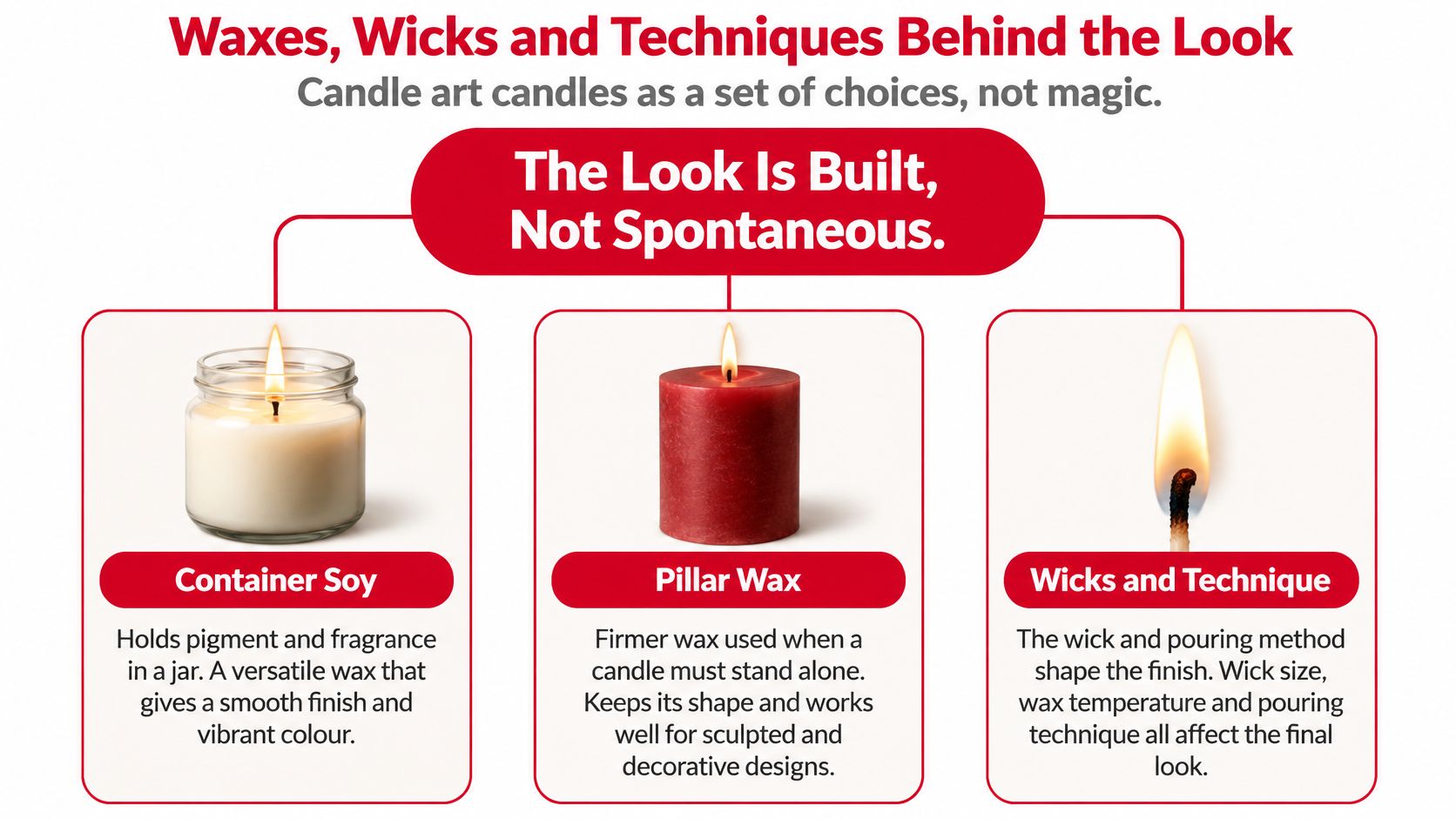
This diagram separates the main decisions behind the finished piece.
Start with the structure
Container soy is formulated to remain supported by a jar while carrying colour and fragrance. A free-standing candle needs a firmer pillar formulation so it can release from a mould and hold its shape.
That's why identifying something as soy alone doesn't tell you enough about its suitability for a particular design. Our guide to candle wax types helps distinguish the materials you'll encounter when comparing containers, pillars and melts.
Think of wax as the canvas, the wick as the tool that must match the canvas, and fragrance as the finishing coat rather than the structure. Changing one component can require changes elsewhere.
Understand the surface treatment
A single pour creates an even-coloured body. Layered pours create separate bands, while marbling introduces swirls rather than a uniform finish. Dyes colour the wax; mica creates a different visual effect and shouldn't be treated as interchangeable with candle dye.
Painting or frosting the vessel moves the artwork onto the glass, allowing the wax itself to remain visually simple. An attractive coating still needs to be compatible with the container's intended use.
- Botanical inclusions: Flowers or herbs near the wall may look delicate, but combustible material can become exposed as wax melts.
- Glitter and heavy decoration: Loose particles can collect around the wick or interfere with the melt pool.
- Display-first finishes: Treat heavily embellished pieces as decorative unless the maker clearly identifies them as designed for burning.
Match the wick to the whole candle
Cotton wicks can produce a compact, steady flame, while wood wicks can create a broader flame and soft crackle. Neither behaviour is guaranteed by the material alone: wick dimensions, jar diameter, wax and fragrance all affect performance.
Only describe a specific product's cotton wick as lead-free, or its wick as wood, when the listing confirms it. Small-batch hand-pouring gives makers opportunities to monitor colour boundaries and fragrance measurements, but consistent results still require controlled formulas, records and burn testing.
How to Read Candle Labels Before You Buy
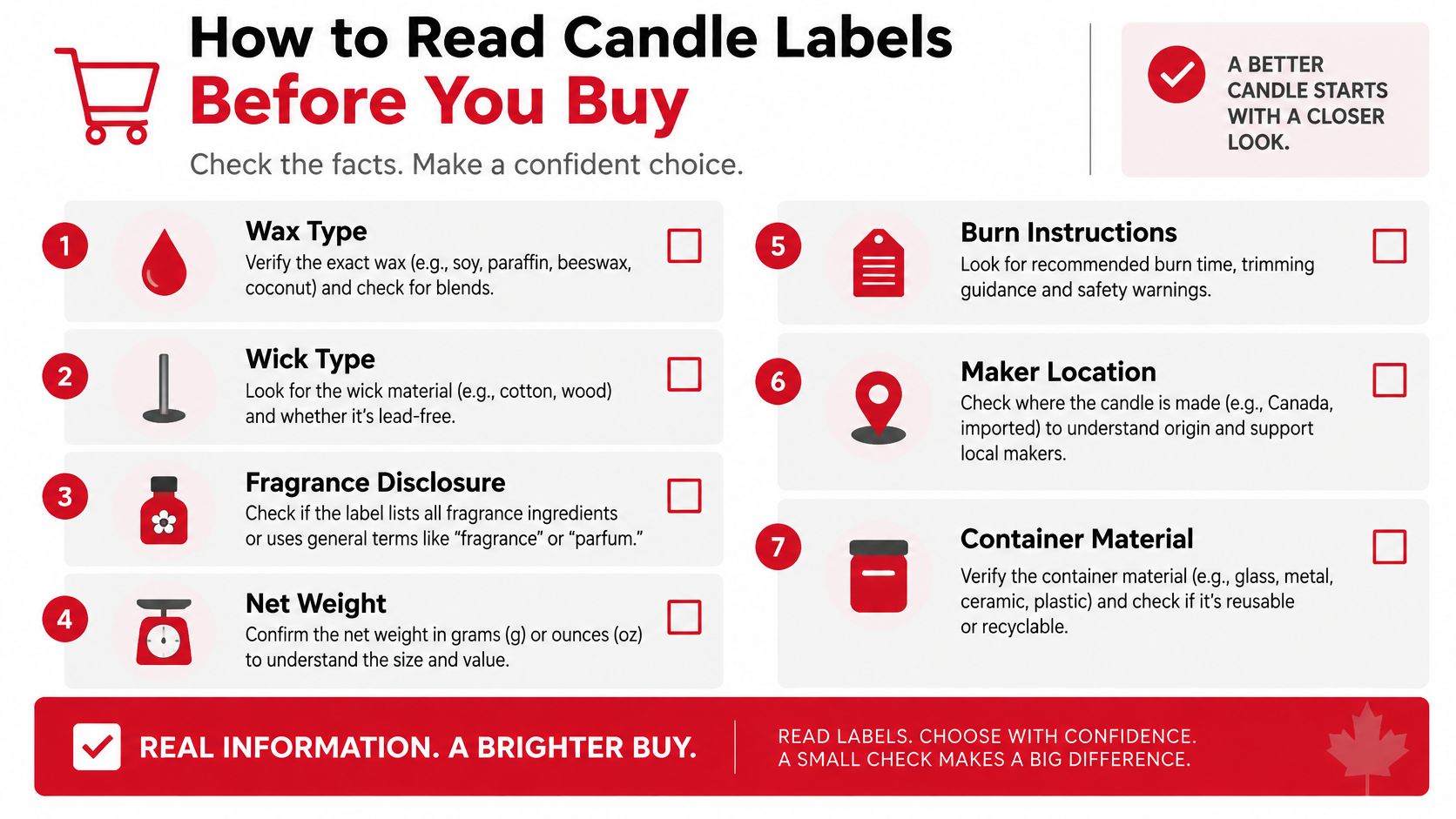
Natural isn't a complete product description. Neither are vegan, artisan or phthalate-free. These terms may describe meaningful material choices, but they don't tell you how a candle behaves when lit or what its overall environmental impact will be.
Read the listing as a verification checklist rather than a collection of reassuring adjectives.
What each label item tells you
| Label item | What it tells you | What it does not prove |
|---|---|---|
| Wax type | Soy, paraffin, or a blend | Lower overall impact or a soot-free burn |
| Wick type | Lead-free cotton or wood, and its size when disclosed | A safety ranking; wood can give a wider flame and crackle |
| Fragrance disclosure | Scent family and stated strength | That a scent suits every room or person |
| Net weight | Amount of wax, such as 8 oz | Burn time without maker guidance |
| Burn instructions | Whether the piece is meant to be lit and how to use it | That it can be left burning unattended |
| Maker location | Where it is poured, such as Ontario | Quality of every batch on its own |
| Container material | Glass, tin, or another vessel | That it is recyclable or reusable unless stated |
Follow that order when comparing products. A photograph can establish colour and shape, but it can't confirm wick construction, vessel suitability or the amount of wax inside.
Look beyond ingredient shorthand
A fair environmental comparison considers wax sourcing, packaging, delivery distance, fragrance strength and realistic container reuse. Reusable glass may be a more useful purchase than single-use plastic packaging when you have a suitable second use for it, but material alone doesn't settle the comparison.
Under the Canada Consumer Product Safety Act, sellers must not offer products that pose a danger to human health or safety or whose labelling or packaging is misleading about safety, as explained in Health Canada's information for direct sellers. Artistic styling shouldn't obscure practical care information.
For another viewing format alongside the written checklist, the following video can be played below.
If you intend to burn a piece, missing burn guidance is a reason to pause the purchase. Ask the maker to clarify unknown wick or container details, and pass over listings that promise complete safety, non-toxic combustion or health benefits without substantiation.
When to Burn a Candle and When to Display It
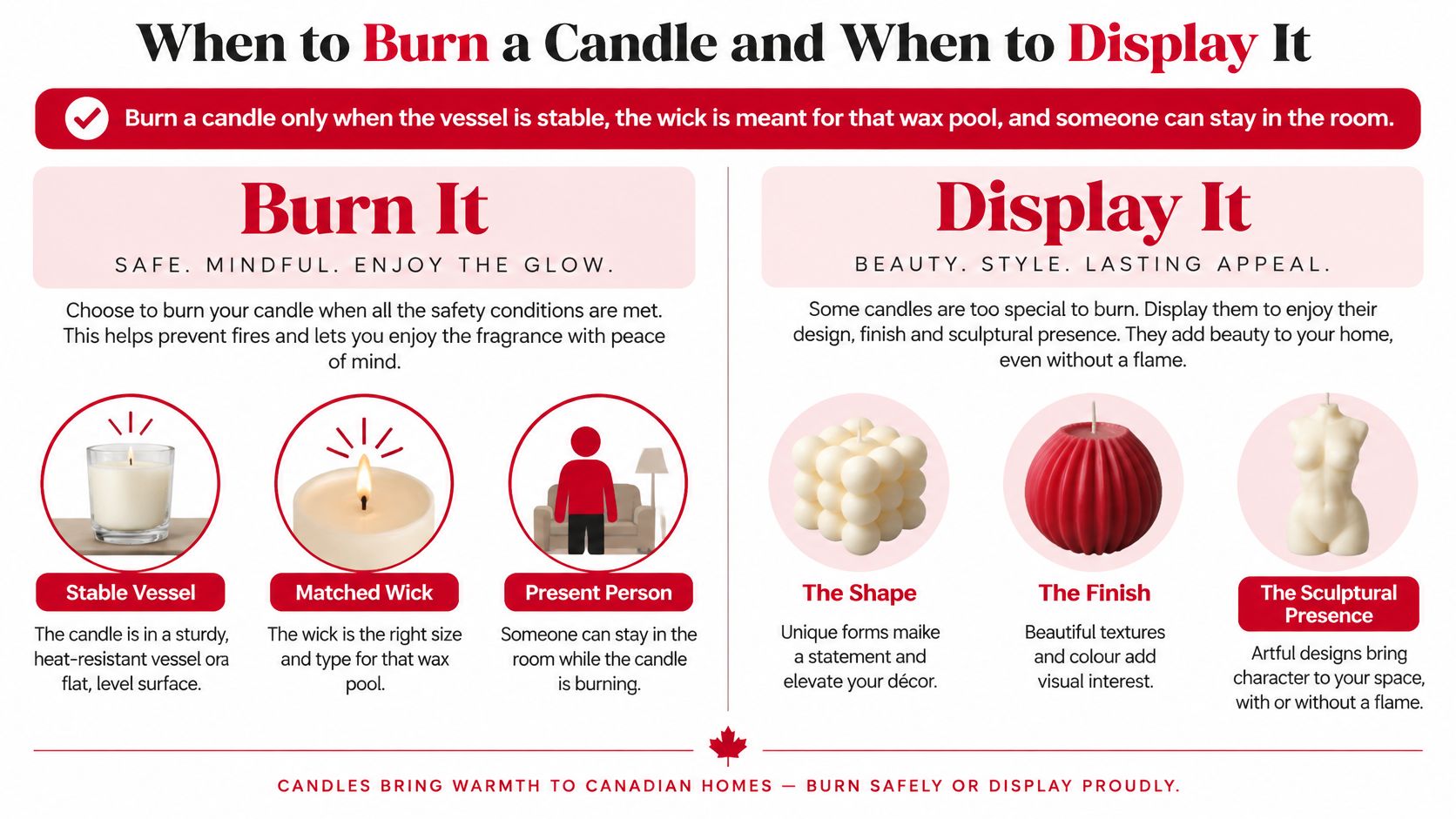
Burn a candle only when the vessel or base is stable, the wick is intended for that wax pool, and someone can remain in the room. Display it when preserving the shape matters most, when combustible embellishments create uncertainty, or when the finish isn't clearly intended to withstand use.
Use the decision as a household choice, not a judgement about whether a candle is beautiful enough to save.
Burn or display by situation
| Situation | Better choice | Why |
|---|---|---|
| Dinner centrepiece left on the table | Unlit sculptural piece or an electric melt warmer used while supervised | No unattended flame |
| Supervised living-room evening | Soy container candle, cotton or wood wick | Stable jar with a wick matched to the wax pool |
| Bedroom wind-down | Modestly scented jar on a clear side table, extinguished before drowsiness | Restrained fragrance without a tall, unstable form |
| Children or pets moving nearby | Wax melts in an inaccessible electric warmer | No open flame, although hot wax remains a hazard |
| Coffee nook or morning ritual | Coffee-and-caramel style soy candle | Scent matches the room while someone is present |
| Fall or winter table | Birch, cranberry, or another seasonal jar | Colour and scent work as décor during supervised use |
A dinner centrepiece that remains behind while everyone moves elsewhere should stay unlit. If you prefer fragrance during a meal, an electric warmer removes the flame but still needs appropriate placement and supervision.
For a living-room evening, a container candle is easier to position securely than a narrow sculpture. A modestly scented bedroom jar can suit reading or getting ready for bed, but not a routine that ends with you falling asleep beside it.
Recognise when the original plan no longer fits
A beautiful jar with an unusually large, restless flame needs attention, not admiration. Extinguish it, let it cool and check the maker's troubleshooting guidance before trying again.
A soft sculpture that starts slumping in a warm room is better relocated to a cooler display spot. Don't light it to correct its shape or place it where leaked wax could damage furniture.
Missing burn instructions mean display-only until the maker confirms otherwise.
In a busy home, a warmer may be easier to manage than an open flame, but reachable hot wax and trailing electrical cords still matter. Choose a location children and pets can't access, rather than treating flameless as hazard-free.
Candle Care and Safety for Decorative Pieces
Health Canada estimates that candles caused nearly 800 fires annually between 1999 and 2008, based on information from Ontario, Manitoba, Alberta and British Columbia rather than a complete national census, with reported contributing behaviours including leaving candles unattended, falling asleep and positioning candles near combustible materials or where they could be knocked over.
A practical routine for burnable pieces
- Prepare the wick. For a cotton wick, about 6 mm (¼ inch) is a common trimming starting point unless the maker specifies otherwise. For wood, remove loose charred debris from the cooled wick according to its instructions so the exposed edge can catch evenly.
- Choose a suitable surface. Set the candle on a level, heat-resistant surface away from drafts, curtains, paper and dried décor. A decorative tray must also tolerate heat; attractive doesn't automatically mean suitable.
- Control access. Keep the candle beyond the reach of children and pets, including tails and curious paws. Leave enough clear space that someone reaching for a book or glass won't pass over the flame.
- Manage the melt pool without chasing it. For a container candle, allow the first burn to develop the melt pool described by the maker, but don't extend the session beyond its stated limit just to reach every edge. Later burns should also stay within that limit, and you should extinguish the candle before leaving or becoming sleepy.
- Stop before the wax is exhausted. Follow the maker's stopping point rather than burning until the vessel looks empty. Let the wax and container cool fully before moving them.
- Respond to warning signs. Extinguish a candle that smokes heavily, becomes unstable or develops a cracked container. Don't continue burning a damaged piece to use up the remaining wax.
Adapt the routine to the format
Free-standing candles need a heat-resistant holder that can catch flowing wax, not just support the original footprint. Decorative ridges may melt unevenly, so keep the surrounding area clear even when the candle begins with a tidy silhouette.
For melts, use a suitable warmer on a stable, clear surface and switch it off when you leave the room. Keep it away from curtains and bedding, and follow its instructions for removing cooled wax.
Our Candle Care & Safety guidance provides further wick and burn-session advice. Material quality and an appropriately matched lead-free wick can support a tidier jar, but no candle should be treated as soot-free or completely safe; attentive use remains essential.
How to Style Candle Art in Canadian Rooms
A candle can work as a room accent, a fragrance source, or both. Decide whether a piece will be burned or kept on display before arranging it. Then group objects by height and colour: a sculptural candle beside a quieter jar and a low bowl or book creates variation without crowding the surface. Keep props away from any candle you plan to light.
Amber glass can complement warm kitchen finishes, while pale wax can sit against bedroom textiles. A saturated vessel can provide one colour accent on a neutral shelf. The look of a candle, though, does not tell you what its wax or wick is made from.
An entry console with an unlit sculpture
Use a sculptural piece as the focal point, with a shallow key bowl nearby. A console is a natural place for an unlit display, especially in a busy passage where a flame could be forgotten.
For adjacent kitchen shelving, Guynn Furniture & Mattress's ideas for decorating open kitchen shelves offer context for balancing practical and decorative objects. Keep shelf candles unlit rather than placing a flame beneath another shelf.
A coffee table with a supervised jar
Keep the arrangement low enough for conversation and leave clear space around a jar candle. These coffee-table styling ideas can help organise the surface without making it feel crowded.
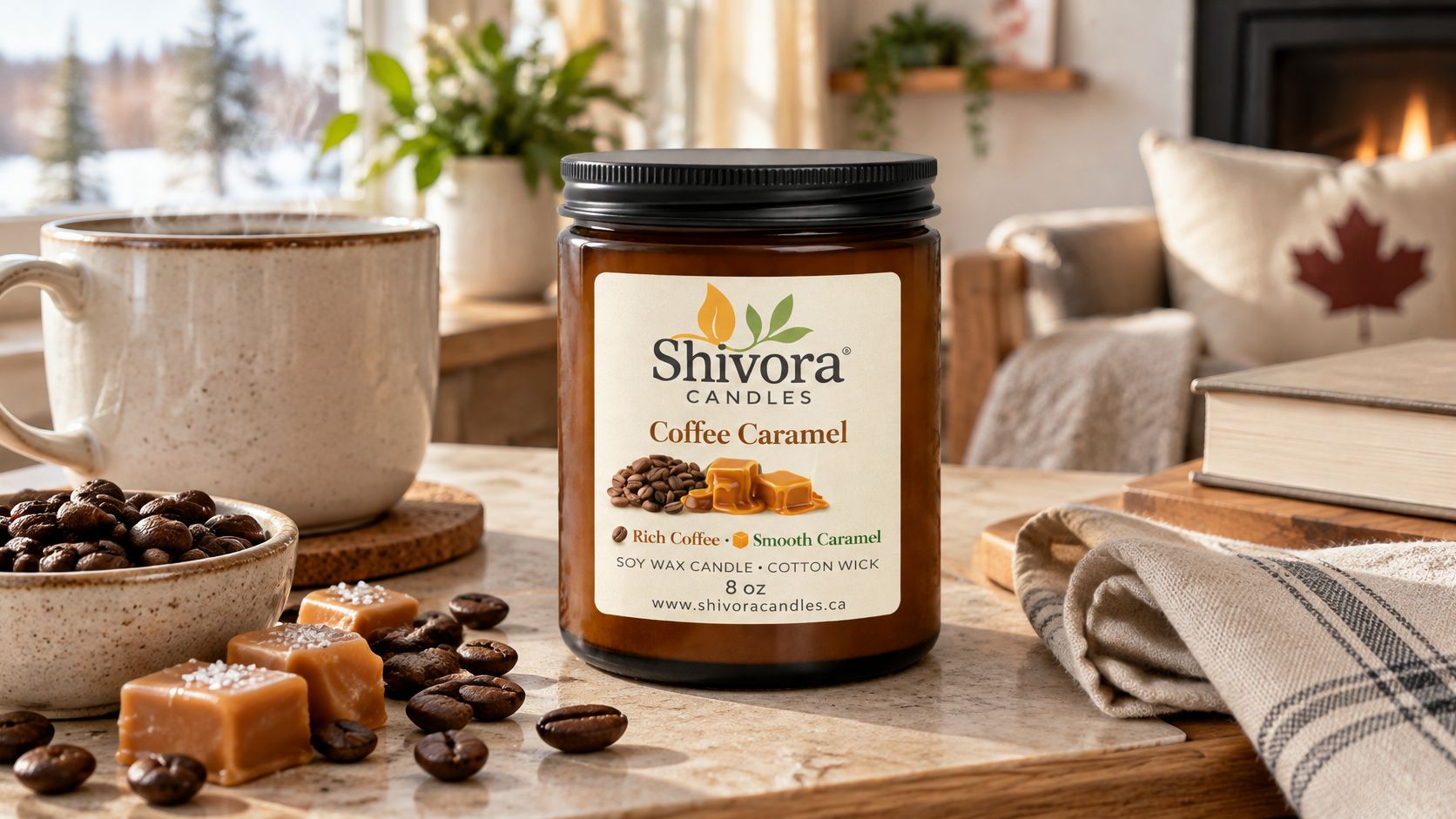
For a kitchen or coffee nook, the Coffee Caramel Soy Candle Canada – 8 oz Cotton Wick is an 8 oz soy candle that can fit into the colour scheme already in the room. Its appearance can contribute to the display; check the product details for its materials and care guidance.
The Birchwood & Cranberry soy candle can also be considered for a seasonal table. Let the room's palette guide the choice, rather than assuming a product name tells you how its fragrance will smell.
A bathroom fragrance spot without a flame
An electric melt warmer belongs only where its manufacturer permits, away from water, towels and reachable edges. A bathroom shelf is not automatically suitable just because the warmer fits.
Choose fragrance by room and preference. Fresh florals or citrus-and-sage notes may suit daytime spaces; woods or lavender may appeal in quieter rooms. For seasonal changes, consider citrus or mango-coconut in warmer months, then explore cozy seasonal scents as the weather turns. In shared areas, one fragrance family can keep the overall impression from feeling crowded.
Frequently Asked Questions About Candle Art Candles
Are candle art candles the same as scented candles?
Not always. Art candles prioritise form or finish as well as function, and some have little or no fragrance. A colourful vessel may contain an ordinary scented candle, while an intricate sculpture may be intended primarily for display, so appearance alone won't settle the distinction.
Can I burn a sculptural candle?
Only when the maker identifies it as designed for burning and provides suitable instructions. You'll also need an appropriate heat-resistant holder to catch melted wax. If the description only discusses décor, keep it unlit until you receive clear confirmation.
Is a soy candle safer than a paraffin candle?
Soy identifies the wax, not the safety of the complete product. Wick selection, container design, decoration and the way you use the candle also matter. Don't use an ingredient label as permission to ignore care instructions or leave a flame unattended.
Do wood wicks burn more safely than cotton wicks?
Neither material establishes a safety ranking. Wood wicks can provide a broader flame and crackling sound, while cotton wicks often appeal to shoppers who prefer a quieter presentation. The important question is whether the maker has matched that wick to the specific candle and provided clear maintenance guidance.
Match a Candle to the Gift and the Room
A candle gift works best when it fits the recipient's habits and the room where they might use it. A sculptural candle can suit someone who enjoys decorative objects, while a scented candle is easier to choose if you know their preferred fragrances. For someone who avoids open flames, consider soy wax melts for use with a warmer.
Shivora Candles are hand-poured in small batches in Ontario, Canada. The range includes 4 oz, 8 oz and 10 oz candles, with lead-free cotton or crackling wood wicks. Check each product's details for its specific size, wick and scent.
Gift matches by recipient and room
| Recipient or occasion | Product type | Why it fits |
|---|---|---|
| Coffee lover or host | Coffee-and-caramel soy candle | Suits a kitchen or dining room when supervised |
| Fall or holiday table | Birchwood and cranberry soy candle | Brings seasonal colour and scent to supervised evenings |
| Wants atmosphere | Wood-wick soy candle | Adds a crackling sound and a distinctive flame |
| Wants a steady everyday flame | Lead-free cotton-wick soy candle | Offers a quieter flame when appropriately matched |
| Enjoys fragrance but not a flame | Soy wax melts | Provide fragrance from a warmer on a clear surface |
For a housewarming, consider what you know about the new home. A modest fragrance may be easier to place than a large decorative object, while an unlit art candle can suit someone who prefers fragrance-free rooms.
Striped Circle's ideas to find unique housewarming gifts can help you choose something that reflects the recipient's interests beyond home fragrance. The aim is a gift that fits their habits, not one they feel obliged to display.
Make the final choices deliberately
Choose a wood wick for its crackle, or a cotton wick for a quieter presentation. Wick type is a matter of ambience, not a safety upgrade.
Wax, appearance and intended use are separate considerations. For a gift, check the product's scent and care details as well as its presentation. Choose a room and occasion first, then compare candles and wax melts according to the recipient's preferences.
Shivora ships across Canada at a flat rate, with free shipping on orders of CAD $79.99 or more; conditions apply.
Shivora Candles offers hand-poured soy candles and wax melts made in small batches in Ontario, Canada, with fragrance options for everyday rooms and seasonal gifts. Visit Shivora Candles to choose a scent, check its wick and care details, and find a piece you'll enjoy using or displaying with intention.

