

On a winter evening in Canada, a taper's glow can make a dinner table feel instantly more welcoming. Clear glass catches the flicker; a coloured, pressed-glass base gives the light a warmer cast. But when a candle leans, wax runs across the table, or a holder has a hidden chip, atmosphere gives way to a practical question: is this piece still a good support for a flame?
Choosing glass taper candle holders means balancing style with fit, stability and care. Canadian glassmaking history helps explain the variety of decorative forms available today, while Health Canada guidance and Ontario Fire Code requirements offer useful context for safe use. This guide also considers how holders pair with tapers, how to arrange them for a gathering, and how to decide whether a worn holder should be cleaned, reused or retired.
Table of Contents
- Setting the Scene with Glass Taper Holders
- Common Glass Taper Holder Styles
- How to Choose a Holder That Stays Put
- Pairing Holders with Tapers and Scent
- Safe Burning Practices for Canadian Homes
- Planning Glass Tapers for Events and Tables
- Care, Cleaning and End-of-Life Decisions
- Common Mistakes and Better Habits
Setting the Scene with Glass Taper Holders
The evening is ready: soup on the stove, coats drying by the door, and a low table set for friends. You place slender tapers in glass holders, strike a match, and watch the light ripple through the clear stems. On another night, a pressed-glass base adds colour to a quiet supper. The holder doesn't compete with the candle, but it shapes how the flame looks and how securely the taper sits.
That practical role can be easy to overlook. A holder needs to keep the candle upright, stand steadily on the table and withstand the heat it encounters. A beautiful piece with a wobbling base or a damaged rim isn't a sound choice for a lit taper.
Canada has its own history behind these decorative forms. Early domestic glass production focused on window and container glass, while imported British styles dominated much of the early nineteenth-century market. Protective tariffs introduced in 1879 helped begin Canada's principal period of pressed-glass production, which continued until approximately the 1930s. Pressed glass was formed by forcing molten glass into a heated iron mould with a plunger, making it possible to produce decorative objects more consistently than individually blown pieces. The range of colours and forms expanded from the 1830s onward, and the 1880s brought an “Art Glass” period of coloured, decorative glass. These developments helped make ornamental household glass practical for a wider Canadian market. (Canadian glassmaking history)
For a table-setting refresher that considers holders as part of the whole arrangement, see this Canadian candle-holder styling guide. If you're dressing an outdoor gathering, this resource on ways to make your marquee look amazing offers ideas for creating a cohesive event setting. The same principle applies at home: choose a holder for the mood, then make sure it's fit for the flame.
Common Glass Taper Holder Styles
Style is easier to judge when you know what each form tends to do on a table. Start with the glass itself: clear glass makes the candle and wax easy to see, while colour and texture add visual weight but can conceal residue.
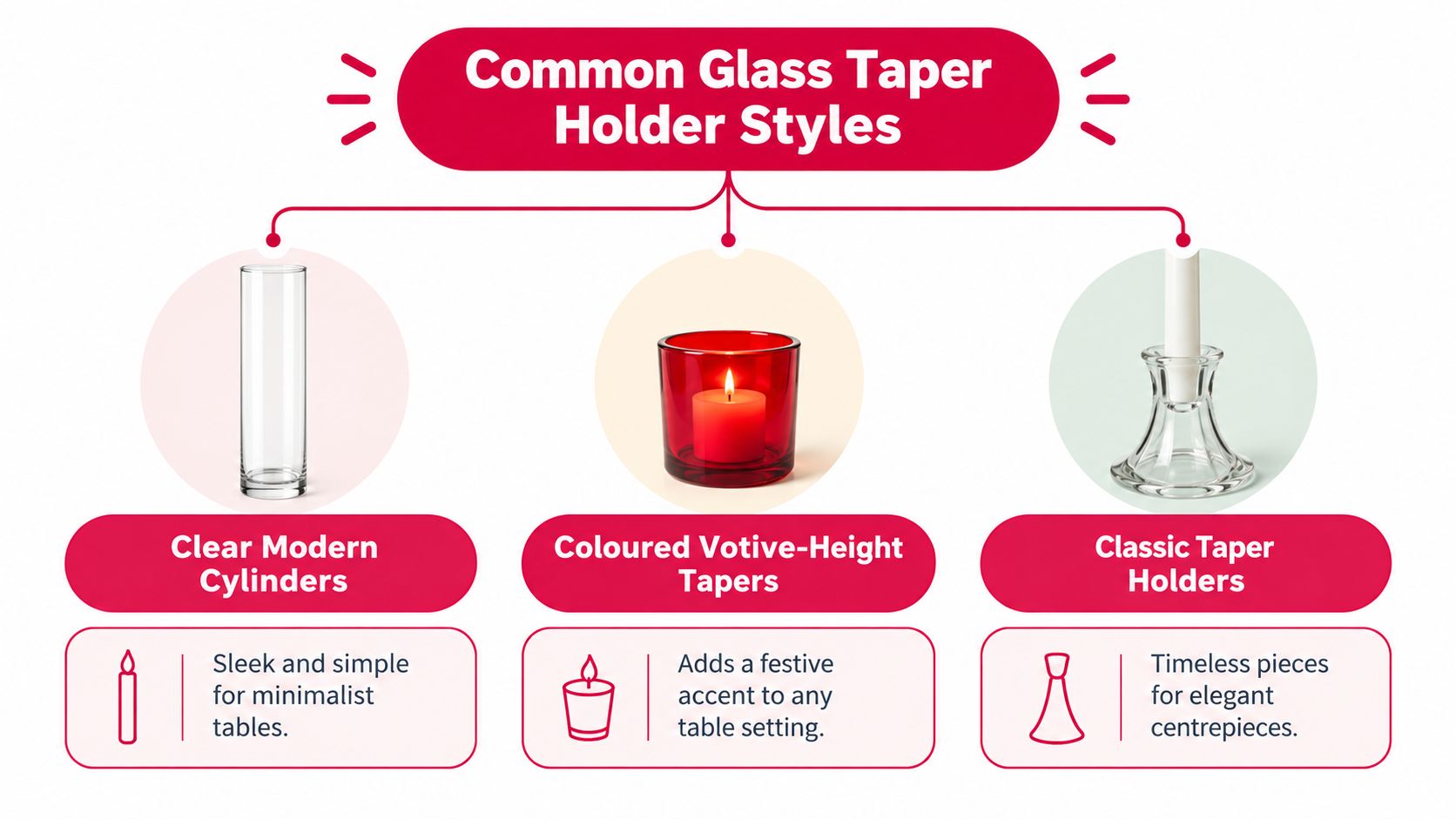
- Clear modern cylinders suit a simple dining table or console. Their clean outline keeps attention on the taper, and the visible glass makes wax buildup easy to spot. A plain cylinder can feel understated, so it benefits from a distinctive candle colour or a thoughtfully composed setting.
- Coloured, shorter forms bring a concentrated note of colour to a festive table or mantel. Amber, green or blue glass can deepen the glow, though dark or patterned glass makes it harder to notice soot and residue.
- Pressed-glass holders often have fluted edges, moulded details or a heavier-looking base. They feel at home in a traditional dining room, especially alongside older tableware. The texture can make cleaning around ridges less straightforward.
- Art glass draws the eye through its saturated colour or unusual form. It can anchor a console or side table, but inspect the socket and base carefully: decorative character doesn't guarantee a secure fit.
- Hurricane-style enclosures surround the candle with taller glass, creating a more sheltered look for an indoor table. Check that the candle sits as intended and that the setup doesn't trap excessive heat around the flame.
- Slim stemmed designs lift the candle above the tabletop and suit a mantel or formal place setting. Their height makes a steady base especially important.
Style check: Look at a holder from the side as well as from above. The silhouette may be elegant, but the base and socket tell you more about how it'll behave in use.
For another perspective on decorative candle-holder themes, this Bridle Up Hope Shop horse candle guide shows how a holder's motif can shape the feeling of a display. Whichever style appeals, check how the candle fits before lighting it.
How to Choose a Holder That Stays Put
A taper is narrow, and its flame sits well above the table. That high centre of mass means a small sideways bump can make the candle lean or tip the holder. A broad, level base helps counter that force, but the socket and glass condition matter just as much.
Check the base and socket
Set the holder on a flat surface and see whether it rocks. If you're shopping in person, a gentle touch at the edge can reveal wobble; at home, check again after cleaning, when wax or debris might otherwise affect the seat. The holder should remain upright without being braced by décor or wedged against another object.
The taper should fit snugly enough to stand vertical, without needing to be forced into the socket. A loose candle can tilt as it burns; forcing a candle into a narrow opening can stress the holder or damage the taper. Look inside the socket for dried wax that could interfere with seating, and check that the holder has enough depth to contain drips without blocking the candle.
Inspect the glass and consider the burn
Choose thick, undamaged glass, and avoid pieces with chips, cracks, scratches or visible signs of heat stress. Glass can break if it's exposed to excessive heat, so a decorative label alone isn't proof that a holder is suitable for a burning taper. A supervised burn test with the candle you intend to use can help reveal leaning, instability or unusual heat concentration. Stop using the holder if you notice a problem.
The Canada Safety Council recommends extinguishing taper and pillar candles when they're within 5 cm (2 in) of the holder and keeping the wick at 5–7 mm. (Candle-burning guidance) Those habits help keep the flame from approaching the glass and help the candle burn as intended.
A holder should support the candle without relying on a shim, folded paper or a dab of glue. If the fit isn't right, choose a different pairing.
Pairing Holders with Tapers and Scent
The taper material affects how the candle behaves in its holder. Some tapers are designed to drip less under suitable conditions; others may leave wax around the socket. A wider, easy-to-clean base can be more forgiving when a candle drips, while a slim stemmed holder keeps the overall look spare and neat.
| Taper type | Best holder style | Watch for |
|---|---|---|
| Dripless taper | Slim stemmed or clear modern holder | “Dripless” doesn't mean a candle can't drip. Drafts and other burning conditions can change how it behaves. |
| Beeswax taper | Wider pressed-glass base | Wax buildup can collect in decorative ridges or around the socket. |
| Standard paraffin taper | Stable holder with a drip-catching base | Check for drips and residue, and keep the candle vertical. |
| Soy-blend taper | A holder with a correctly sized socket and stable base | Don't assume wax type alone determines fit or scent strength. |
Lightly scented tapers can suit a small dinner where you want a subtle fragrance alongside the meal. A holder's openness affects how exposed the flame is to surrounding air, but it doesn't determine how far a scent travels. If fragrance competes with food or other room scents, an unscented taper can be the more comfortable choice.
For a closer look at what dripless tapers can and can't promise, read this guide to dripless taper candles. If you're comparing decorative candle formats for a celebration, Simply Hospitality's candle products provide another example of candles presented with their holders. Whichever taper you choose, test the fit before the meal, not while guests are waiting.
Safe Burning Practices for Canadian Homes
A taper burns for hours, and most problems develop slowly: the candle shortens, the flame draws closer to the socket and heat builds inside the glass. Health Canada advises choosing holders that are sturdy, well ventilated and resistant to tipping, and warns that glass can break when overheated. Before lighting, set the holder on a stable, non-flammable surface, seat the taper upright and check the glass for chips or cracks. (Health Canada candle-safety advice)
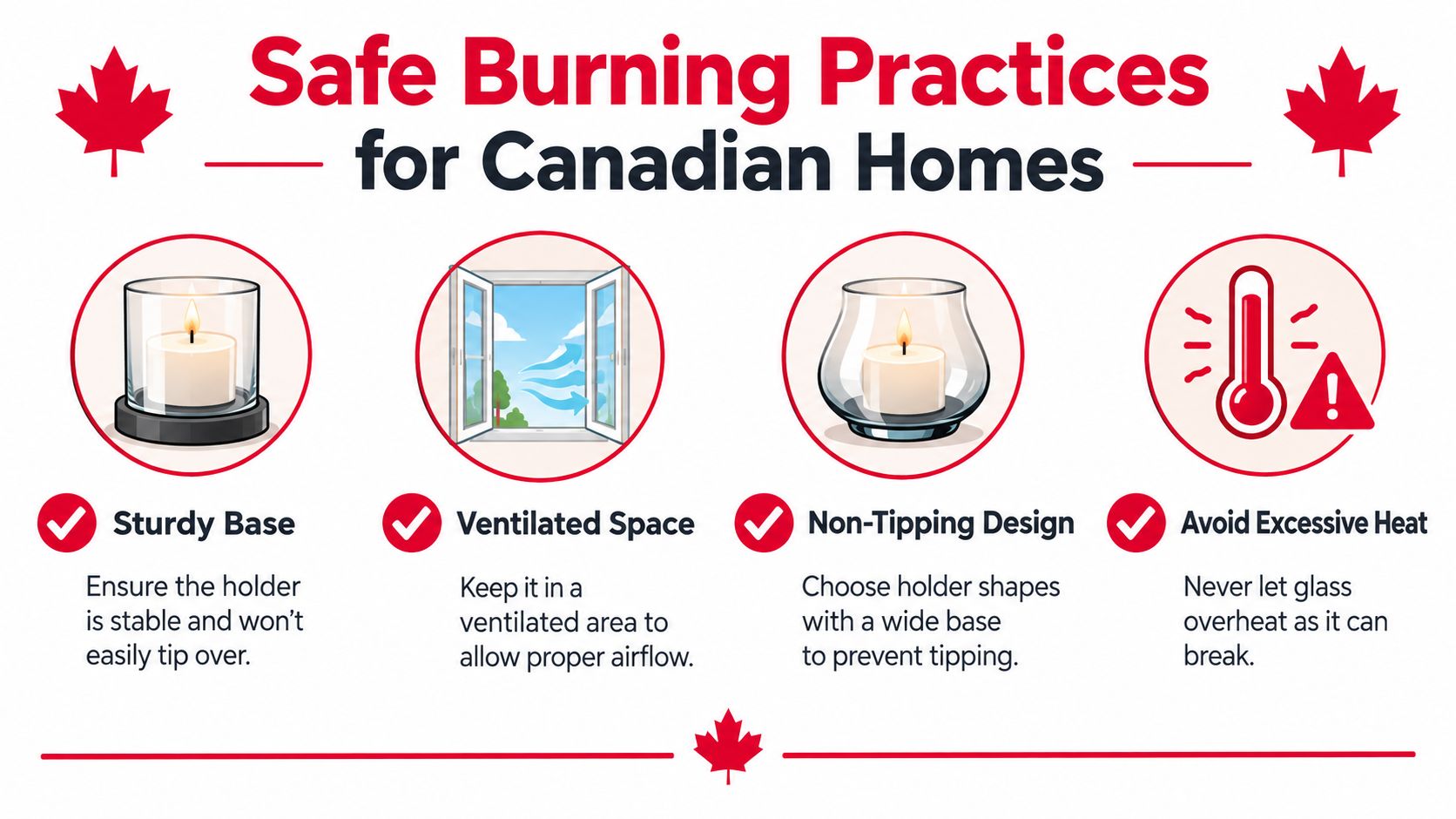
Distance is the part people tend to misjudge. The Department of National Defence advises leaving at least 10 cm (4 in) between candles and keeping a candle at least 1 metre (3 feet) from any surface above it, such as a shelf or mantel. (Canadian home-fire prevention guidance) The vertical clearance is the one that surprises readers: heat rises straight up, so a taper burning beneath a shelf can scorch what sits overhead even when the flame looks small. A row of four tapers may look evenly spaced across a dining table, but measure the gaps rather than trusting your eye, and keep napkins and other table décor clear of each flame.
The flame itself needs limits too. The Canada Safety Council recommends extinguishing taper and pillar candles when they're within 5 cm (2 in) of the holder and keeping the wick at 5 to 7 mm. (Canada Safety Council candle guidance) A wick left longer produces a taller, wavering flame, and a candle burned right down to the socket concentrates heat exactly where the glass is thinnest. Each centimetre you leave unburned is heat the holder never has to absorb.
When to extinguish or stop using a holder
- Extinguish before leaving. A burning candle should never be left unattended; put it out before leaving the room or going to bed.
- Keep flames clear of people and pets. Place candles where children and pets can't knock them over or reach the flame.
- Put out a leaning taper. If the candle shifts, tilts or loosens in the socket, extinguish it and correct the fit before relighting.
- Retire damaged glass. A holder with a crack, chip or sign of heat stress has already reached its limit; don't burn another taper in it.
Ontario's Fire Code applies the same logic to public settings: businesses and venues must keep open-flame devices securely supported in non-combustible holders and positioned or protected so combustible materials can't contact or be ignited by the flame. A home dining table isn't regulated the same way, but the habit transfers directly. These candle safety tips cover the everyday checks in more detail.
Planning Glass Tapers for Events and Tables
Glass taper holders can bring a table together, but an arrangement needs to work for the room as well as the photographs. Start with the table's clear space, overhead surfaces and nearby decorations. Then decide where height, colour and candlelight will add to the setting without crowding guests or placing a flame near something combustible.
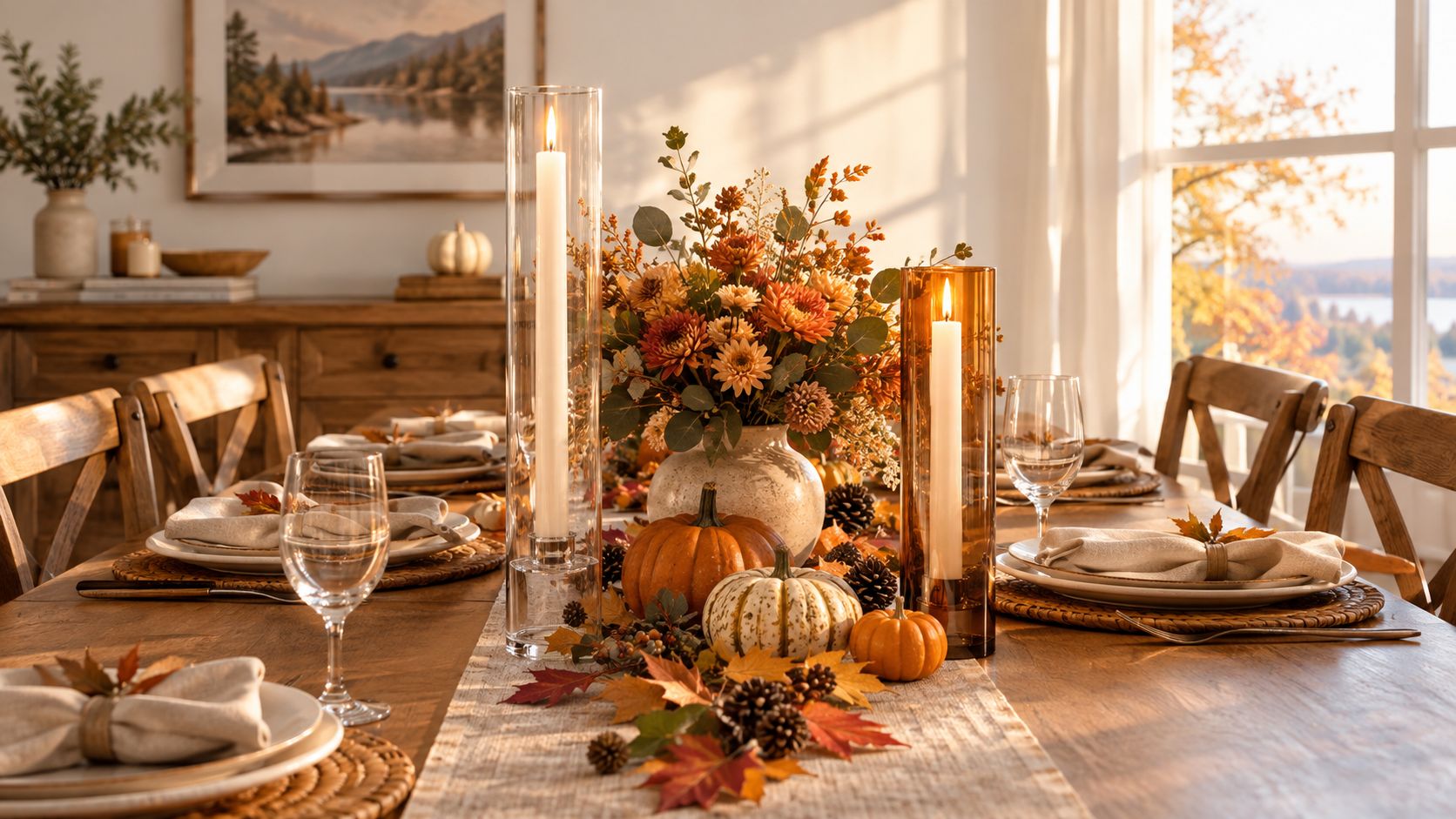
For a Thanksgiving dinner, a pair of holders can frame a low arrangement of autumn flowers and miniature pumpkins. Keep the flowers and any greenery well away from the flames, and leave enough room for dishes and serving hands. A low centrepiece helps guests see each other across the table.
At a winter wedding, hurricane-style glass holders can add height beside florals on a head table. Keep the flowers below and clear of the flame, and check the distance from any overhead feature. A tall holder might suit the room, but it still needs a steady base and a candle that fits properly.
For a Diwali or holiday buffet, a line of holders can bring a warm rhythm to a sideboard. Leave clear space around each flame and keep garlands, paper decorations and serving items away from the candles. If the display is near a wall shelf, account for the overhead clearance as well as the space between the holders.
Before guests arrive: Arrange the holders and decorations first, then check the distances and stability before lighting anything.
After the event, let the holders cool completely and pack them so glass rims and stems don't knock against one another in storage. A little care between gatherings can prevent chips that are easy to miss when unpacking in a hurry.
Care, Cleaning and End-of-Life Decisions
After a quiet dinner, the holder often looks worse than it is. Let the glass cool fully, then lift away cooled wax with a soft, non-sharp tool. A taper holder works like a small stand: its job is to keep a flame upright while heat and wax move around it, so protect the socket and rim while you clean.
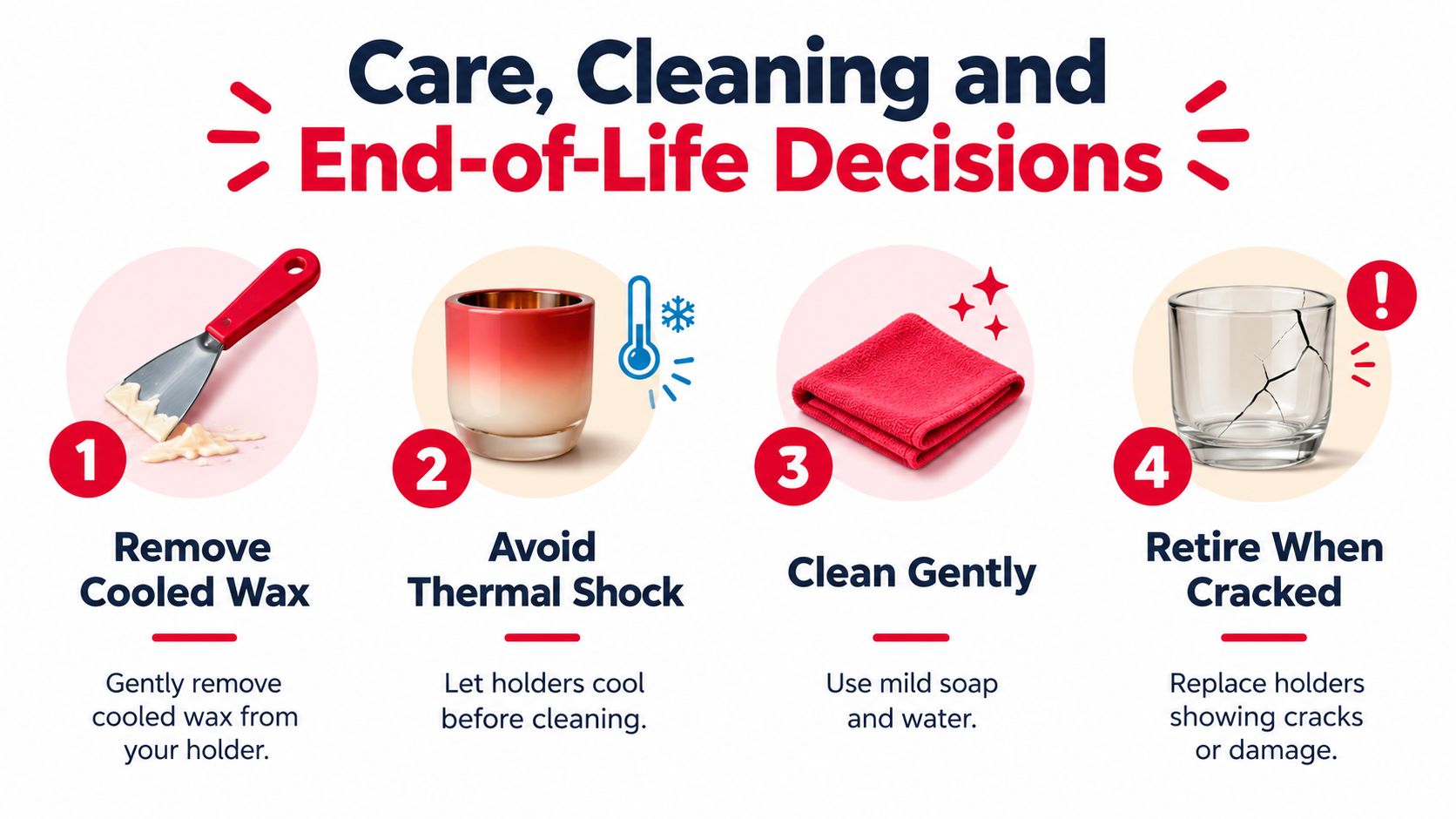
Wash with mild soap and water only after the glass has cooled. A warm holder in cold water can be stressed by the sudden change. Dry it well, then set it on the counter and see whether it rocks.
Reuse, repair or retire
For Canadian homes, the same stability logic behind fire-safety guidance applies to the holder itself: if it rocks, leans or is cracked, it should not carry a lit taper. Look for hairline cracks, chips, cloudiness that may signal heat damage, a loose socket, or a base that no longer sits flat. Glue, paper shims and improvised inserts do not make damaged glass dependable.
Recycling is a separate decision. Decorative holders can be heat-resistant glass, crystal, coated glass or mixed materials, and leftover wax or metal parts can complicate sorting. Check your municipality's accepted-material rules before putting one in the blue bin. Canadian households diverted 23,102 more tonnes of glass in 2024 than in 2023, according to Statistics Canada's waste diversion reporting (Statistics Canada glass diversion data), but local programs still set what they accept.
If a holder is intact, clean and steady, keep using it. If damage appears, it may live on as décor without a flame; do not return it to candle service.
Common Mistakes and Better Habits
A candle arrangement can look polished and still have a simple safety problem: a taper placed beside fresh greenery, a wick left long, or a holder that no longer sits straight. These aren't styling details to overlook. A leaning candle can bring its flame closer to the glass or nearby décor, and foliage close to an open flame is a poor trade for a fuller-looking centrepiece.
A reliable pre-dinner routine takes little time:
- Check the holder: Look for chips, cracks, heat damage and a base that rocks.
- Trim the wick: Keep it to the recommended length discussed above, and make sure the candle stands upright.
- Clear the surroundings: Use a stable, non-flammable surface and move greenery, curtains, napkins and other combustible items away from the flame.
- Check spacing: Measure between candles and look above the arrangement before lighting.
- Stay nearby: Extinguish candles when leaving the room, going to bed or moving the display.
Candlelight doesn't need to be the only source of fragrance at the table. For a meal where an open flame or scented taper isn't suitable, a flameless home-fragrance option can offer another way to set the mood. The right choice depends on the occasion, the space and how you plan to use your holders.
Shivora Candles offers hand-poured soy candles and soy wax melts made in Ontario, Canada, for evenings when you want fragrance alongside carefully arranged candlelight. Explore Shivora Candles for Canadian-made home fragrance, with shipping across Canada starting at $9.99 and free shipping on orders of $79.99 CAD or more, some conditions apply.

