

Why does a tall glass tube that looks like simple décor change how a candle burns, how hot the glass gets, and whether your city will recycle it afterward? That's the gap most shoppers miss, because a candle glass cylinder isn't just a pretty surround for a flame. It's a heat-bearing holder, and its diameter, height, and placement decide whether the wax melts evenly or the flame leans hot against one wall.
Done well, the glass steadies the light and gives a pillar or votive a clear, upright home. Done carelessly, it traps heat, wastes wax, and ends up in the wrong bin. The steps ahead walk through sizing, placement, safe burning, and disposal in plain terms, with Canadian rules in mind.
Table of Contents
- What a Candle Glass Cylinder Is and How It Differs
- Candle Glass Cylinder Sizes for Each Candle Type
- Choosing Diameter and Height for Your Space
- Flame, Flameless and Heat Options Compared
- How to Place and Burn a Candle in a Cylinder Safely
- Cleaning and Recycling an Empty Cylinder
- Frequently Asked Questions About Candle Glass Cylinders
What a Candle Glass Cylinder Is and How It Differs
A candle glass cylinder is a tall, straight-walled glass holder made to stand a pillar, votive, or flameless candle upright, with the glass containing the candle and the candle providing the light. It is like the glass panels of a lantern. The glass shapes the light, softens drafts around the flame, and gives you a clear view from every side.
It's easy to confuse one with a drinking glass or a food jar, so look for three differences instead.
- Taller than wide: The walls rise well above the base, rather than ending just past the candle's middle.
- Open at the top: There's no lid or threaded neck, so you can lower a candle in and light it without reaching through a narrow mouth.
- Sold as a holder: It's meant to hold a separate candle, not to package food or drink.
Why purpose-built glass matters
Looks can mislead you here. A vase or tumbler can have thick, attractive walls and still be the wrong choice, because it wasn't made for repeated heating and cooling. ASTM's consumer product standards identify F2179 as a specification for annealed glass containers produced for use as candle containers, and note that candle containers face sustained household heat and may need to withstand thermal shock.
That distinction is practical, not technical trivia. A purpose-built vessel is designed for the cycle of warming while lit and cooling afterward. An ordinary decorative container may not be.
Check for a vessel labelled for candle use and written burn instructions, not thick walls or a pretty finish.
If the packaging doesn't say it's for candles, don't guess. Choose a sturdy, stable holder made for the job, and treat any substitute glass as décor for a flameless pillar only.
Candle Glass Cylinder Sizes for Each Candle Type
Start with the candle you already own, then match the glass to it. This table uses a simple clearance rule explained after it, so you can find your size in seconds and then check the reasoning.
| Candle type | Candle diameter | Candle height | Suggested cylinder inside diameter | Suggested cylinder height |
|---|---|---|---|---|
| Tea light | 1.5 in | Measure your own | 2.5 in | 3 in |
| Votive | 2 in | 2 in | 3 in | 3 in |
| Pillar 3 x 3 in | 3 in | 3 in | 4 in | 5 in |
| Pillar 3 x 6 in | 3 in | 6 in | 4 in | 7 in |
| Pillar 4 x 6 in | 4 in | 6 in | 5 in | 8 in |
| Pillar 4 x 9 in | 4 in | 9 in | 5 in | 10 in |
These are general sizing rules of thumb, not manufacturer specifications. Your candle's maker may give different guidance, and that guidance wins. The table gives you a sensible starting point before you measure.
The 1 inch clearance rule
Aim for an inside diameter about 1 inch wider than the candle. A 3 inch pillar, for example, sits comfortably in a cylinder with a 4 inch inside diameter. That gap isn't wasted space. It leaves room for the wick to stay centred, for the melt pool to form without pushing hot wax against the wall, and for about a finger's width of clearance all around.
That clearance matters for heat. If a pillar nearly touches the glass, the flame and melted wax sit close to one surface for the whole burn. With breathing room, air can move around the candle and the heat spreads more evenly. You'll also find it easier to lower the candle in, lift it out, and clean the glass later.
Measure the inside diameter listed for the vessel, not the outside edge. Glass has thickness, and a cylinder that measures 4 inches across the outside gives you less room inside. If a listing only gives outer dimensions, measure across the inner opening yourself with a ruler before you light anything.
Height above the candle top
Choose a cylinder that rises 1 to 2 inches above the top of the candle. A 6 inch pillar pairs with a 7 or 8 inch cylinder, depending on how much shelter you want. That extra height keeps the flame inside the glass, where it's less likely to flicker in a passing draft, and it makes the glow read as contained and calm.
Don't go much taller than that without a reason. Very deep glass makes lighting and trimming awkward, and you may end up tilting the cylinder to reach the wick. Tea lights are the exception in the table because their height varies by cup style, so measure the tea light you own and add the same 1 to 2 inches.
If you're still sorting out which candle format suits your home, the Aroma Warehouse candle guide walks through common candle kinds in plain language, which can help you settle on a type before you buy glass for it.
Dry-fit check: Slide the candle into the cylinder before lighting. If it wedges, scrapes, or leans against one wall, move up one size.
A candle that leans will burn toward the low side and heat that wall unevenly. A candle that wedges can't be centred at all. The dry fit takes ten seconds and tells you more than any product photo. Once the candle drops in cleanly, stands straight, and keeps clear space on every side, you've found your match.
Choosing Diameter and Height for Your Space
Size alone doesn't decide whether a cylinder works in a room. Scale and placement do. A dining centrepiece, for example, should stay low enough for guests to see and talk across the table. A bedside or entryway piece can be taller, since nobody needs a sightline through it, but it still has to sit clear of curtains and away from drafts.
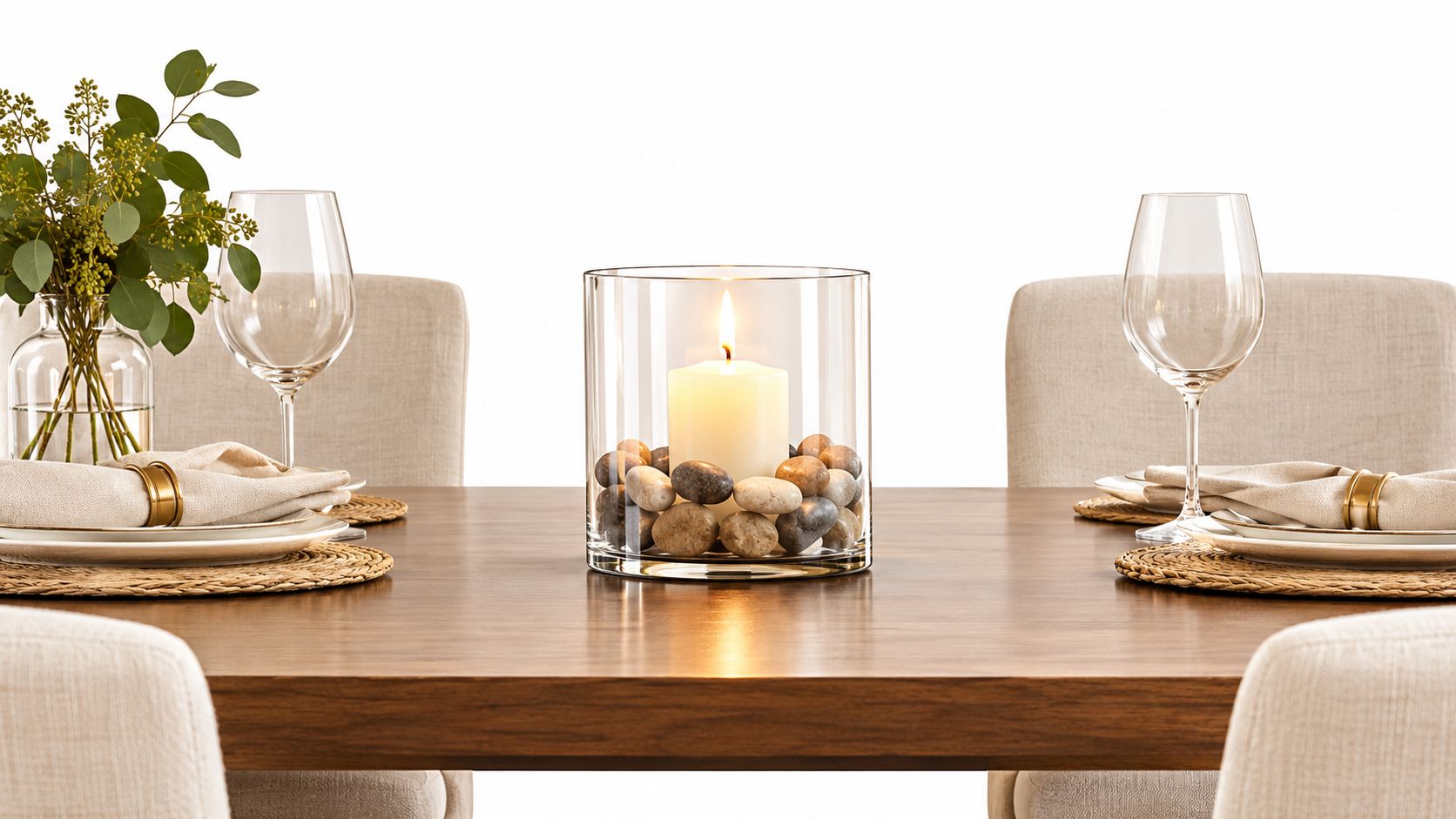
Work through this short checklist before you choose.
- Measure the surface: Note its width and depth, and how much room plates, books, or keys still need.
- Count the viewers: Ask how many people will sit around it and whether they need to see past it.
- Check for moving air: Note windows, doors, and heating vents that could push a flame sideways.
- Decide on the light source: Will you light a real candle, or will the piece hold only a flameless pillar?
A concrete example
Say you have a narrow console table in a hallway. A 4 x 9 in pillar in a 10 in cylinder can dominate that spot, crowding a small bowl or framed photo and catching sleeves as people pass. A 3 x 6 in pillar in a 7 in cylinder fits the same table with room to spare and still gives you a tall, clear column of light.
Grouping helps smaller pieces feel intentional. Three cylinders of different heights look more considered than three identical ones, because your eye reads the steps between them. An odd number of pieces also tends to feel relaxed rather than rigid. For more ways to arrange groupings by room, see our guide to styling candles at home.
If the top of the cylinder sits above eye level when you're seated, scale down or lower the surface.
That one rule prevents most centrepiece mistakes. Sit where your guests will sit, look across, and be honest about what blocks the view. If you have to peer around the glass, the cylinder is too tall for that table, whatever its diameter.
Flame, Flameless and Heat Options Compared
Match the candle type to the cylinder before you buy, because each option heats the glass differently and asks something different of you.
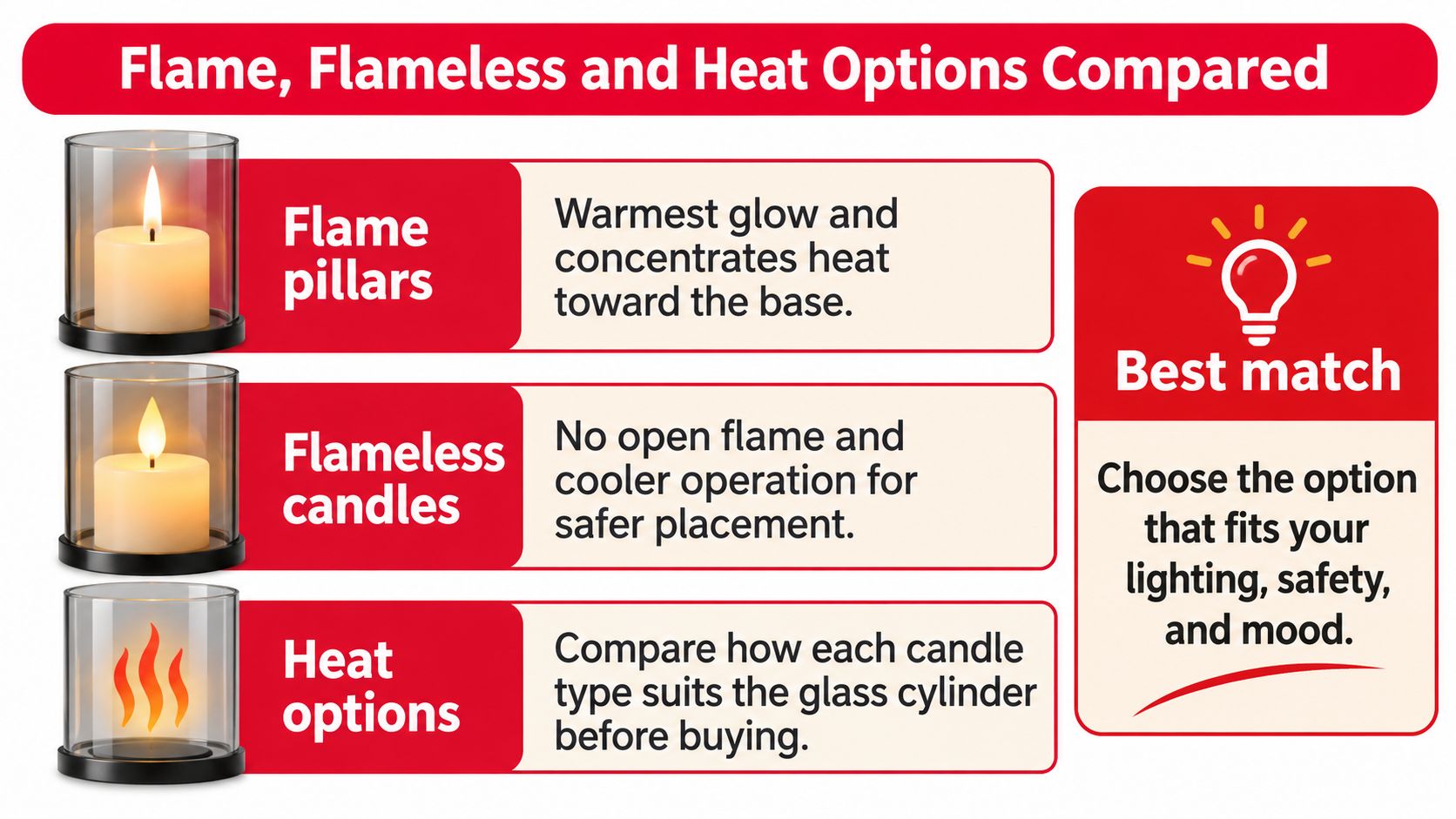
| Option | Heat at the glass | Upkeep | Best fit |
|---|---|---|---|
| Flame pillar | Highest, builds toward the base | Trim the wick and clear the wax pool before each burn | Relaxed evenings with supervision |
| Votive or tea light | Concentrated in a small volume | Replace once burned down | Short table sessions |
| Flameless LED pillar | No open flame | Battery or charging as the manufacturer directs | Spaces where no open flame is wanted |
Flame pillars give the warmest, most traditional glow, with real movement as the flame responds to the air. They also concentrate heat toward the base as they burn down, so they need the most attention from you. The glass warms gradually, and the lower the flame sits inside the cylinder, the more you should watch how the burn is behaving.
Votives and tea lights suit short table sessions, such as dinner or a bath. Their small volume of wax burns down quickly compared with a pillar, so you replace them once they're spent rather than tending them over many evenings. Their heat stays concentrated in that small volume, which is why the snug, short cylinders in the sizing table work well for them.
Flameless LED pillars remove the open flame entirely. There's no wick to trim and no melt pool to manage. Follow the manufacturer's battery or charging instructions, and the cylinder becomes pure décor that shapes the light.
Pros and cons at a glance
- Flame pros: Movement, warmth, and a traditional glow that LED light only imitates.
- Flame cons: Needs wick trimming, a centred candle, and close attention for the whole burn.
- Flameless pros: The look without the upkeep, and it suits spaces where an open flame isn't wanted, such as a bookshelf or a child's bedtime story corner.
- Flameless cons: No real flame movement, and you'll need to keep up with batteries or charging.
A flame candle and a flameless one can sit side by side for a layered look, but only the lit candle needs a level spot and an adult within sight.
That mix works nicely for a mantel grouping. Put a flame where you can watch it, and let flameless pillars fill the ends of the arrangement. You get the glow across the whole display while keeping your attention on a single flame.
How to Place and Burn a Candle in a Cylinder Safely
A glass cylinder is part of the candle's heat environment, not just a decorative frame. Set it up so the candle stands upright, the wick stays centred, and nearby objects remain clear of the flame.
Canada's Candles Regulations prohibit a candle from spontaneously reigniting after it has gone out. At home, aim for a steady flame and glass that remains intact throughout the burn.
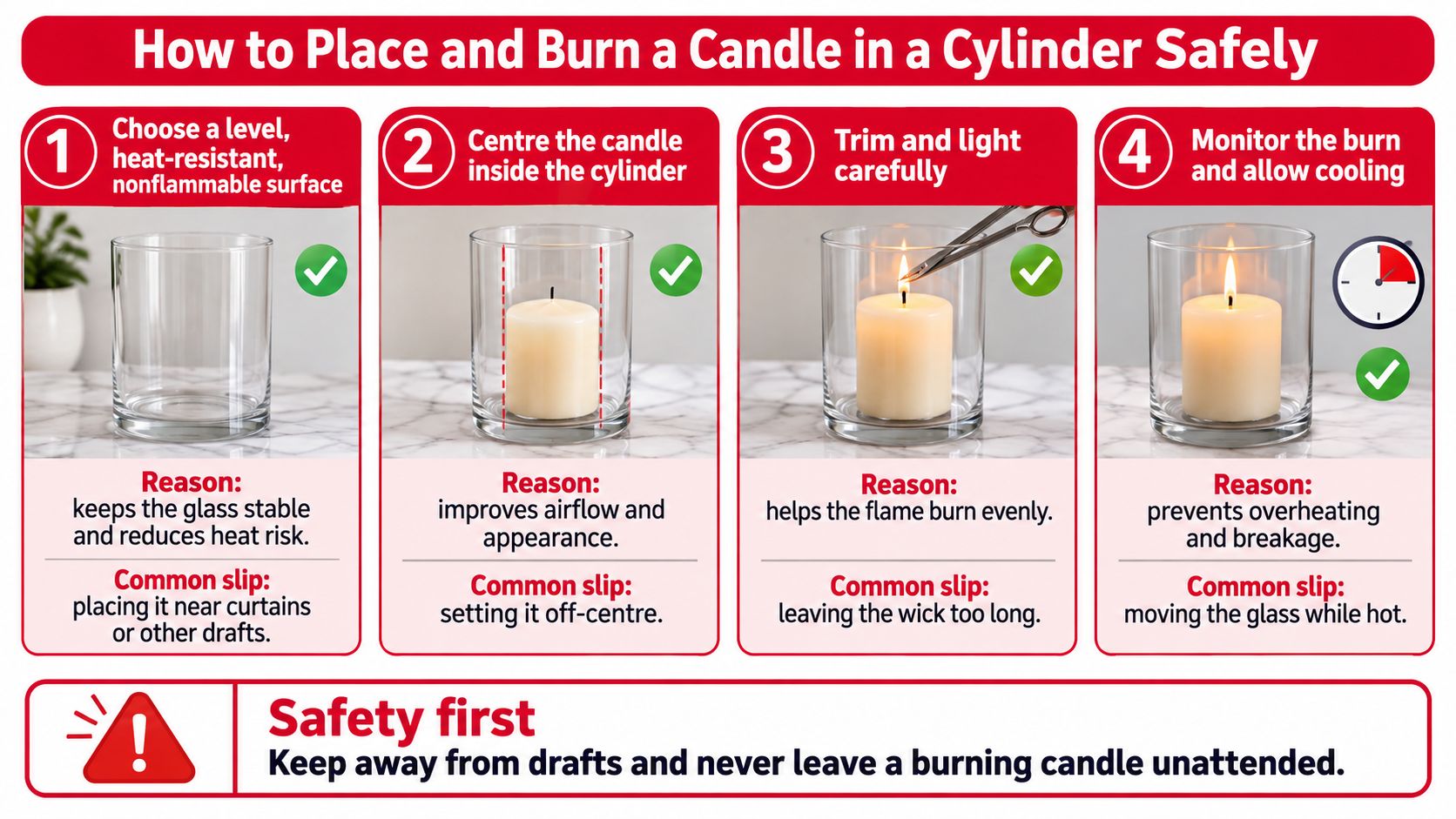
- Choose a level, heat-resistant surface. Place the cylinder on a stable, uncluttered surface away from drafts. A wobbly side table can unsettle the holder, while a cloth runner puts flammable material beneath it.
- Leave clear space around the cylinder. Keep it away from curtains, paper, plants, and other combustible décor. For example, don't place it beside a stack of magazines or on a fabric runner where the flame could reach nearby material.
- Trim the wick before each burn. Trim it to about 1/4 inch. A long wick can smoke and produce a larger flame, while a shorter wick helps keep the flame modest. For practical trimming and storage guidance, read how to get more from your candles.
- Centre the candle and wick. Check that the candle sits straight and the wick is in the middle. If the wick leans toward the cylinder wall, heat can concentrate on one side. Adjust the candle before lighting, while the wax is still firm.
- Let the first burn reach the edges. Allow the melt pool to extend to the candle's edges on its first burn. Otherwise, wax can tunnel down the centre, leaving unused wax around the sides.
- Stay within sight. Never leave a burning candle unattended, and keep it out of reach of children and pets. Extinguish it before leaving the room. These candle safety tips cover the basics of supervision and care.
- Extinguish before the flame nears the base. Stop burning before the flame gets close to the holder or cylinder. The final wax may not be worth the added heat near the base.
- Let the cylinder cool fully. Wait until the glass is cool before moving or storing it. Sudden temperature changes can stress glass, so let it return to room temperature before handling.
What a healthy burn looks like
Look for an even melt pool, a steady flame, and minimal smoke. If the flame leans persistently, smokes, or grows tall, extinguish the candle. Once it has cooled, trim the wick and check for drafts before lighting it again.
Cleaning and Recycling an Empty Cylinder
Start with cleaning, and only then decide where the glass goes. Let the cylinder cool completely first. If leftover wax clings to the bottom, place the cooled cylinder in the freezer so the wax contracts and lifts out more easily. Scrape gently with a plastic tool, such as an old loyalty card or a plastic spoon, so you don't scratch the glass. Then wash in warm soapy water and dry thoroughly.
Remove the wick tab and any metal, lid, adhesive label, or decorative accessory before you judge the glass on its own. Those extras, not the glass itself, are often the reason a vessel can't go where you expect. For stubborn residue and other methods, see our guide to removing candle wax from glass.
Why the blue box answer varies in Canada
Here's where many guides oversimplify. Canadian municipal systems distinguish between glass packaging and other glass products. The Capital Regional District in British Columbia states that food and beverage bottles and jars are collected separately because other glass items can have different melting characteristics and contaminate the recycling stream.
So a candle vessel may look like a jar yet not be accepted as packaging glass, especially if it carries wax residue, a metal tab, or a coating. Rules also vary by municipality, province, and apartment program, so a universal instruction to put it in the blue box can be wrong where you live.
Use this short decision list instead.
- Remove wax and accessories: Clean the cylinder and take out tabs, lids, and labels where your local rules allow.
- Check your municipal list: Look up candle glass or non-packaging glass in your city's waste tool or accepted-materials list.
- Reuse if it isn't accepted: A clean cylinder works as a planter, pen holder, or storage vessel for cotton balls or matches kept away from flames.
- Skip food use: Don't reuse it for food or drink unless the manufacturer confirms food-contact suitability.
When in doubt, check the local list rather than guessing. Two Canadian cities can give you two different answers for the same piece of glass.
Reuse is a good outcome, not a consolation prize. A straight-walled cylinder is useful around the home, and keeping it in service delays disposal altogether.
Frequently Asked Questions About Candle Glass Cylinders
Can a candle glass cylinder be used outdoors
A sheltered porch table can protect a cylinder from steady wind, but a lit candle still needs supervision. Wind and moisture can affect the flame. Bring the cylinder indoors afterward rather than leaving it exposed to wet, freezing weather.
Can a wax melt go inside a cylinder
Keep melts in a warmer designed for them. The warmer controls how the wax is heated, and the melt belongs in the warmer's dish. Follow the warmer's instructions.
Can a cylinder with a candle be given as a gift
Yes. Add a note about trimming the wick and extinguishing the candle before the flame nears the base. Shivora Candles' 4 oz candles are a compact choice for sampling a scent, smaller spaces, or a Canadian-made gift.
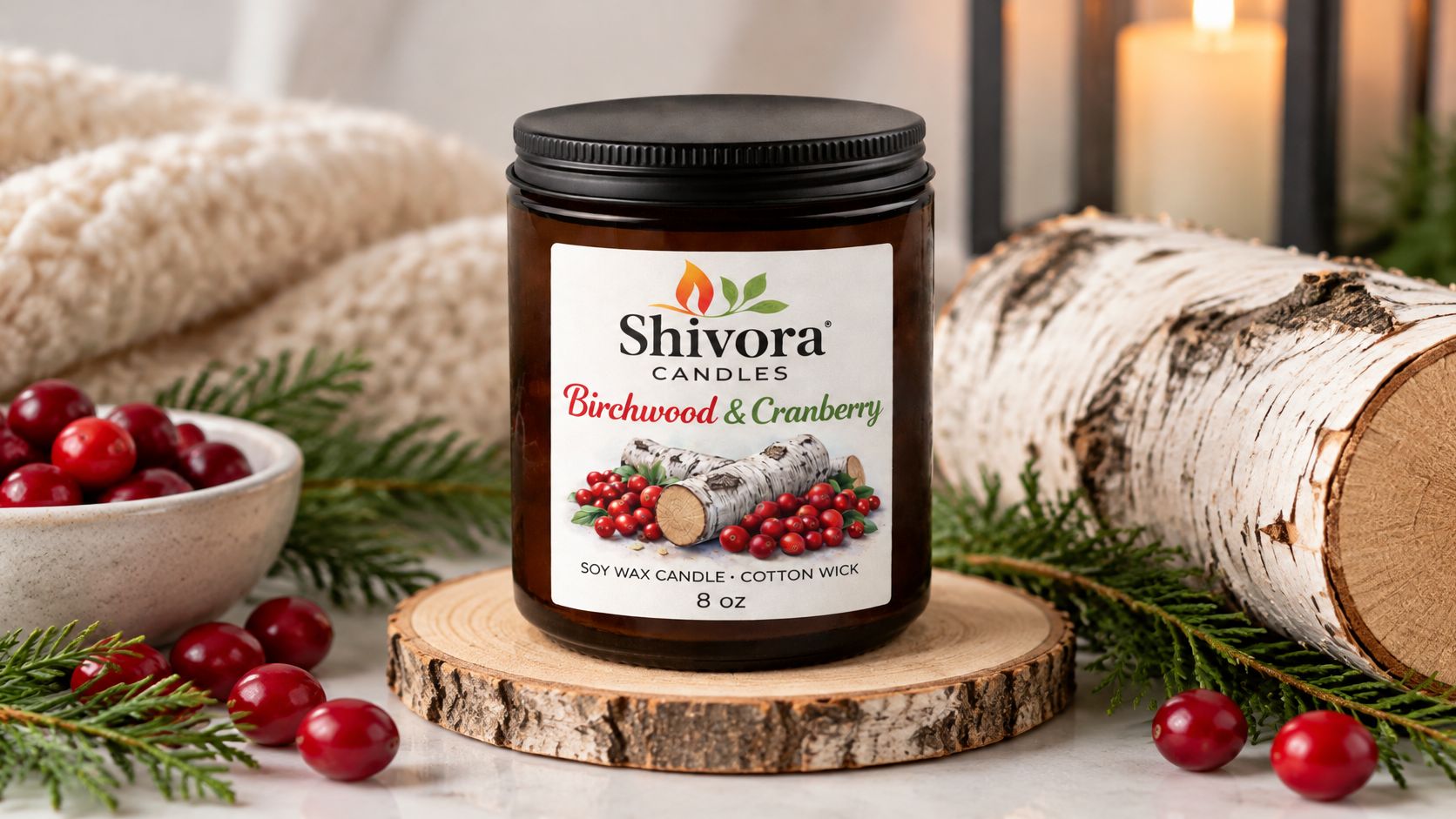
Shivora Candles offers soy candles and wax melts made in small batches in Ontario, Canada. Its candles come in 4 oz, 8 oz, and 10 oz sizes, making it easier to choose a format for a bedside table or living room. The Birchwood & Cranberry Soy Candle Canada – 8 oz Cotton Wick is one option in the collection.
Free shipping is available on orders of $79.99 CAD or more. Conditions apply.
Choosing a cylinder starts with matching its size to the candle and allowing room around the wick. For a cotton or wood wick candle, select a holder with enough clearance, then place it on a stable surface away from drafts. Visit Shivora Candles to browse candles for your home or as a Canadian-made gift.

