

A 10 oz candle jar can look right beside a tall taper holder, but its wide base won't fit the holder's narrow socket. The same mismatch happens when a broad pillar rests on a stand designed for tapers. To choose tall candle holders that work, start with the candle they'll carry, then check the fit, stability, flame clearance and reach.
Table of Contents
- Tall Candle Holder Sizes at a Glance
- Types of Tall Candle Holders and Where Each Works
- Materials and Base Stability for Tall Holders
- Safe Flame Clearance and Burn Limits
- Placing Tall Holders Within Easy Reach
- Styling Tall Holders in Living Spaces
- Common Questions About Tall Candle Holders
- Confirm Your Holder and Candle Pairing Before You Buy
Tall Candle Holder Sizes at a Glance
First, measure the candle itself. The ounce size on a jar tells you its capacity, not its exact diameter, and jar dimensions can vary by maker. Use the table as a fit check, then compare the measurements with the holder's listed opening or platform.
| Candle format | Holder fit to check |
|---|---|
| 4 oz jar | Measure the jar before choosing an opening; use a flat platform or opening about 1 in wider than its measured diameter |
| 8 oz jar | Platform or hurricane opening about 1 in wider than the jar's measured diameter |
| 10 oz jar | Platform or hurricane opening about 1 in wider than the jar's measured diameter |
| Standard taper candle (7/8 in) | Socket that grips a 7/8 in taper without wobble |
| Pillar 3 x 6 in | Flat base about 1 in wider than the 3 in diameter, about 4 in |
Read the jar rows as a measurement task, not as a promise that all jars of the same ounce size are interchangeable. For an 8 oz or 10 oz jar, measure across the widest part of its base. A hurricane needs an opening wider than that measurement; a tall tray or riser needs a flat platform with room for the vessel to sit without overhanging. Jars don't belong in taper sockets because the socket is too narrow to support their bases.
The taper row works differently. A taper is held by its lower end, so the socket must grip it upright without wobble. Check the listed socket size rather than assuming every taper stand fits every candle.
Practical rule: For a flat platform or hurricane opening, aim for roughly 1 in more width than the candle's measured diameter. The extra room helps the vessel sit without crowding the holder.
A retail example gives a sense of how tall a taper holder can be: in 2026, Crate & Barrel Canada listed an 18-inch Megs Large Black Taper Candle Holder for CAD 79.95. That height is a product example, not a universal standard for taper holders.
Before ordering, write down the candle's height and diameter, then check the holder's listed height, opening and base. A tall silhouette is only useful if the candle sits securely and the flame has suitable space around it.
Types of Tall Candle Holders and Where Each Works
Start with one question: Is your candle a taper, a pillar or a jar? That answer narrows the holder styles worth considering.
| Holder type | Best candle | Stability and base | Best placement |
|---|---|---|---|
| Tall taper candlestick | 7/8 in taper candles | Narrow base; needs a weighted foot | Dining table, mantel |
| Tall pillar holder | 3 to 4 in pillars | Wide base; most stable of the tall types | Console, sideboard, entryway |
| Glass hurricane cylinder | 8 oz and 10 oz jars, pillars | Heavy glass base; opening wider than the candle | Coffee table, dining centrepiece |
| Floor candelabra | Tapers or pillars | Wide tripod or square base | Corner, entryway, beside a chair |
| Metal riser with drip tray | 8 oz and 10 oz jars, votives | Heavy base with a wax-catching tray | Mantel, buffet, bedside |
A tall taper candlestick suits a slender candle held in a narrow socket. Its raised shape can add a vertical accent to a dining table or mantel, but the narrow footprint makes a weighted foot important. For pillar candles, choose a tall pillar holder with a broad base; that wider support makes it the most stable of these tall styles and a practical choice for a console, sideboard or entryway.
A glass hurricane cylinder surrounds the candle rather than gripping it. Choose one with a heavy base and an opening wider than the candle, whether it holds a jar or pillar. A floor candelabra makes a stronger floor-level statement, so place it in a corner or beside a chair, away from walkways. A metal riser with a drip tray lifts a jar or votive while giving melting wax a place to collect.
The shape also has a practical history. The Canadian Museum of History's Artefacts Canada database documents an iron miner's candlestick belonging to mining engineer Harry Marsh at the Pueblo Mines near Whitehorse, Yukon, in 1914. It had a hollow candle cup and a curved rod ending in a spike, a functional design that could secure the holder to a surface. The record shows candleholders were used beyond household display, as well as serving decorative and social purposes in Canada. See the Canadian Museum of History's Artefacts Canada record.
The candle format changes the fit, balance and amount of wax a holder may collect. Check the candle first, then compare styles. For more on slender glass designs, explore glass taper candle holders.
Materials and Base Stability for Tall Holders
Start with the base: a tall holder is only as stable as the surface beneath it. Added height raises the centre of gravity, so a narrow base, uneven table or accidental bump can make tipping more likely. Health Canada's candle safety guidance recommends sturdy, well-ventilated holders that resist tipping. It advises against wooden or plastic holders for open-flame candles because they can ignite, and warns that glass can fracture if overheated.
Cast iron or heavy steel can provide a steady foundation when the base is wide and level. Weight helps, but a heavy holder can still rock or tip if its footprint is too small.
Ceramic and stoneware can also feel substantial. Check that the underside sits flat and that the rim or candle platform has no chips that could affect the fit. For a glass hurricane, leave space around the candle so heat does not build up against the sides.
Keep wood as décor beside a candle, rather than using it to support an open flame. A wood wick is part of the candle, so choose a holder based on the candle's vessel and base fit.
Try the base test
Set the empty holder on the table, console or floor where you plan to use it. Press its top edge gently from several directions. It should return upright without rocking or sliding. As a practical check, aim for a base at least one third as wide as the holder is tall.
Then place the candle in its socket or on its platform. It should sit upright and snugly. For 8 oz and 10 oz jars, compare the vessel's measured diameter and weight with the platform or hurricane. A taper holder is not shaped to support a jar.
Montréal fire-safety guidance recommends non-combustible holders that keep open-flame devices stable. Keep décor, clothing and curtains clear of the flame, and leave the holder in place while it is lit.
Safe Flame Clearance and Burn Limits
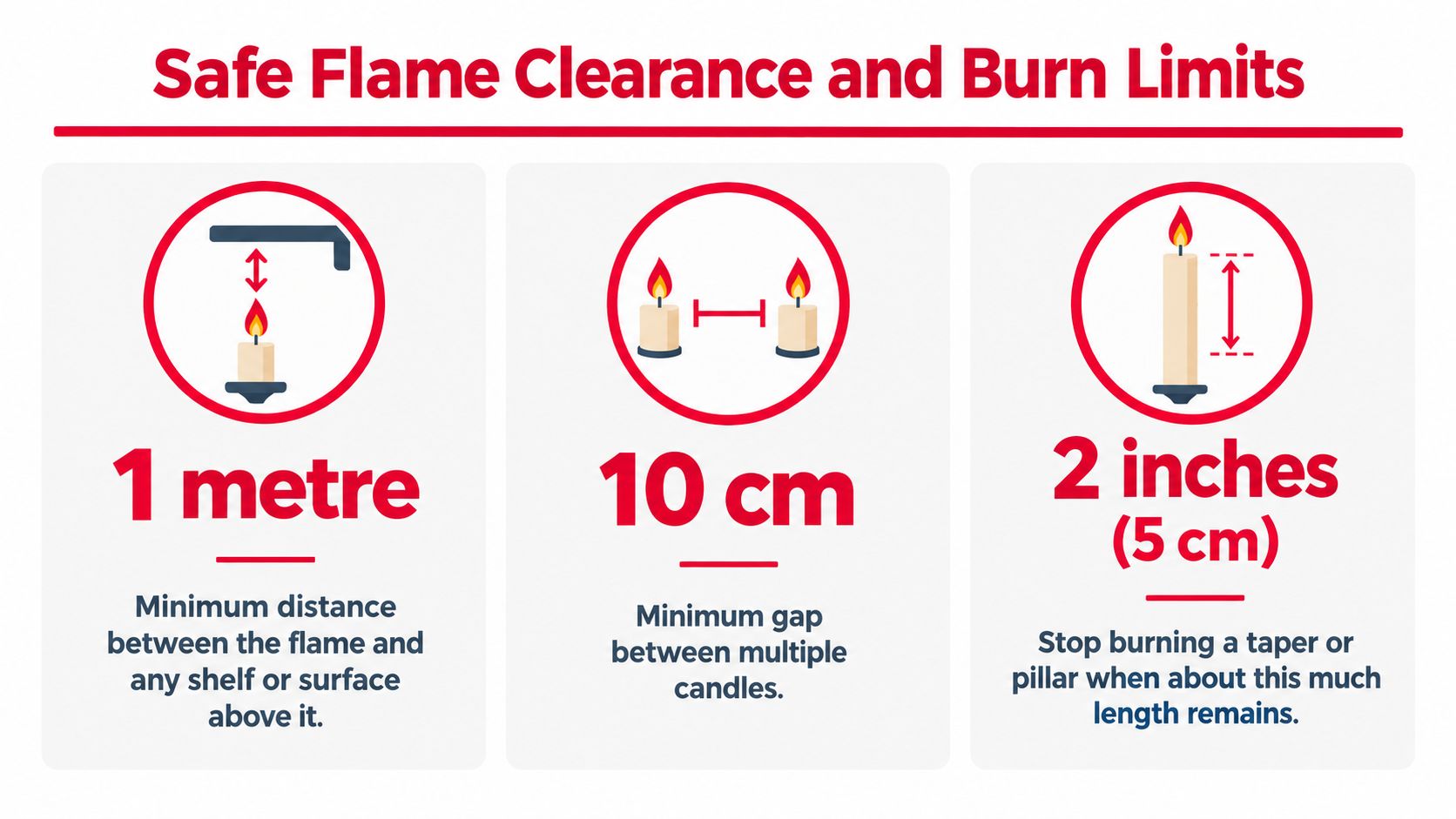
A tall holder raises the flame, and every clearance measurement starts at the flame rather than the base. A candle that sat comfortably in a low jar can end up far closer to a shelf once it moves into a candelabra, so judge the pairing by where the flame lands, not by how the silhouette looks. Three numbers cover most setups: at least 1 metre between the flame and a shelf or surface above it, at least 10 cm between candles burning side by side, and a stop point 5 cm before a taper or pillar reaches its holder.
| Requirement | Guidance | Applies to |
|---|---|---|
| Distance from flame to a shelf or surface above | At least 1 metre | Mantels, shelves, overhead décor |
| Spacing between multiple candles | At least 10 cm (4 in) | Grouped holders on one tray or table |
| Remaining candle before stopping | Stop when within 5 cm (2 in) of the holder | Taper and pillar candles |
| Wick trim | 5 to 7 mm (about ¼ in) before lighting, then every 2 to 3 hours | All candles in tall holders |
| Burn session limit | No more than 4 hours at a time; never leave a lit candle unattended | All candles |
The Canadian government's home fire-prevention guidance sets out the overhead and between-candle clearances. Measure the overhead gap from the flame itself, and allow extra room if a draft is making the flame lean or the wick has grown long. Flame height, wick condition and nearby airflow all change the space a burn needs, so a holder large enough to contain dripping wax keeps the setup working for the whole session.
Set up before lighting
- Trim the wick. Health Canada recommends trimming it to 5 to 7 mm, or about ¼ inch, before lighting, then trimming it again every 2 to 3 hours to help prevent a high flame. Follow the Health Canada wick-care guidance.
- Choose a level surface. Keep the holder away from curtains and décor, and check that it doesn't rock.
- Check the open space. Confirm the flame has suitable room above it and grouped candles aren't too close together.
- Inspect the tray. Make sure any drip tray can catch wax without letting it run onto the table.
- Monitor the burn. Shivora recommends not burning a candle for more than 4 hours at a time, and trimming the wick again during longer sessions.
- Stop at the holder. End a taper or pillar burn when the remaining candle is within 5 cm of its holder.
A candle involves an open flame, so never leave it burning unattended. Run through the same clearance checks every time, whether the holder is brand new or the candle is nearly finished. For more setup advice, see Shivora's candle safety tips.
Placing Tall Holders Within Easy Reach
Try the reach test before choosing a spot. From a standing or seated position, you should be able to light, inspect, trim and extinguish the candle without leaning over its flame. Canadian accessibility guidance encourages environments that work for a broad range of abilities; applied to candle décor, that means weighing reach, flame visibility and ease of maintenance alongside appearance. The Canadian accessibility guidance on common accessibility measures offers a useful lens, even though it isn't written specifically for household candle arrangements.
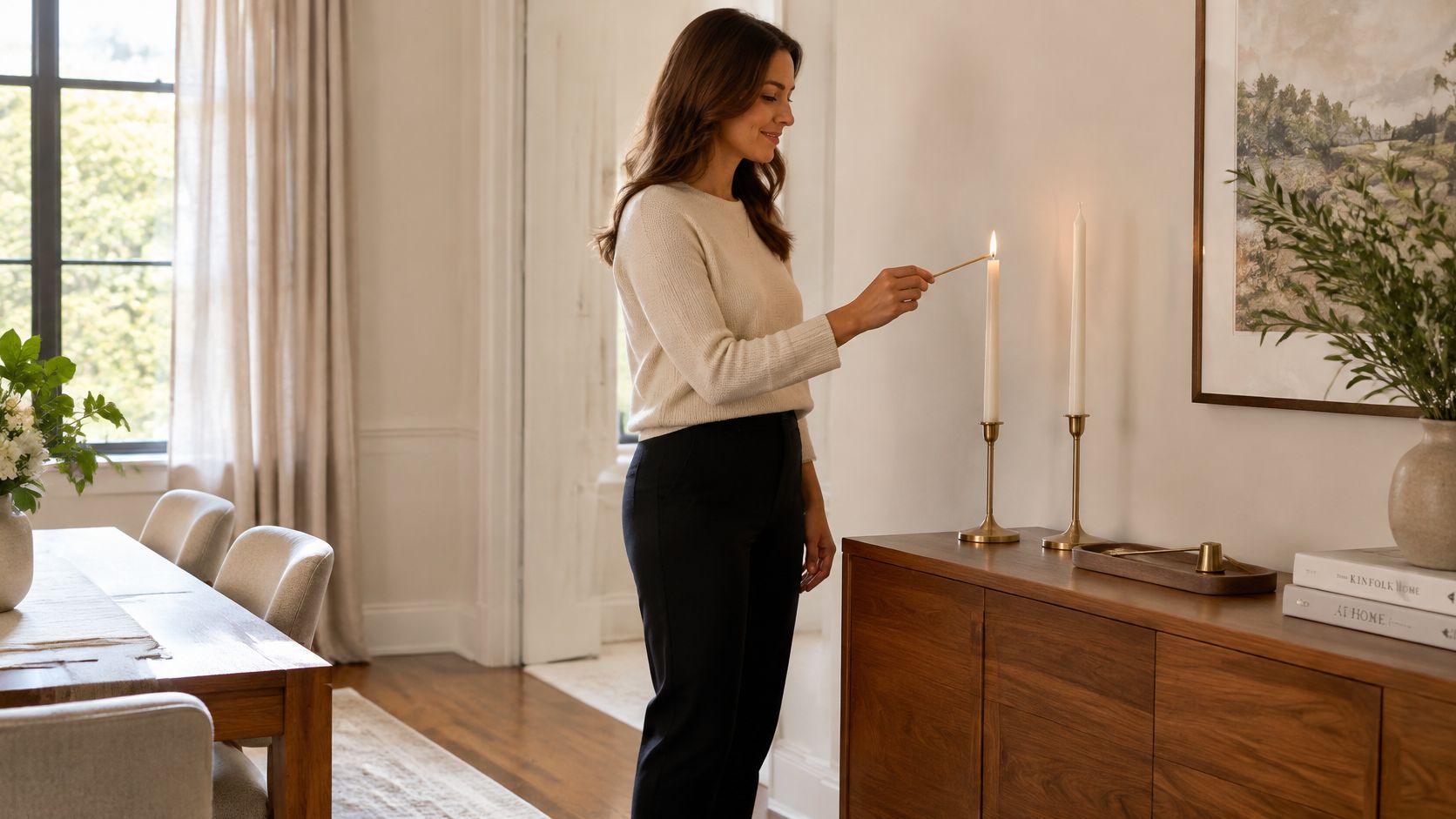
Each location has its own trade-off:
- Floor: A candelabra can stand in a corner or beside a chair, but keep it out of walkways and away from sofas. Check that you can see the flame and reach the holder without stepping around furniture.
- Console: Make sure the flame has enough space below any mirror or shelf above it. Keep the holder on a stable surface where you can inspect it without shifting nearby objects.
- Mantel: Consider the shelf or surface overhead as well as the reach required to tend the candle. If lighting or extinguishing it means leaning across décor, choose a different position.
- Dining table: Keep the centrepiece low enough that guests can see across the table. In a crowded setting, a tall holder may obstruct sightlines or be easy to bump.
For older adults, people with limited dexterity or mobility, and hosts setting a busy table, the most useful arrangement is one where the flame stays visible and easy to monitor. If open-flame supervision isn't practical, flameless wax melts offer a home-fragrance option without a candle flame. Tall should describe visual impact, not inaccessible maintenance.
Styling Tall Holders in Living Spaces
A bare mantel can feel flat until three holders of different heights add a clear vertical rhythm. Before styling, check that every holder fits its candle and that the arrangement leaves suitable space around the flame.
Three simple choices help the grouping feel intentional:
- Group an odd number of holders, such as three.
- Step the heights by about 4 inches to create a visible rise.
- Limit the materials to one or two, then add a single accent.
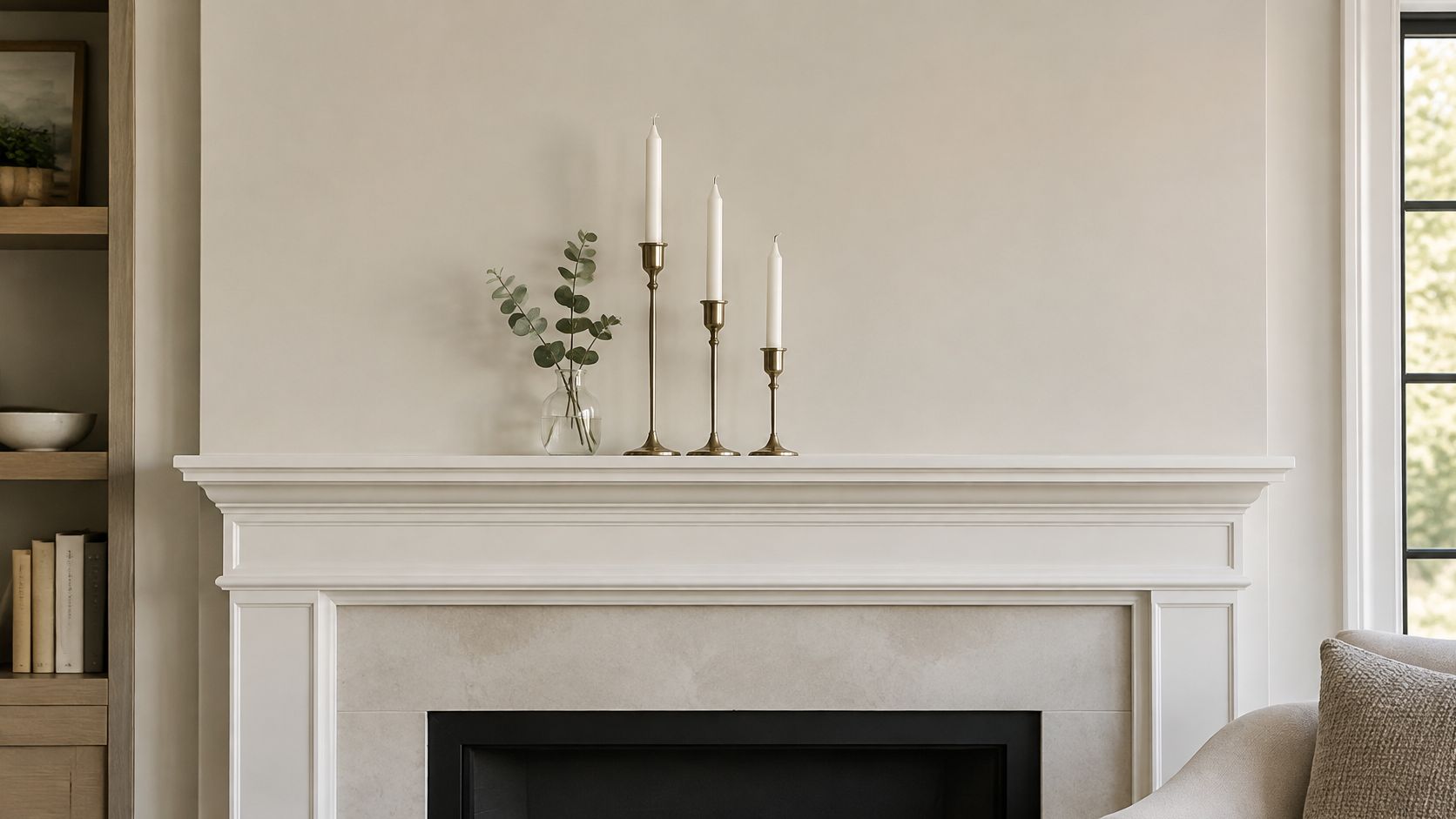
A stepped mantel trio might use holders about 10, 14 and 18 inches tall, with the tallest at one end. Check the clearance between each flame and the shelf above, and don't place greenery over a lit candle.
For a dining centrepiece, pair a 14-inch holder with two low trays of 8 oz jars. Keep the arrangement low enough that guests can see one another across the table, and leave room to serve food without reaching over a flame.
An entryway console can take a pair of 12-inch pillar holders flanking a shallow bowl. Choose broad bases for the pillars, and keep the bowl low so it doesn't crowd the candle area.
In a living room corner, a floor candelabra beside a reading chair adds height without taking up table space. A wood-wick jar on a low riser can balance the composition, but keep it on a separate stable surface with clear space around its flame.
Warm brass, matte black iron, pale ceramic and natural wood accents can sit comfortably in many Canadian interiors. Keep fabric and greenery well away from open flames. For more ideas on arranging objects as a balanced group, Stahl Home Center's expert coffee table decorating tips offer helpful guidance. Shivora's candle holder décor and styling guide for Canada can also help you plan the look around your space.
Common Questions About Tall Candle Holders
How do I remove wax drips from a tall holder?
Let the wax harden, then lift it gently with a plastic scraper. You can chill the holder briefly if its material allows. Wipe the surface with a soft cloth, and avoid heat guns on glass or harsh solvents on finished metal.
Are tall candle holders suitable for homes with children or pets?
They can be used with careful placement and supervision. Keep holders out of reach, make sure they remain stable, and never leave a burning candle unattended. For setup guidance, see Shivora's Candle Care and Safety page.
Can I place a tall holder near a window?
Allow space between the flame and curtains, blinds or other fabric. Avoid spots where an open window could disturb the flame or where people might brush against the holder.
Is there a weight limit for a tall candle holder?
Follow the holder maker's stated limit, if one is provided. The base should sit flat without rocking, and the holder should support the candle without tipping. A heavier holder can be harder to knock over, but weight alone does not guarantee stability.
Confirm Your Holder and Candle Pairing Before You Buy
A holder should fit the candle it carries, not just suit the room. Before ordering, measure the candle's diameter and height, check that its base sits securely on the intended surface, and make sure the space above the flame follows the clearance guidance.
Shivora Candles makes hand-poured soy candles and wax melts in small batches in Ontario, Canada. The Buttercream & Vanilla Soy Candle Canada – 8 oz Cotton Wick is one jar format to measure before choosing a holder. Match the holder's opening or platform to the vessel, then check the candle's height against the available overhead clearance.
Free shipping is available on orders of CAD $79.99 or more, with conditions. Visit Shivora Candles to choose a candle and pair its vessel with a holder that gives the flame a stable, well-cleared place.

